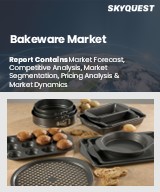
Bakeware Market
Report ID: SQMIG25I2048
Report ID: SQMIG25I2048
[email protected]
USA +1 351-333-4748
Report ID:
SQMIG25I2048 |
Region:
Global |
Published Date: January, 2026
Pages:
186
|Tables:
92
|Figures:
69


Global Bakeware Market size was valued at USD 4.6 Billion in 2024 and is poised to grow from USD 4.91 Billion in 2025 to USD 8.38 Billion by 2033, growing at a CAGR of 6.9% during the forecast period (2026–2033).
The demand for bakeware is fueled upon the ongoing changes in lifestyles, increasing health awareness, and the influence of social media on cooking culture.
Baked goods bring joy and togetherness for family and friends, thus bakeware is slowly beginning to be regarded as a gifting option. The bakeware, therefore, will be purchased by clients based on their seasonal cooking or for family and friends who enjoy baking and cooking as a way of killing two birds with one stone, thus triggering a sudden seasonal hike in demand. Once again, the limited-edition sets and accessories for the holidays favor cooking novices and seasoned bakers alike, creating another impetus for demand. Thus, the seasonal baking fetishes along with the gift-giving phenomenon continue to act as the drivers for the global bakeware market growth.
In addition, sustainability concerns are becoming more apparent to customers along with the quality of the product. Eco-conscious consumers often prefer bakeware composed of durable and sustainable materials, including ceramic, silicone, and stainless steel, and may prioritize products that are non-stick and easy to clean. Products that minimize waste, including reusable silicone mats, are garnering widespread popularity. All these shifts in consumers' values, along with the joys of baking at home, are propelling the bakeware industry globally.
In What Ways Is Smart Bakeware Changing the Baking Experience?
One significant technological innovation that is changing the global bakeware market outlook is the availability of smart bakeware with Internet of Things sensors that allow for monitoring temperature, humidity, and bake time in real-time. In 2024, for example, a smart kitchen appliance maker named June Oven added connected baking trays and mats to its smart bakeware offerings, which are connected apps on mobile devices for precision baking to prevent overbaking. By 2025, cafes and smaller bakeries in North America have adopted this technology in response to consumer needs for trusted results and ease of use in home baking and commercial baking, and to ensure consistency of the product and to reduce waste.
Market snapshot - 2026-2033
Global Market Size
USD 3.84 Billion
Largest Segment
Commercial
Fastest Growth
Household
Growth Rate
6.5% CAGR
To get more insights on this market click here to Request a Free Sample Report
Global Bakeware Market is segmented by Product, Material, End Use and region. Based on Product, the market is segmented into Tins & Trays, Cups, Molds, Pans & Dishes and Rolling Pin. Based on Material, the market is segmented into Stainless Steel, Aluminum, Stoneware, Carbon Steel and Glass. Based on End Use, the market is segmented into Commercial and Household. Based on region, the market is segmented into North America, Europe, Asia Pacific, Latin America and Middle East & Africa.
As per the 2024 bakeware market analysis, the pans & dishes category represented over 38% of total sales. Pans and baking dishes are common in almost all kitchens, because they are necessary for a variety of recipes, from baking and roasting to casseroles and desserts. To support the trend of cooking from home and health-conscious eating, the use of bakeware products, especially pans and dishes, continues to increase, given they provide possibilities for different styles of cooking. The use of durable and non-stick products, such as cast iron and ceramic, provides greater longevity and convenience to customers. Consumers are looking for better quality multi-use products for cooking.
The sales of molds are forecasted to grow at a compound annual growth rate (CAGR) of 7.5% between 2025 and 2032. Makeware molds will also increase in demand as customers continue to seek creative baking ideas, such as shaped cakes and darling desserts. Molds enable bakers to achieve attractive and professional looking finished products at home, which is particularly nice with the increase in interest in unique, decorative and visually appealing baked goods, fueled by social media. Home bakers are interested in trying out different shapes and designs of baked goods, driven by the popularity of social media posts, and baking recipes as more bakers use them for elaborate dessert making.
As per the 2024 bakeware market forecast, the share of the commercial segment is expected to exceed 55%. The expanding food service segment is causing the need for commercial bakeware to increase since more bakeries, restaurants, cafes, and catering services require durable, high-quality baking materials and equipment. Commercial bakeware is required in a professional environment with high productivity since commercial bakeware is designed to endure multiple, high-volume baking use.
The household category is anticipated to have the highest bakeware market share as increased attention to health and the enjoyment of preparing and consuming one's own food increases. Households are purchasing high quality bakeware to support more frequent baking activities, focusing on ingredient management and reduced consumption of processed food.
To get detailed segments analysis, Request a Free Sample Report
As per the bakeware market regional analysis, the North American market makes up 27.9% of the market revenue in 2024, fueled by lifestyle, social media influence, and health consciousness. More North Americans have been baking for themselves to keep a grip on ingredients, reduce food additives, and as an enjoyable way to do something different and fun. North Americans especially like their own bakeware due to seasonal customs such as holiday baking and social gathering. This mode of purchase is further dictated by the trend here for durable and effective cookware. A big part of this US desire for quality cookware is high-end materials such as silicone and carbon steel.
The U.S. bakeware sector will exhibit an ever-increasing yearly growth rate of 6.7% in the period of 2025-2032. This growth will be driven by those who prefer to bake at home and regulate ingredients instead of accepting the preservatives in store-bought items. Convenience requires simply letting such a trend grow better. Media outlets have given a strong foundation for this by opening all kinds of bakeware. This results in people being more apt to try more extravagant baking endeavors such as desserts that require spectacular applications or some new breed of bread. There is also a high increase in demand as the period of the year holds special projects with different types of sweets being made: in addition to bakeware being neatly positioned in their kitchen cupboards.
The Canadian bakeware market continues to be driven by the increasing demand for green kitchenware and green baking accessories. As for bacteria-free, healthier materials, silicone matting and Teflon-coated bakeware are the most in demand. It was reported that one of the known retailers saw a 22% sales boost for silicone baking sheets in 2024, saying that people are on a quest for long-lasting, non-wasteful bakeware, eco-friendly and functional for everyday baking use.
Europeans are looking for better control over their ingredients wherever possible, and they want to eat fresh and high-quality bakery products. Holiday bakers, creators of artisan bread, and the like serve as an encouragement of sorts for people to support home baking, hence brooding over select high-quality bakeware to enrich their baking experiences. Long-lasting, environment-friendly bakeware material is gainful in the market.
Home baking is becoming the preferred hobby for many consumers in the UK because of its creative value and stress reliever. This is further compounded with durable and easy-to-clean bakeware on demand. In professional bakeries, high-performance pans are increasingly used to provide consistent quality amidst the growing demand for artisanal products. According to the national poll done in 2025, 48% of households have tried new bakeware when making their own pastries and sweets.
French preferences are thus sustainability and quality as the two most important aspects one must consider while choosing and buying kitchen wares. They're homemade, artisanal sweet things, and so that raises need for high-in-demand bakeware. Orders for ceramic and non-stick baking goblets significantly increased in the French patisserie chains in 2024 to meet quality in production. At the same time, "environmentalists" were able to look for recycled-metal pans and reusable silicone mats-end users further indulged in showcasing their choices towards products emphasizing environment performance and responsibility.
The bakeware performance and durability are the important drivers for demand regarding bakeware in Germany. Modular and multipurpose pans are increasingly being used by both the home baker and the commercial kitchen. High-quality silicone and ceramic bakeware were installed in bakeries across Berlin for waste minimization and high-volume production. This shows how nonstick-coated trays now become popular for device and environmental issues, complementing the efficient and sustainable kitchenware culture in Germany.
The Asia Pacific bakeware market is predicted to have a CAGR of 7.7% during the forecast period of 2025-2032. Factors that influence the forecast of growing market demand for bakeware in the Asia Pacific are lifestyle changes, urbanization, and exposure to international food trends. Countries such as Australia, South Korea, and Japan, which have come to adopt products like Western-style breads, cakes, or pastries, have also created a growing demand for diverse and better types of bakeware. Even more so, social media encourages these people to showcase new recipes, thus involved in home baking. Increased use of reliable and durable bakeware for in-house kitchenware is also evident in people's tendency to spend on it due to their history of wanting healthy self-cooked foods.
Increased fame of home baking and café culture drives bakeware on the rise in South Korea. Consumers are opting for non-stick, multi-use eco-bakeware for use in baking breads, pastries and confectionery. Consumer demand for stainless steel pans and reusable silicone mats increased by 30% in 2024 because of the gradual health tendencies of the younger generations, coupled with the incidence of baking trends spread by social media.
In Japan, accuracy and quality have a huge say on the choice of bakeware. Both commercial bakers and private customers prefer the high performance and durability of bakeware so that they can achieve consistent results. For example, in 2025, bakeries in Tokyo increased investments in ceramic and silicone pans with non-stick coatings to guarantee uniform baking standards for both traditional and Western-style desserts. Environmentally conscious home bakers also adopted reusable silicone mats, illustrating the dual emphasis on quality and sustainability.
To know more about the market opportunities by region and country, click here to
Buy The Complete Report
Health and Wellbeing Trends
Effect of Social Media
Difference Between Costs of Raw Materials
Interruptions in Supply Chain
Request Free Customization of this report to help us to meet your business objectives.
The global bakeware industry is highly competitive, consisting of both established and new companies. Competition is based on the development of new products, premium and durable materials, and attractive designs. Broadening their range of products, taking advantage of a broad distribution model, and using non-stick and sustainable materials are key bakeware market strategies. Startups are dedicated to the development of new products, innovative, useful and ecologically sustainable solutions, while established companies serve both commercial and residential customers. These factors contribute to enhancing market diversification, and therefore, growth.
SkyQuest’s ABIRAW (Advanced Business Intelligence, Research & Analysis Wing) is our Business Information Services team that Collects, Collates, Correlates, and Analyses the Data collected by means of Primary Exploratory Research backed by robust Secondary Desk research.
As per SkyQuest analysis, the global bakeware industry is experiencing rapid growth due to the effects of social media, health-minded shoppers, and the increased interest in bake-from-scratch. Continued momentum from sustainable materials, innovative baking, and health trends are contributing to the current sustainability trend with high-end, environmentally friendly bakeware. Smart appliances, reusable mats, and non-stick coatings-while addressing the supply chain hiccups raised through increased raw material costs-have not eradicated all disruptions. Groupe SEB and Wilton, as legacy players, along with newer entrants like Misen and DoughEZ, have expanded their products in offerings as well as bakeware market share.
| Report Metric | Details |
|---|---|
| Market size value in 2024 | USD 4.6 Billion |
| Market size value in 2033 | USD 8.38 Billion |
| Growth Rate | 6.9% |
| Base year | 2024 |
| Forecast period | 2026-2033 |
| Forecast Unit (Value) | USD Billion |
| Segments covered |
|
| Regions covered | North America (US, Canada), Europe (Germany, France, United Kingdom, Italy, Spain, Rest of Europe), Asia Pacific (China, India, Japan, Rest of Asia-Pacific), Latin America (Brazil, Rest of Latin America), Middle East & Africa (South Africa, GCC Countries, Rest of MEA) |
| Companies covered |
|
| Customization scope | Free report customization with purchase. Customization includes:-
|
To get a free trial access to our platform which is a one stop solution for all your data requirements for quicker decision making. This platform allows you to compare markets, competitors who are prominent in the market, and mega trends that are influencing the dynamics in the market. Also, get access to detailed SkyQuest exclusive matrix.
Table Of Content
Executive Summary
Market overview
Parent Market Analysis
Market overview
Market size
KEY MARKET INSIGHTS
COVID IMPACT
MARKET DYNAMICS & OUTLOOK
Market Size by Region
KEY COMPANY PROFILES
Methodology
For the Bakeware Market, our research methodology involved a mixture of primary and secondary data sources. Key steps involved in the research process are listed below:
1. Information Procurement: This stage involved the procurement of Market data or related information via primary and secondary sources. The various secondary sources used included various company websites, annual reports, trade databases, and paid databases such as Hoover's, Bloomberg Business, Factiva, and Avention. Our team did 45 primary interactions Globally which included several stakeholders such as manufacturers, customers, key opinion leaders, etc. Overall, information procurement was one of the most extensive stages in our research process.
2. Information Analysis: This step involved triangulation of data through bottom-up and top-down approaches to estimate and validate the total size and future estimate of the Bakeware Market.
3. Report Formulation: The final step entailed the placement of data points in appropriate Market spaces in an attempt to deduce viable conclusions.
4. Validation & Publishing: Validation is the most important step in the process. Validation & re-validation via an intricately designed process helped us finalize data points to be used for final calculations. The final Market estimates and forecasts were then aligned and sent to our panel of industry experts for validation of data. Once the validation was done the report was sent to our Quality Assurance team to ensure adherence to style guides, consistency & design.
Analyst Support
Customization Options
With the given market data, our dedicated team of analysts can offer you the following customization options are available for the Bakeware Market:
Product Analysis: Product matrix, which offers a detailed comparison of the product portfolio of companies.
Regional Analysis: Further analysis of the Bakeware Market for additional countries.
Competitive Analysis: Detailed analysis and profiling of additional Market players & comparative analysis of competitive products.
Go to Market Strategy: Find the high-growth channels to invest your marketing efforts and increase your customer base.
Innovation Mapping: Identify racial solutions and innovation, connected to deep ecosystems of innovators, start-ups, academics, and strategic partners.
Category Intelligence: Customized intelligence that is relevant to their supply Markets will enable them to make smarter sourcing decisions and improve their category management.
Public Company Transcript Analysis: To improve the investment performance by generating new alpha and making better-informed decisions.
Social Media Listening: To analyze the conversations and trends happening not just around your brand, but around your industry as a whole, and use those insights to make better Marketing decisions.
REQUEST FOR SAMPLE
 REQUEST FREE CUSTOMIZATION


Want to customize this report? This report can be personalized according to your needs. Our analysts and industry experts will work directly with you to understand your requirements and provide you with customized data in a short amount of time. We offer $1000 worth of FREE customization at the time of purchase.
Feedback From Our Clients


 USA (+1) 351-333-4748

