Automotive Body Control ECU Market
Report ID: SQMIG25A2929
Report ID: SQMIG25A2929
[email protected]
USA +1 351-333-4748
Report ID:
SQMIG25A2929 |
Region:
Global |
Published Date: August, 2026
Pages:
157
|Tables:
145
|Figures:
78


Global Automotive Body Control Ecu Market size was valued at USD 9.26 Billion in 2024 and is poised to grow from USD 9.89 Billion in 2025 to USD 16.74 Billion by 2033, growing at a CAGR of 6.8% during the forecast period (2026-2033).
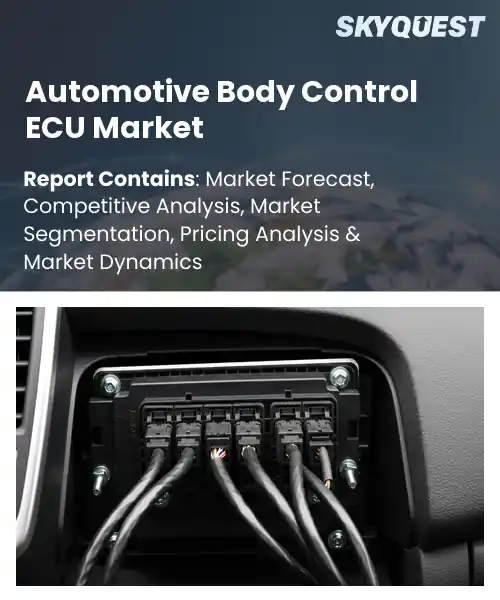
The automotive body control ECU market consists of micro‑controller units that regulate lighting, windows, door locks, and interior climate in vehicles. Its importance derives from rising demand for safety, comfort, and energy efficiency, as coordination replaces linkages. In the 1990s body functions were managed by simple relays; the transition to integrated ECUs began in the 2000s with the adoption of CAN‑bus, enabling a single module to process multiple signals. The spread of LEDs and smart glass further pushed suppliers to embed diagnostics and OTA‑update capability, expanding the market from niche OEM sourcing to a network of Tier‑1 and Tier‑2 vendors.
The rise of electric and hybrid vehicles drives the market because auxiliary functions draw from a battery, forcing manufacturers to embed power‑saving logic in the body control ECU. When the ECU can disable lights, seats, or climate modules during inactivity, vehicle range improves. Tesla’s OTA‑updated interior lighting and BYD’s door‑lock management illustrate how software control reduces idle drain. These examples push suppliers to create microcontrollers that support low‑power operation and firmware updates, opening a niche for firms with safety certification capabilities. As a result, OEMs prefer modular ECUs, creating revenue opportunities for Tier‑1 partners and fostering development within electrification ecosystem.
How are AI and IoT Automation Influencing The Automotive Body Control ECU Market?
AI and IoT automation are reshaping the automotive body control ECU market by embedding intelligent sensors and cloud‑linked analytics directly into vehicle networks. These ECUs now process real‑time data from doors, lights, and climate systems, enabling predictive maintenance and adaptive function tuning without driver intervention. The convergence of edge computing with AI models allows manufacturers to fine‑tune comfort and safety features on the fly, while IoT connectivity ensures seamless OTA updates and remote diagnostics. OEMs are partnering with semiconductor firms to embed low‑power AI cores, creating a feedback loop that continuously improves system performance. This shift is driving a more modular architecture, where body control units can be reprogrammed for new vehicle models, reducing hardware redundancy and accelerating development cycles.
In March 2024, Continental introduced an AI‑enabled body control ECU platform that leverages IoT telemetry to optimize lighting and door functions, illustrating how intelligent automation boosts efficiency and supports market growth.
Market snapshot - (2026-2033)
Global Market Size
USD 9.26 Billion
Largest Segment
Passenger Vehicles
Fastest Growth
Light Commercial Vehicles
Growth Rate
6.8% CAGR
To get more insights on this market click here to Request a Free Sample Report
Global automotive body control ecu market is segmented by vehicle type, function, propulsion type, sales channel, vehicle class and region. Based on vehicle type, the market is segmented into Passenger Vehicles, Light Commercial Vehicles and Heavy Commercial Vehicles. Based on function, the market is segmented into Lighting Control, Door & Window Control, Wiper & Washer Control, Seat & Mirror Control and Security & Access Control. Based on propulsion type, the market is segmented into Internal Combustion Engine Vehicles, Hybrid Electric Vehicles and Battery Electric Vehicles. Based on sales channel, the market is segmented into OEM and Aftermarket. Based on vehicle class, the market is segmented into Economy, Mid-Range and Luxury. Based on region, the market is segmented into North America, Europe, Asia Pacific, Latin America and Middle East & Africa.
Lighting control segment dominates because vehicle manufacturers prioritize advanced illumination systems to meet safety standards and consumer expectations for adaptive lighting. Integrating headlamp leveling, LED matrix, and dynamic turn signals into the body control architecture drives demand for dedicated ECUs that can manage complex algorithms and communication protocols. This focus fuels higher component integration, prompting OEMs to select robust lighting control solutions as core building blocks for modern vehicle electronics.
Meanwhile, door & window control emerges as the fastest growing area because cabin automation and user experience features are expanding rapidly. Smart glass, power lift doors, and integrated gesture controls require increasingly sophisticated ECUs, attracting investment and new entrants. This momentum is set to broaden the overall market scope and stimulate further innovation.
Heavy commercial vehicles segment leads because fleet operators demand robust and reliable body control solutions to withstand harsh operating conditions. The need for durable lighting, auxiliary power management, and advanced driver assistance integration pushes manufacturers to embed high grade ECUs capable of handling higher voltage loads and extensive wiring architectures. This requirement elevates the importance of heavy duty ECUs, making them central to vehicle platform engineering and supply chain prioritization.
Conversely, passenger vehicles emerge as the fastest growing area because electrification and connectivity trends are accelerating demand for smarter body control functions. Integrated ambient lighting, automated door systems, and seamless OTA updates drive integration of versatile ECUs, inviting fresh technology partnerships. This surge expands the market footprint and fuels new growth opportunities.
To get detailed segments analysis, Request a Free Sample Report
Asia Pacific leads the global automotive body control ECU market through a combination of deep engineering expertise, extensive supplier networks, and rapid adoption of advanced vehicle technologies. The region hosts several original equipment manufacturers that prioritize integration of sophisticated electronic control units to enhance safety, comfort, and connectivity. Robust research and development ecosystems in Japan and South Korea generate continuous innovation, while a highly skilled workforce supports efficient production scaling. Government initiatives encouraging electrification and smart mobility further stimulate demand for intelligent body control solutions. The collaborative culture among tier‑one and tier‑two suppliers also accelerates technology transfer, enabling rapid rollout of next‑generation features across a broad vehicle portfolio. (subheading)
Automotive Body Control ECU Market in Japan benefits from a reputation for precision engineering and a dense ecosystem of component suppliers. Leading automotive manufacturers drive stringent quality standards, prompting continuous refinement of control algorithms and integration techniques. Close collaboration between OEMs and semiconductor firms accelerates the adoption of high‑performance microcontrollers, while government support for connected vehicle initiatives fuels demand for advanced body control functionalities. This synergy sustains Japan’s leadership in innovative ECU solutions.
Automotive Body Control ECU Market in South Korea is propelled by an electronics manufacturing base and investment in software development. Carmakers collaborate closely with semiconductor leaders to embed sophisticated control units that enhance vehicle safety and user experience. The nation’s focus on 5G connectivity and autonomous driving research creates a fertile environment for integrating advanced body control features. This blend of hardware expertise and software innovation positions South Korea as a driver of market growth.
Europe’s automotive body control ECU market expands rapidly due to a confluence of rigorous safety standards, strong demand for premium vehicle experiences, and a deep engineering heritage. Manufacturers across the region prioritize advanced body control functions to meet stringent emissions and crash‑worthiness regulations, driving continuous refinement of electronic architectures. The presence of world‑class component suppliers and a collaborative ecosystem between OEMs and technology firms accelerates innovation in connectivity, over‑the‑air updates, and driver‑assist integration. Additionally, Europe’s commitment to sustainable mobility encourages the adoption of lightweight, energy‑efficient control solutions. The region’s strong emphasis on standardization and cross‑border collaboration further streamlines development cycles, enabling manufacturers to deploy new functionalities across multiple markets efficiently. Moreover, the growing consumer expectation for seamless infotainment and safety integration drives continuous investment in next‑generation ECUs. (subheading)
Automotive Body Control ECU Market in Germany is anchored by a legacy of precision engineering and a network of Tier‑one suppliers. German automakers emphasize safety systems, prompting intensive development of sophisticated control units that integrate seamlessly with chassis and infotainment architectures. Close collaboration with local semiconductor firms accelerates adoption of advanced microelectronics, while stringent domestic regulations ensure continuous refinement of ECU functionalities. This ecosystem sustains Germany’s leadership in delivering premium body control solutions.
Automotive Body Control ECU Market in the United Kingdom is experiencing rapid growth driven by focus on connectivity and electric vehicle adoption. British manufacturers and suppliers prioritize integration of update capabilities and advanced driver‑assist features within body control units. Research initiatives between automotive firms and universities foster innovative ECU architectures that support lightweight and energy‑efficient designs. Government incentives for low‑emission vehicles accelerate demand, positioning the United Kingdom as a fast‑moving hub for next‑generation body control solutions.
Automotive Body Control ECU Market in France is emerging as manufacturers adopt sophisticated electronic solutions to meet evolving safety and comfort expectations. French automakers collaborate with a network of specialized suppliers to develop modular ECU platforms that enable feature updates and integration with driver‑assist systems. Emphasis on sustainable vehicle design encourages lightweight control units that improve energy efficiency. This progressive approach, combined with supportive regulatory frameworks, positions France as an up‑and‑coming player in the body control ECU landscape.
North America strengthens its position in the automotive body control ECU market through a blend of advanced technology adoption, robust supply chain capabilities, and a consumer base that values safety and connectivity. Leading manufacturers in the United States and Canada invest heavily in research partnerships with semiconductor and software firms, fostering the development of high‑performance ECUs that support autonomous driving features and over‑the‑air updates. The region’s extensive testing infrastructure and regulatory environment encourage rapid validation of new control strategies. Additionally, the growing prevalence of electric and hybrid vehicles drives demand for lightweight, energy‑efficient body control solutions. The presence of major Tier‑one suppliers with expertise in power electronics further reinforces the ability to deliver integrated control modules that meet stringent performance criteria. Moreover, consumer demand for infotainment integration and vehicle experiences drives continuous innovation in body control ECU software architectures. (subheading)
Automotive Body Control ECU Market in the United States is characterized by innovation ecosystems and collaboration between automakers, technology firms, and research institutions. U.S. manufacturers prioritize ECUs that enable advanced driver‑assist systems, over‑the‑air updates, and seamless integration with connected services. A mature regulatory framework supports rigorous safety testing, while a large consumer market drives demand for feature‑rich, reliable body control solutions. This environment sustains the United States’ leadership in shaping next‑generation ECU technologies.
Automotive Body Control ECU Market in Canada benefits from a focus on safety standards and a collaborative approach between domestic automakers and electronics suppliers. Canadian manufacturers emphasize ECU designs that support advanced driver‑assist features and reliable over‑the‑air functionality, aligning with regulatory expectations. Government programs encouraging electric vehicle adoption further stimulate demand for lightweight, energy‑efficient body control solutions. This combination of safety‑centric engineering and sustainability initiatives positions Canada as a notable contributor to the regional ECU landscape.
To know more about the market opportunities by region and country, click here to
Buy The Complete Report
Electrification Driving Body Control Demand
Advanced Safety Features Boost ECU Adoption
High Development Costs Limit Adoption
Regulatory Fragmentation Hinders Standardization
Request Free Customization of this report to help us to meet your business objectives.
The competitive landscape of the global automotive body‑control ECU market is shaped by aggressive M&A, strategic alliances and rapid tech innovation; Bosch’s acquisition of a 5G automotive‑chip firm, Continental’s joint venture with Samsung to co‑develop next‑generation body‑control platforms, and Valeo’s partnership with Nvidia to embed AI‑driven diagnostics illustrate how incumbents are consolidating capabilities and accelerating product cycles to outpace emerging rivals.
SkyQuest’s ABIRAW (Advanced Business Intelligence, Research & Analysis Wing) is our Business Information Services team that Collects, Collates, Correlates, and Analyses the Data collected by means of Primary Exploratory Research backed by robust Secondary Desk research.
As per SkyQuest analysis, the global automotive body control ECU market is being propelled primarily by electrification, which forces manufacturers to embed power‑saving logic and OTA‑update capability into ECUs, while advanced safety features such as adaptive lighting and automated door locking act as a second driver accelerating adoption. High development costs present the main restraint, limiting how quickly new functions can be introduced. Asia Pacific dominates the market due to its dense supplier network, strong R&D base and rapid EV rollout, and within the product mix the lighting‑control segment holds the largest share as automakers prioritize sophisticated illumination systems.
| Report Metric | Details |
|---|---|
| Market size value in 2024 | USD 9.26 Billion |
| Market size value in 2033 | USD 16.74 Billion |
| Growth Rate | 6.8% |
| Base year | 2024 |
| Forecast period | (2026-2033) |
| Forecast Unit (Value) | USD Billion |
| Segments covered |
|
| Regions covered | North America (US, Canada), Europe (Germany, France, United Kingdom, Italy, Spain, Rest of Europe), Asia Pacific (China, India, Japan, Rest of Asia-Pacific), Latin America (Brazil, Rest of Latin America), Middle East & Africa (South Africa, GCC Countries, Rest of MEA) |
| Companies covered |
|
| Customization scope | Free report customization with purchase. Customization includes:-
|
To get a free trial access to our platform which is a one stop solution for all your data requirements for quicker decision making. This platform allows you to compare markets, competitors who are prominent in the market, and mega trends that are influencing the dynamics in the market. Also, get access to detailed SkyQuest exclusive matrix.
Table Of Content
Executive Summary
Market overview
Parent Market Analysis
Market overview
Market size
KEY MARKET INSIGHTS
COVID IMPACT
MARKET DYNAMICS & OUTLOOK
Market Size by Region
KEY COMPANY PROFILES
Methodology
For the Automotive Body Control ECU Market, our research methodology involved a mixture of primary and secondary data sources. Key steps involved in the research process are listed below:
1. Information Procurement: This stage involved the procurement of Market data or related information via primary and secondary sources. The various secondary sources used included various company websites, annual reports, trade databases, and paid databases such as Hoover's, Bloomberg Business, Factiva, and Avention. Our team did 45 primary interactions Globally which included several stakeholders such as manufacturers, customers, key opinion leaders, etc. Overall, information procurement was one of the most extensive stages in our research process.
2. Information Analysis: This step involved triangulation of data through bottom-up and top-down approaches to estimate and validate the total size and future estimate of the Automotive Body Control ECU Market.
3. Report Formulation: The final step entailed the placement of data points in appropriate Market spaces in an attempt to deduce viable conclusions.
4. Validation & Publishing: Validation is the most important step in the process. Validation & re-validation via an intricately designed process helped us finalize data points to be used for final calculations. The final Market estimates and forecasts were then aligned and sent to our panel of industry experts for validation of data. Once the validation was done the report was sent to our Quality Assurance team to ensure adherence to style guides, consistency & design.
Analyst Support
Customization Options
With the given market data, our dedicated team of analysts can offer you the following customization options are available for the Automotive Body Control ECU Market:
Product Analysis: Product matrix, which offers a detailed comparison of the product portfolio of companies.
Regional Analysis: Further analysis of the Automotive Body Control ECU Market for additional countries.
Competitive Analysis: Detailed analysis and profiling of additional Market players & comparative analysis of competitive products.
Go to Market Strategy: Find the high-growth channels to invest your marketing efforts and increase your customer base.
Innovation Mapping: Identify racial solutions and innovation, connected to deep ecosystems of innovators, start-ups, academics, and strategic partners.
Category Intelligence: Customized intelligence that is relevant to their supply Markets will enable them to make smarter sourcing decisions and improve their category management.
Public Company Transcript Analysis: To improve the investment performance by generating new alpha and making better-informed decisions.
Social Media Listening: To analyze the conversations and trends happening not just around your brand, but around your industry as a whole, and use those insights to make better Marketing decisions.
REQUEST FOR SAMPLE
 REQUEST FREE CUSTOMIZATION
Global Automotive Body Control Ecu Market size was valued at USD 9.26 Billion in 2024 and is poised to grow from USD 9.89 Billion in 2025 to USD 16.74 Billion by 2033, growing at a CAGR of 6.8% during the forecast period (2026-2033).
The competitive landscape of the global automotive body‑control ECU market is shaped by aggressive M&A, strategic alliances and rapid tech innovation; Bosch’s acquisition of a 5G automotive‑chip firm, Continental’s joint venture with Samsung to co‑develop next‑generation body‑control platforms, and Valeo’s partnership with Nvidia to embed AI‑driven diagnostics illustrate how incumbents are consolidating capabilities and accelerating product cycles to outpace emerging rivals. 'Robert Bosch GmbH', 'Continental AG', 'ZF Friedrichshafen AG', 'Aptiv PLC', 'Denso Corporation', 'Valeo SE', 'Marelli Holdings Co., Ltd.', 'Hitachi Astemo, Ltd.', 'Panasonic Automotive Systems Co., Ltd.', 'Hyundai Mobis Co., Ltd.', 'Lear Corporation', 'Forvia SE', 'Hella GmbH & Co. KGaA', 'Mitsubishi Electric Corporation', 'NXP Semiconductors N.V.', 'Renesas Electronics Corporation', 'Infineon Technologies AG', 'Texas Instruments Incorporated', 'Toshiba Electronic Devices & Storage Corporation', 'Microchip Technology Incorporated'
The shift toward electric vehicles requires sophisticated coordination of doors, windows, and lighting systems to meet safety standards and user expectations, prompting manufacturers to integrate advanced body control ECUs. These units enable seamless communication between high‑voltage components and traditional subsystems, improving reliability and reducing weight. As designers prioritize modular architectures, the demand for flexible, software‑centric control solutions rises, encouraging suppliers to develop next‑generation platforms that support rapid feature integration and over‑the‑air updates, thereby expanding market opportunities across global automotive supply chains.
Advanced Driver Assistance Integration: Manufacturers are embedding body control ECUs deeper into ADAS frameworks, enabling coordinated operation of lighting, HVAC, and safety systems. This synergy reduces latency, enhances user experience, and supports over‑the‑air updates that keep features current without hardware changes. As consumers demand seamless connectivity and predictive maintenance, suppliers are prioritizing software‑defined functionality, allowing a single ECU platform to manage multiple sensor inputs and actuation commands, thereby streamlining development cycles and improving vehicle reliability across diverse model lineups, markets worldwide, and future platforms.
Why does Asia Pacific Dominate the Global Automotive Body Control ECU Market? |@12


Want to customize this report? This report can be personalized according to your needs. Our analysts and industry experts will work directly with you to understand your requirements and provide you with customized data in a short amount of time. We offer $1000 worth of FREE customization at the time of purchase.
Feedback From Our Clients


 USA (+1) 351-333-4748

