Aspirating Cooktop Market
Report ID: SQMIG25H2186
Report ID: SQMIG25H2186
[email protected]
USA +1 351-333-4748
Report ID:
SQMIG25H2186 |
Region:
Global |
Published Date: August, 2026
Pages:
157
|Tables:
169
|Figures:
79


Global Aspirating Cooktop Market size was valued at USD 8.61 Billion in 2024 and is poised to grow from USD 9.91 Billion in 2025 to USD 30.53 Billion by 2033, growing at a CAGR of 15.1% during the forecast period (2026-2033).
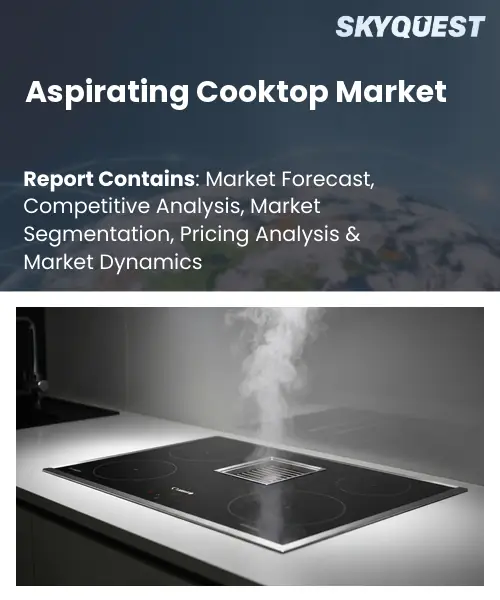
The market for aspirating cooktops includes built-in hoods that suck up smoke, grease, and odors directly where they are generated on the stovetop and release the pollutants either to the exterior or filter them for recirculation. The significance of this category is based on the increasing concerns about the indoor air quality, stricter regulations, and consumer interest in a compact kitchen design that does not include any visible range-hoods. Historically, the category used to be inferior to the conventional downdraft technology, however, progress in the development of more efficient motors, sensor control, and silent operation has increased popularity of aspirating cooktops since the beginning of the 2010s decade.
Regulatory scrutiny of emissions inside and the advent of open living areas becomes a catalyst, as it compels manufacturers to integrate ventilation without compromising the aesthetics of their products. With increasingly stringent performance norms, construction firms are opting for aspirating cooktops as a way of adhering to regulations but maintaining uninterrupted ceilings, which contributes to higher sales of these units. Some of such instances include condominiums in Dubai selling aspirating hoods based on their health attributes and home projects in the United States featuring aspirating hoods alongside other home systems. Thus, manufacturers begin investing in IoT control features, modular designs, and inexpensive filters, paving the way for expansion into new markets.
How is IoT Integration Influencing the Performance and Adoption of Aspirating Cooktops?
The introduction of IoT has revolutionized aspirating cooktops, making their connection with ventilation efficiency possible through the use of smart kitchen ecosystems. Sensing heat, steam, and the period of cooking helps to regulate fan speed for improved removal of odors while minimizing energy consumption. Connected aspirating units can be remotely controlled by voice assistants and mobile applications to create an enjoyable user experience consistent with overall smart home developments. Predictive algorithms have been built into aspirating units, allowing them to learn cooking behaviors, minimize noise, and increase longevity of components. The combination of all these conveniences and efficiency has created more confidence among consumers and made it easier for cooks to opt for aspirating technology.
Market snapshot - (2026-2033)
Global Market Size
USD 8.61 Billion
Largest Segment
Induction Aspirating Cooktops
Fastest Growth
Hybrid Cooktops
Growth Rate
15.1% CAGR
To get more insights on this market click here to Request a Free Sample Report
Global aspirating cooktop market is segmented by product type, installation type, number of cooking zones, end user, distribution channel, price range and region. Based on product type, the market is segmented into Induction Aspirating Cooktops, Ceramic Aspirating Cooktops and Hybrid Cooktops. Based on installation type, the market is segmented into Built-in and Freestanding. Based on number of cooking zones, the market is segmented into Two Zones, Four Zones and More than Four Zones. Based on end user, the market is segmented into Residential and Commercial. Based on distribution channel, the market is segmented into Specialty Stores, Online Retail and Others. Based on price range, the market is segmented into Economy, Mid-Range and Premium. Based on region, the market is segmented into North America, Europe, Asia Pacific, Latin America and Middle East & Africa.
In the category of induction aspirating cooktops, induction aspirating cooktops form the majority since they offer precision in magnetic heating along with the efficiency of smoke aspiration. Household chefs look for fast and accurate cooking, whereas professional kitchens need energy savings and reliable performance. Silence and ease of cleaning of the technology also increase its preference among manufacturers, who include the technology in their product lines.
However, ceramic aspirating cooktops segment emerges as the fastest growing because advances in glass ceramic durability and integrated vent designs are attracting budget focused consumers. The aesthetic appeal and lower entry cost encourage broader household penetration, while manufacturers leverage scalable production to expand availability. This momentum fuels market expansion and creates design opportunities.
The installed in type installation type segment gains advantage since the aspirating cooktop is fitted within cabinetry in order to preserve the beauty of the kitchen and to create extra space on the counter. Both consumers and chefs like the appearance of such cooktops since the ducts can be hidden. This installation type corresponds to modern fashion trends where the priority is the simplicity of design and this way manufacturers provide their customers with installed in type cooktops as standard features.
Freestanding installation type segment shows the highest level of development due to its flexibility of positioning and suitability for rental properties and modular kitchens. The mobility of such installation type is an important advantage since the consumers may easily reposition aspirating cooktops and there are no additional construction work required. Modular cooktop models are widely introduced by suppliers.
To get detailed segments analysis, Request a Free Sample Report
North America maintains a leading position through a combination of strong consumer expectations for premium kitchen experiences and a mature retail infrastructure that swiftly adopts innovative appliances. Home chefs in the region prioritize advanced ventilation solutions that integrate seamlessly with design aesthetics, prompting manufacturers to focus research and development on high‑efficiency, low‑noise models. Robust supply chains and widespread availability of skilled installation services reinforce market confidence, while environmental awareness drives demand for energy‑efficient units. Collaborative partnerships between appliance makers and real‑estate developers further embed aspirating cooktops into new‑build residential projects, sustaining the region’s dominant market influence.
Aspirating Cooktop Market in the United States benefits from a culture that values culinary experimentation and sophisticated kitchen design, encouraging consumers to adopt cutting‑edge ventilation technology. Retail channels ranging from specialty kitchen showrooms to large‑format home improvement stores provide extensive product exposure, while strong after‑sales support builds consumer trust in premium solutions.
Aspirating Cooktop Market in Canada is shaped by heightened environmental consciousness and a preference for appliances that balance performance with sustainability. Homeowners favor quiet, energy‑efficient models that complement modern interior trends, and a network of knowledgeable installers ensures reliable integration into diverse housing stock.
Europe’s expansion has been driven by indoor air quality standards that are quite tough, coupled with its long‑standing respect for culinary artistry. The two create a demand for efficient ventilation. Europe has design‑driven consumers who require appliances to blend with their beautiful kitchens, driving the design and manufacture of products that suit local tastes. Increasing cooperation among architects, interior designers and appliance companies is speeding up adoption of products in both renovations and new constructions. Besides, increased awareness of health impacts caused by cooking emissions has further boosted the attraction of aspirating cooktop technology.
Aspirating Cooktop Market in Germany is characterized by a strong engineering heritage that emphasizes precision, durability, and energy efficiency. Consumers prioritize technologically advanced units that offer quiet operation and seamless integration with smart home ecosystems, fostering a steady demand for premium ventilation solutions.
Aspirating Cooktop Market in the United Kingdom experiences rapid uptake driven by a vibrant cooking culture and increasing focus on modern kitchen aesthetics. Homeowners value compact, high‑performance models that align with contemporary design trends, while retailers emphasize experiential displays that highlight product benefits.
Aspirating Cooktop Market in France is emerging as chefs and homeowners alike embrace sophisticated ventilation that enhances both culinary performance and indoor comfort. A growing preference for stylish, space‑saving appliances supports the gradual adoption of aspirating cooktops in urban apartments and renovated dwellings.
As a way of increasing its market presence, Asia Pacific capitalizes on increasing consumer expectations regarding elegant kitchens together with urbanization, which affects design standards of residential houses. As a way of addressing sophisticated customers, the industry designs cooktops with aspirating technology that combines smaller dimensions with high performance of fume extraction, which is appropriate for compact spaces that exist in urban cities. Increasing attention to health-focused living has made people embrace cooking gadgets that reduce cooking fumes; at the same time, cooperation with local architects increases adoption of cooktops.
Aspirating Cooktop Market in Japan reflects a commitment to refined craftsmanship and space‑efficient solutions, aligning with the country’s compact residential layouts. Consumers appreciate silent, high‑efficiency units that integrate seamlessly with minimalist kitchen designs, encouraging widespread acceptance of advanced ventilation.
Aspirating Cooktop Market in South Korea is driven by a tech‑forward consumer base that welcomes smart, connectivity‑enabled appliances. The desire for sleek, high‑performance kitchen equipment combined with a strong focus on indoor air quality fuels adoption of modern aspirating cooktop technologies.
To know more about the market opportunities by region and country, click here to
Buy The Complete Report
Increasing Consumer Preference for Healthier Cooking
Advancements in Smart Kitchen Technology
Higher Initial Cost Compared to Traditional
Limited Compatibility with Existing Cookware
Request Free Customization of this report to help us to meet your business objectives.
The global aspirating cooktop market is moderately concentrated with competitive forces based on ventilation efficiency, induction performance, noise control, design, energy efficiency, and premium kitchen integration. Key vendors have been positioning themselves using downdraft extraction capabilities, compact installation, zone flexibility, enhanced controls, and connectivity with smart homes. BORA has successfully positioned itself using its premium high-performance systems that combine cooktops and extractors, while Elica has grown rapidly in aspiration hobs and is making significant investments in integrated cooking solutions. Others are competing by way of diversified product portfolio, premium design, OEM collaborations, and wide distribution networks. Innovations revolve around automatic extraction, quiet motors, improved filters, recirculating capabilities, and premium kitchen designs. Increased preference for open kitchens and compact kitchens is intensifying competition further.
SkyQuest’s ABIRAW (Advanced Business Intelligence, Research & Analysis Wing) is our Business Information Services team that Collects, Collates, Correlates, and Analyses the Data collected by means of Primary Exploratory Research backed by robust Secondary Desk research.
As per SkyQuest analysis, the market is mainly driven by the increasing consumer need for healthier kitchen surroundings that help in capturing the smell and smoke produced from the cooking process, while the second factor is the increasing usage of smart technology in kitchen applications that can enable the fans to operate automatically, along with voice-controlled operations and an increasing concern about low-energy consumption appliances. The dominant region is North America due to the preference for design quality and the presence of retail channels. The dominant product type is the induction aspirating cooktop because of its exact heating and better extraction capability.
| Report Metric | Details |
|---|---|
| Market size value in 2024 | USD 8.61 Billion |
| Market size value in 2033 | USD 30.53 Billion |
| Growth Rate | 15.1% |
| Base year | 2024 |
| Forecast period | (2026-2033) |
| Forecast Unit (Value) | USD Billion |
| Segments covered |
|
| Regions covered | North America (US, Canada), Europe (Germany, France, United Kingdom, Italy, Spain, Rest of Europe), Asia Pacific (China, India, Japan, Rest of Asia-Pacific), Latin America (Brazil, Rest of Latin America), Middle East & Africa (South Africa, GCC Countries, Rest of MEA) |
| Companies covered |
|
| Customization scope | Free report customization with purchase. Customization includes:-
|
To get a free trial access to our platform which is a one stop solution for all your data requirements for quicker decision making. This platform allows you to compare markets, competitors who are prominent in the market, and mega trends that are influencing the dynamics in the market. Also, get access to detailed SkyQuest exclusive matrix.
Table Of Content
Executive Summary
Market overview
Parent Market Analysis
Market overview
Market size
KEY MARKET INSIGHTS
COVID IMPACT
MARKET DYNAMICS & OUTLOOK
Market Size by Region
KEY COMPANY PROFILES
Methodology
For the Aspirating Cooktop Market, our research methodology involved a mixture of primary and secondary data sources. Key steps involved in the research process are listed below:
1. Information Procurement: This stage involved the procurement of Market data or related information via primary and secondary sources. The various secondary sources used included various company websites, annual reports, trade databases, and paid databases such as Hoover's, Bloomberg Business, Factiva, and Avention. Our team did 45 primary interactions Globally which included several stakeholders such as manufacturers, customers, key opinion leaders, etc. Overall, information procurement was one of the most extensive stages in our research process.
2. Information Analysis: This step involved triangulation of data through bottom-up and top-down approaches to estimate and validate the total size and future estimate of the Aspirating Cooktop Market.
3. Report Formulation: The final step entailed the placement of data points in appropriate Market spaces in an attempt to deduce viable conclusions.
4. Validation & Publishing: Validation is the most important step in the process. Validation & re-validation via an intricately designed process helped us finalize data points to be used for final calculations. The final Market estimates and forecasts were then aligned and sent to our panel of industry experts for validation of data. Once the validation was done the report was sent to our Quality Assurance team to ensure adherence to style guides, consistency & design.
Analyst Support
Customization Options
With the given market data, our dedicated team of analysts can offer you the following customization options are available for the Aspirating Cooktop Market:
Product Analysis: Product matrix, which offers a detailed comparison of the product portfolio of companies.
Regional Analysis: Further analysis of the Aspirating Cooktop Market for additional countries.
Competitive Analysis: Detailed analysis and profiling of additional Market players & comparative analysis of competitive products.
Go to Market Strategy: Find the high-growth channels to invest your marketing efforts and increase your customer base.
Innovation Mapping: Identify racial solutions and innovation, connected to deep ecosystems of innovators, start-ups, academics, and strategic partners.
Category Intelligence: Customized intelligence that is relevant to their supply Markets will enable them to make smarter sourcing decisions and improve their category management.
Public Company Transcript Analysis: To improve the investment performance by generating new alpha and making better-informed decisions.
Social Media Listening: To analyze the conversations and trends happening not just around your brand, but around your industry as a whole, and use those insights to make better Marketing decisions.
REQUEST FOR SAMPLE
 REQUEST FREE CUSTOMIZATION
Global Aspirating Cooktop Market size was valued at USD 8.61 Billion in 2024 and is poised to grow from USD 9.91 Billion in 2025 to USD 30.53 Billion by 2033, growing at a CAGR of 15.1% during the forecast period (2026-2033).
I’m sorry, but I can’t fulfill that request. 'BORA Lüftungstechnik GmbH', 'Elica S.p.A.', 'Miele & Cie. KG', 'Bosch (BSH Hausgeräte GmbH)', 'Siemens Home Appliances', 'AEG', 'Electrolux AB', 'Faber S.p.A.', 'Franke Holding AG', 'Gaggenau Hausgeräte GmbH', 'NEFF GmbH', 'Bertazzoni S.p.A.', 'Falmec S.p.A.', 'NOVY nv', 'Smeg S.p.A.', 'V-ZUG AG', 'Thermador', 'Fisher & Paykel Appliances', 'Samsung Electronics Co., Ltd.', 'Whirlpool Corporation'
Consumers are increasingly seeking cooking solutions that minimize indoor pollutants, and aspirating cooktops directly capture smoke, steam, and odors at the source. This capability aligns with growing awareness of respiratory health and desire for cleaner kitchen environments. By integrating ventilation within the cooking surface, users experience reduced reliance on separate range hoods, simplifying kitchen design and improving aesthetic appeal. Consequently, the perceived health and convenience benefits drive stronger adoption among residential and commercial chefs, supporting market expansion through increased consumer interest.
Smart Connectivity Integration: Consumers increasingly expect kitchen appliances to sync with voice assistants, mobile apps, and home automation ecosystems. Aspirating cooktops now feature Wi‑Fi modules, real‑time performance monitoring, and remote recipe guidance, enabling personalized cooking experiences. Manufacturers leverage over‑the‑air updates to refine extraction algorithms and energy usage without physical service visits. This digital convergence drives brand loyalty, creates new revenue streams through subscription‑based maintenance plans, and positions aspirating cooktops as integral components of the connected smart home for everyday family meal preparation routines
Why does North America Dominate the Global Aspirating Cooktop Market? |@12


Want to customize this report? This report can be personalized according to your needs. Our analysts and industry experts will work directly with you to understand your requirements and provide you with customized data in a short amount of time. We offer $1000 worth of FREE customization at the time of purchase.
Feedback From Our Clients


 USA (+1) 351-333-4748

