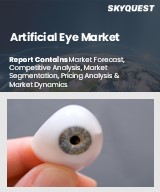
Artificial Eye Market
Report ID: SQMIG35A3146
Report ID: SQMIG35A3146
[email protected]
USA +1 351-333-4748
Report ID:
SQMIG35A3146 |
Region:
Global |
Published Date: January, 2026
Pages:
182
|Tables:
120
|Figures:
69


Global Artificial Eye Market size was valued at USD 2.23 Billion in 2024 and is poised to grow from USD 2.37 Billion in 2025 to USD 3.87 Billion by 2033, growing at a CAGR of 6.3% during the forecast period (2026–2033).
The artificial eye market is experiencing steady growth because of increasing incidence of ocular conditions, eye injuries due to trauma, and congenital eye conditions. There is a growing awareness of the cosmetic and functional rehabilitation potential for patients with ocular prostheses which drives demand for new ocular prosthetic solutions. The continued advancement in technology related to 3D printing, as well as the introduction of biocompatible materials, led to greater comfort, aesthetics, and patient satisfaction in custom-fit artificial eyes. In addition, the growing population of older adults, as well as the advancement in personal and medical care, has increased the number of individuals accessing ocular prosthetic solutions.
The market is further developed through new digital imaging and scanning techniques integrated into ocular prosthetics that allow for greater precision and customization of ocular prosthetics and models. Additionally, collaboration and scientific development between research institutes, healthcare providers, and ocular prosthetic manufacturers is further allowing for development of innovative ocular prosthetic solutions related to mobility and vision support, as well as enhancing quality of life for patients.
How is AI Improving Customization and Design of Prosthetic Eyes?
The artificial eye market is being transformed by Artificial Intelligence (AI), through the design, customization, and functioning of ocular prosthetics. By 2024, this shift to AI-driven digital processes allowed ocular prosthetics to be made personally with imaging data that is "molded" to fit and create the best comfort and most natural appearance. AI alongside bionic vision systems such as the Orion device could now add elements of AI with visual data captured from cameras that can interpret and be translated into signals that the brain can understand down through to offering functional vision restoration to those with severe visual impairments. Furthermore, AI alongside 3D print technology also allowed the production to be sped up significantly, allowing custom designed and printed prosthetics to be accomplished in a fraction of the time, but still providing the accuracy of traditional prosthetics. The conclusion of AI is only better outcomes for patients while lowering the costs and sooner turnaround, which leads to greater satisfaction during this process. With the continued evolution of AI technologies expect to not only continue to improve when it comes to real-time adaptation, sensory feedback, and making prosthetic solutions even more accessible in the next decade. These innovations will lead to the overall quality of life for those individuals who require artificial eyes will improve.
Market snapshot - 2026-2033
Global Market Size
USD 2.1 billion
Largest Segment
Custom-Made Prosthetic Eyes
Fastest Growth
Bionic Eyes
Growth Rate
6.3% CAGR
To get more insights on this market click here to Request a Free Sample Report
Global Artificial Eye Market is segmented by Product Type, Technology, End-User and region. Based on Product Type, the market is segmented into Ocular Prosthetic Shells / Moulded Prosthesis, Ocular Implants, Retinal / Bionic Eye Systems and Customised Cosmetic Anaplastic Eyes. Based on Technology, the market is segmented into Acrylic, Hydroxyapatite, Medpor®, Silicone & Others and Electronic / Sensor-embedded Systems. Based on End-User, the market is segmented into Hospitals & Ophthalmic Clinics, Ocular Prosthetic Labs & Specialists, Ambulatory Surgery Centres and Home-care / Remodelling Services. Based on region, the market is segmented into North America, Europe, Asia Pacific, Latin America and Middle East & Africa.
The custom-made prosthetic eyes segment continues to remain the largest segment of the market due to the number of patients seeking prosthetic eyes for aesthetic and functional rehabilitation. The prosthetic eye is custom-made to match the patient’s natural eye in dimensions and color, so it fits comfortably and looks realistic. Custom-made prosthetic eyes can be very appealing to hospitals, specialty locations, and/or ophthalmic clinics because they look better and improve patient confidence, hence why custom-made prosthetic eyes have the largest market share.
As per global artificial eye market analysis, bionic eyes represent the fastest growing segment of prosthetic eyes due to recent advancements in technology related to vision restoration. Bionic prosthetic eyes contain sensors, AI, and retinal implants to help restore forwarding vision in those with severe visual impairment. The rapid growth in this market segment is primarily attributable to ongoing focus on research and development, partnerships between tech and healthcare to improve functional rehabilitation, and that many of these bionic eye solutions are more expensive than a traditional prosthetic eye.
As per global artificial eye market forecast, cosmetic rehabilitation represents the largest application segment, as most artificial eye patients pursue cosmetic solutions to restore visual appearance after eye loss. There is also a high demand from adults and children requiring lifelike prosthetics for cosmetic improvements to their appearance, personal confidence, and social acceptability. The strong healthcare infrastructure in developed regions further contributes to the dominance of this segment.
As per global artificial eye market outlook, functional vision restoration is the fastest-growing, driven by advances in bionic eye intervention and AI-assisted prosthetic systems. These solutions are not only cosmetic restoration but also provide patients with retinal degeneration and severe visual impairment, with partial vision capabilities. The growing growth of this segment is fueled by the increasing prevalence of ocular diseases, growing investment in advanced technologies in health care systems, and growing awareness among patients.
To get detailed segments analysis, Request a Free Sample Report
North America is one of the largest artificial eye markets, owing to its superior healthcare infrastructure, high awareness of ocular prosthetics, and significant R&D spend in the area. The region also has access to well-established hospitals, prosthetics, and specialized centers providing advanced ocular rehabilitation. The rising incidence of ocular trauma and ocular diseases, in addition to the adoption of technology, such as AI-assisted customization and 3D printing for ocular prosthetics, is driving even further market growth.
The U.S. is a major contributor to the North America artificial eye market, propelled by its strong healthcare system, high disposable income, and a rich ecosystem for medical advancements and innovations. The general uptake of advanced prosthetic solutions, together with the presence of key players in the market, has contributed to the high penetration of artificial eyes across community hospitals and clinics.
Canada has seen steady growth, spurred by increased awareness of cosmetic and functional rehabilitation and the government supporting ocular health program initiatives. Investments in and spending on prosthetic technologies by hospitals and the research environment is resulting in a greater availability of prosthetics and solutions that are customized.
With rising levels of disposable income, and ongoing improvement in the infrastructure around healthcare, the Asia-Pacific region is emerging as a high-growth market. Increased awareness of more innovative prosthetic solutions and governmental initiatives around eye care are assisting the expansion of this market.
As per industry analysis, Japan is a top-tier market in the region due to its fast-moving, technology-driven sector, along with the adoption of innovative prosthetic solutions. Stakeholders are incentivized to further invest in a variety of prosthetic eye research, further aided by innovations of digital imaging and AI-assisted ocular prosthetics.
The artificial eye market is growing in South Korea alongside increases in eye injury and other diseases and due to a government focus on investigation around medical innovation. Also, some government-sponsored healthcare programs are expanding the prevalence of artificial eye use related to ocular disorders, while specialty prosthetic eye centers have emerged throughout South Korea.
As per our regional forecast, Europe has a sizeable percentage of the global artificial eye market to current advances in healthcare, a strong awareness regarding ocular prosthetics, and regulatory approvals surrounding medical devices. Newer technologies, especially with regards to 3D printing, AI customization, and bionic vision, are common in key countries.
As per regional outlook, Germany represents a cornerstone of the European market with an extensive stock of hospitals, prosthetic facilities, and research institutions. Germany’s focus on technology and patient-friendly solutions is prompting demand for high-tech artificial eyes.
Government support for health care innovations, a high standard of medical care throughout the healthcare system and growing awareness among patients and clinicians are benefits for the market in the UK; with slow but expanding specialized ocular prosthetic services.
Italy is likely to see steady growth, with a more general investment in health care infrastructure and demand for cosmetic and functional ocular rehabilitation rising. Ongoing collaborative efforts between their hospitals and prosthetic manufacturers are increasing awareness and penetration in the market.
To know more about the market opportunities by region and country, click here to
Buy The Complete Report
Increasing Incidence of Eye Diseases and Injury
Technological Advances Associated with Prosthetics
High Price of Advanced Prosthetic Options
Limited Awareness of Ocular Prosthetics in Emerging Markets
Request Free Customization of this report to help us to meet your business objectives.
The artificial eye industry is fiercely competitive and is inhabited by key players that focus on innovation, patient-centered solutions, and advancements in technology. These companies include The National Artificial Eye Service (NAES), Marie Allen Ocularist Ltd, International Prosthetic Eye Centre, Advanced Artificial Eyes, Second Sight Inc, and Bionic Vision Technologies. These competitors leverage AI, 3D printing, and biocompatible materials to offer highly customized, lifelike, and ultimately functional ocular prosthetics. Innovations such as digital imaging, automated design processes, and integrations with bionic vision are improving patients' comfort, aesthetics, and, in some cases, partial restoration of vision.
Startups focused on artificial eyes are offering innovative technology-driven approaches to ocular prosthetic development. These organizations are developing AI-driven designs, 3D printed customized prosthetic eyes, and bionic vision systems for effective precision, comfort, and functionality for patients. Startups are using digital imaging, automated modeling, and new materials to develop lifelike prosthetic eyes that improve aesthetics and patient confidence. Faster turnaround times, cost-effective solutions, and personalized services have begun to challenge traditional providers while fostering overall innovation in the artificial eye market. There is also a market trend towards collaboration with hospitals, research institutions and technology companies to tap into engineering expertise and fast-track innovation and accessibility for both developed and emerging markets contributing to future growth of the artificial eye market.
SkyQuest’s ABIRAW (Advanced Business Intelligence, Research & Analysis Wing) is our Business Information Services team that Collects, Collates, Correlates, and Analyses the Data collected by means of Primary Exploratory Research backed by robust Secondary Desk research.
As per SkyQuest analysis, growth in the artificial eye market continues to occur due to the prevalence of ocular diseases, eye injuries from trauma, and congenital eye disease. Increasing awareness of the feasibility of cosmetic and functional rehabilitation has resulted in the demand for ocular prosthetics. Transformative improvements with artificial intelligence-based customization, 3D printing, and bionic vision systems improve fit, function, aesthetics, and outcomes for patients with ocular prosthetics. The solution has easily been incorporated into hospitals, clinics, and specialized research institutes, because it enhances care and quality of life for patients. Development in the sector has received support from collaboration on research among manufacturers, health care professionals, and research institutes. Overall, the trends seen in reduction of time and cost of prosthetics, increased knowledge and expertise, and utilizing advanced technology in ocular rehabilitation, demonstrate a trend in consumer awareness and acceptance of quality, personalized, innovative, efficient and cost-effective ocular rehabilitation solutions.
| Report Metric | Details |
|---|---|
| Market size value in 2024 | USD 2.23 Billion |
| Market size value in 2033 | USD 3.87 Billion |
| Growth Rate | 6.3% |
| Base year | 2024 |
| Forecast period | 2026-2033 |
| Forecast Unit (Value) | USD Billion |
| Segments covered |
|
| Regions covered | North America (US, Canada), Europe (Germany, France, United Kingdom, Italy, Spain, Rest of Europe), Asia Pacific (China, India, Japan, Rest of Asia-Pacific), Latin America (Brazil, Rest of Latin America), Middle East & Africa (South Africa, GCC Countries, Rest of MEA) |
| Companies covered |
|
| Customization scope | Free report customization with purchase. Customization includes:-
|
To get a free trial access to our platform which is a one stop solution for all your data requirements for quicker decision making. This platform allows you to compare markets, competitors who are prominent in the market, and mega trends that are influencing the dynamics in the market. Also, get access to detailed SkyQuest exclusive matrix.
Table Of Content
Executive Summary
Market overview
Parent Market Analysis
Market overview
Market size
KEY MARKET INSIGHTS
COVID IMPACT
MARKET DYNAMICS & OUTLOOK
Market Size by Region
KEY COMPANY PROFILES
Methodology
For the Artificial Eye Market, our research methodology involved a mixture of primary and secondary data sources. Key steps involved in the research process are listed below:
1. Information Procurement: This stage involved the procurement of Market data or related information via primary and secondary sources. The various secondary sources used included various company websites, annual reports, trade databases, and paid databases such as Hoover's, Bloomberg Business, Factiva, and Avention. Our team did 45 primary interactions Globally which included several stakeholders such as manufacturers, customers, key opinion leaders, etc. Overall, information procurement was one of the most extensive stages in our research process.
2. Information Analysis: This step involved triangulation of data through bottom-up and top-down approaches to estimate and validate the total size and future estimate of the Artificial Eye Market.
3. Report Formulation: The final step entailed the placement of data points in appropriate Market spaces in an attempt to deduce viable conclusions.
4. Validation & Publishing: Validation is the most important step in the process. Validation & re-validation via an intricately designed process helped us finalize data points to be used for final calculations. The final Market estimates and forecasts were then aligned and sent to our panel of industry experts for validation of data. Once the validation was done the report was sent to our Quality Assurance team to ensure adherence to style guides, consistency & design.
Analyst Support
Customization Options
With the given market data, our dedicated team of analysts can offer you the following customization options are available for the Artificial Eye Market:
Product Analysis: Product matrix, which offers a detailed comparison of the product portfolio of companies.
Regional Analysis: Further analysis of the Artificial Eye Market for additional countries.
Competitive Analysis: Detailed analysis and profiling of additional Market players & comparative analysis of competitive products.
Go to Market Strategy: Find the high-growth channels to invest your marketing efforts and increase your customer base.
Innovation Mapping: Identify racial solutions and innovation, connected to deep ecosystems of innovators, start-ups, academics, and strategic partners.
Category Intelligence: Customized intelligence that is relevant to their supply Markets will enable them to make smarter sourcing decisions and improve their category management.
Public Company Transcript Analysis: To improve the investment performance by generating new alpha and making better-informed decisions.
Social Media Listening: To analyze the conversations and trends happening not just around your brand, but around your industry as a whole, and use those insights to make better Marketing decisions.
REQUEST FOR SAMPLE
 REQUEST FREE CUSTOMIZATION


Want to customize this report? This report can be personalized according to your needs. Our analysts and industry experts will work directly with you to understand your requirements and provide you with customized data in a short amount of time. We offer $1000 worth of FREE customization at the time of purchase.
Feedback From Our Clients


 USA (+1) 351-333-4748

