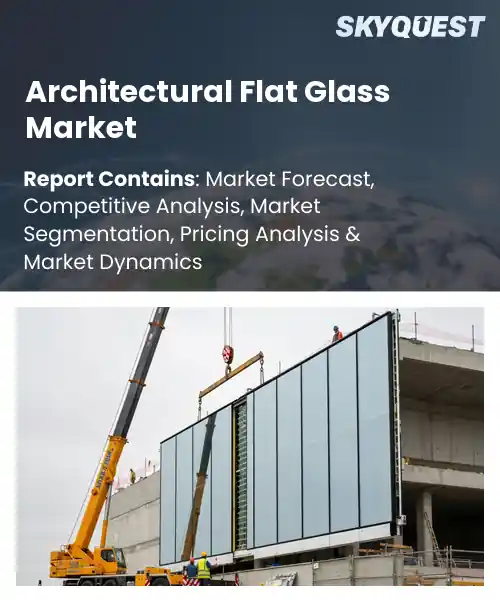
Architectural Flat Glass Market
Report ID: SQMIG20B2145
Report ID: SQMIG20B2145
[email protected]
USA +1 351-333-4748
Report ID:
SQMIG20B2145 |
Region:
Global |
Published Date: May, 2026
Pages:
157
|Tables:
128
|Figures:
77


Global Architectural Flat Glass Market size was valued at USD 167.9 Billion in 2024 and is poised to grow from USD 174.45 Billion in 2025 to USD 236.91 Billion by 2033, growing at a CAGR of 3.9% during the forecast period (2026-2033).
High demand for energy-efficient buildings, increasing urbanization and high-rise construction activities, rising adoption of green building standards, advancements in smart glazing technologies, and growing focus on occupant comfort and safety are driving demand for architectural flat glass products.
Rising investments in urban redevelopment projects, high-rise infrastructure, airport terminals, and smart commercial buildings drive steady architectural flat glass adoption. The growing usage of flat glass in applications such as facades, windows, curtain wall systems, skylights, and partition walls is aiding in driving the growth in this market. Stringent energy norms that have been established regarding buildings is likely to boost the usage of flat glass in constructions. The architects, along with other parties involved in construction projects, have started using advanced glazing, coated glazing, smart glasses, and double-glazing systems to conserve energy. Increasing emphasis on sustainable construction and increasing demand for aesthetically advanced and energy-efficient building materials around the world coupled with rising infrastructure and commercial construction activities are expected to primarily drive architectural flat glass market growth.
However, fluctuations in raw material and energy costs, high installation and replacement expenses, challenges associated with recycling and transportation, and economic slowdowns impacting construction activities are anticipated to slow down architectural flat glass market penetration in the long run.
How is IoT Enabling Smart Energy Management Through Architectural Flat Glass?
IoT technologies are revolutionizing architectural flat glass into not only building material but also an integral part of energy management systems. More often now, innovative glass solutions have been paired with cloud computing analytics along with intelligent edge controls, to maximize the use of natural lighting, minimize energy consumed by HVAC, and increase occupant comfort levels. Architects, developers, and glass manufacturers are favoring the implementation of smart insulated glass units to interact with HVAC systems and occupancy detection sensors, as well as weather forecast data. With the application of IoT technology, light and temperature can be monitored via sensor; electrochromic glass windows can be remotely controlled.
Market snapshot - (2026-2033)
Global Market Size
USD 167.9 Billion
Largest Segment
Insulated Glass
Fastest Growth
Low-E Glass
Growth Rate
3.9% CAGR
To get more insights on this market click here to Request a Free Sample Report
Global architectural flat glass market is segmented by product type, coating type, application, end use, and region. Based on product type, the market is segmented into annealed glass, tempered glass, laminated glass, insulated glass, coated glass, reflective glass, Low-E glass, and others. Based on coating type, the market is segmented into hard-coated glass and soft-coated glass. Based on application, the market is segmented into windows & facades, doors, curtain walls, interior partitions, skylights, railings & balustrades, mirrors, solar control & acoustic installations, and others. Based on end use, the market is segmented into residential buildings, commercial buildings, institutional buildings, and industrial buildings. Based on region, the market is segmented into North America, Europe, Asia Pacific, Latin America, and the Middle East & Africa.
The low-E glass segment is projected to lead the global architectural flat glass market revenue generation over the coming years. Its ability to manage the entry of heat from the sun and long wave thermal transfer helps in lowering building energy load, thus motivating architects and builders who require performance and operating cost savings to choose it. Efficiency standards related to buildings, the comfort requirements of the occupants, and the ease of application of the material insulated glass units make Low-E Glass an ideal choice.
However, insulated glass is emerging as the most rapidly expanding sub-segment due to rising demand for multi pane units offering enhanced thermal and acoustic performance, ready integration with coatings and gas fills, and strong uptake in renovation and new construction, thereby creating avenues for value added assembly and expanded glazing solutions.
The curtain walls segment is anticipated to account for the highest global architectural flat glass market share in the future. Its call for extensive use of undisturbed glass areas makes it necessary to specify the highest possible quality of architectural flat glasses meeting all structural and aesthetic needs. Curtain walls are preferred by architects when creating their iconic building fronts; this necessitates development of new coatings and better glass and insulating systems, thus raising the level of procurement.
However, windows & facades is emerging as the most rapidly expanding segment as per this architectural flat glass market forecast. A surge in retrofits, increase in energy efficient glazing demand, and rise in the use of prefabricated unitized systems due to rapid installation benefits. All these trends lead to increased acceptance of various forms of glazed units, which include coated and insulated glasses, among others.
To get detailed segments analysis, Request a Free Sample Report
Sustained construction activity, dense urbanization, and technology adoption that prioritizes energy efficiency and aesthetic glazing are helping this region maintain its dominance going forward. Strong manufacturing capacity and integrated supply chains enable regional producers to scale out varied glass products for commercial and residential projects. The shift in focus toward sustainable construction and retrofits will lead to the emergence of needs in regard to performance glass. The cooperation between material scientists, façade engineers, and large construction companies will facilitate the use of advanced coatings, laminates, and insulating panels. The export focus and closeness to emerging markets will add to the region’s strength. The presence of professional production capacity coupled with substantial investments in smart building materials is the key behind Asia Pacific’s supremacy in flat architectural glass.
Sophisticated glazing technologies, a strong focus on seismic resilience, and integration of advanced coatings with compact urban design helps shape architectural flat glass demand in Japan. The joint efforts of the glass producers and façade engineering companies have resulted in improved safety laminated systems and multi-functional glazing systems. Domestic producers focus on quality control, precise tempering, and insulation designed to meet the needs of highly dense structures as well as more elaborate facades.
Architectural flat glass sales in South Korea are backed by advanced manufacturing techniques, strong integration between electronics and material science, and a focus on smart façade solutions. Local producers concentrate on high-quality coatings, dynamic glazing and laminated safety systems suited to corporate campuses and mixed-use complexes. Close collaboration among glass fabricators, façade consultants and construction groups fosters specification of innovative insulating units and bespoke glazing options for urban projects nationwide.
An interplay between regulatory emphasis on building energy performance, a strong refurbishment market, and a design culture that values advanced glazing shapes architectural flat glass demand in the region. Manufacturers and specialty contractors have invested in manufacturing and design development to fulfil the high-performance specifications required to meet the demands for retrofitting existing buildings and providing performance demands for newly built buildings requiring dual-pane insulated low-emissivity laminated glazing systems. Investment in facade engineering and the mature construction services sector has created a high demand for high performance glazing systems in residential and commercial segments. The establishment of collaborative international relationships between glass manufacturers, architects and conservation professionals has resulted in the development of innovative solutions that simultaneously upgrade thermal performance while maintaining the integrity of the historic building. All this activity supports continued growth through the establishment of innovation centers for developing new products/services, and increased demand for superior quality façade products in metropolitan regions. Fabricators that specialize in specific design requirements are supporting most aspects of the development of façades with custom designed glazing systems and custom designed façades with complex glazing.
Mature manufacturing base and deep façade engineering expertise focused on durable, high-performance glazing shapes architectural flat glass innovation in Germany. Cooperation between scientific institutes of materials and manufacturers stimulates development of innovative laminated safety technologies as well as facade solutions specifically designed for demanding architectural projects. architectural flat glass producers value accuracy, unique coating materials and custom insulation units that correspond to the high energy and safety standards.
Architectural flat glass adoption in the United Kingdom is marked by retrofit activity, high demand for premium façade renovations and a receptive architectural community that favor innovative glazing systems. Fabricators and façade engineers respond with adaptable insulating units, performance coatings, and bespoke laminated assemblies for complex urban projects. The investments by the developers for mixed use projects motivate the development of high-performance glazed systems.
A design-driven approach that blends historic conservation with contemporary glazing expressions shapes architectural flat glass procurement in France. Architects work together with the glass manufacturers to ensure that the desired visual qualities as well as the thermal and acoustic requirements are satisfied. Fabrication companies and art studios focus on bespoke laminated panels, coating and insulating glass for sensitive refurbishment projects and new constructions.
Manufacturing modernization, emphasis on energy efficient building envelopes, and close alignment between glass suppliers and large-scale construction firms creates new business scope in the region. Specification of high-performance insulating systems, acoustic properties and safety-glazing systems is driving increased use of advanced laminated and coated products in commercial and institutional applications. Increased investment in fabrication technologies and automated production processes allows for more complex, larger-size glazed products and provides opportunities to customize products to suit customer needs. Increased cooperation with façade consultants, sustainability consultants and system integrators will help expedite the use of smart-glazing products and the assembly of integrated façades. An established distribution network, combined with a focus on retrofitting existing building stock, helps to further strengthen the position of North America as a provider of technically advanced glazing products. Partnerships with academic research organizations and the active participation of North America in the development of building codes supports the continued advancement of products in a manner consistent with each region's sustainability and safety goals.
Demand from corporate and institutional projects prioritizing performance glazing and visual impact shapes architectural flat glass sales in the United States. Advanced supply chain competencies guarantee that such projects are efficiently specified and delivered. Collaborations between the façade engineers and owners of buildings result in the use of smart glass solutions and retrofitting options with better energy efficiency and comfort. Domestic suppliers provide both volume production with customization, making use of large format insulation panels and modern coating techniques.
The architectural flat glass industry in Canada prioritizes thermal properties, longevity, and acoustics due to the demands of the climate. Manufacturers concentrate on producing high-performance insulated glazing, durable sealants, and laminated glass for urban and rural locations. Collaboration between manufacturers, façade specialists and regulatory bodies enables adaptation of advanced glazing solutions for renovation and new build projects. A focus on resilience and sustainable materials shapes specification choices across public developments.
To know more about the market opportunities by region and country, click here to
Buy The Complete Report
Rising Urbanization and Construction
Focus on Energy Efficiency
High Production and Energy Costs
Stringent Safety and Regulatory Compliance
Request Free Customization of this report to help us to meet your business objectives.
Competition in the global architectural flat glass market is intensifying as incumbents and tech entrants compete on facade integration and energy performance. Examples of consolidation include mergers & acquisitions, for instance Saint Gobain acquiring GCP Applied Technologies, and strategic equity partnerships like AGC with smart coatings companies. Innovation is driven by start-ups that introduce products through building integrated photovoltaics and AI window tinting technology.
SkyQuest’s ABIRAW (Advanced Business Intelligence, Research & Analysis Wing) is our Business Information Services team that Collects, Collates, Correlates, and Analyses the Data collected by means of Primary Exploratory Research backed by robust Secondary Desk research.
As per SkyQuest analysis, growing demand for energy-efficient buildings and increasing adoption of advanced glazing technologies are anticipated to drive the demand for architectural flat glass going forward. However, fluctuations in raw material and energy costs and high installation expenses are slated to slow down the adoption of architectural flat glass in the future. Asia Pacific is slated to spearhead the demand for architectural flat glass owing to rapid urbanization, large-scale infrastructure development, and increasing investments in commercial and residential construction projects. Development of smart electrochromic glazing systems and increasing integration of connected glass technologies with building automation systems are anticipated to be key trends driving the architectural flat glass market through 2033.
| Report Metric | Details |
|---|---|
| Market size value in 2024 | USD 167.9 Billion |
| Market size value in 2033 | USD 236.91 Billion |
| Growth Rate | 3.9% |
| Base year | 2024 |
| Forecast period | (2026-2033) |
| Forecast Unit (Value) | USD Billion |
| Segments covered |
|
| Regions covered | North America (US, Canada), Europe (Germany, France, United Kingdom, Italy, Spain, Rest of Europe), Asia Pacific (China, India, Japan, Rest of Asia-Pacific), Latin America (Brazil, Rest of Latin America), Middle East & Africa (South Africa, GCC Countries, Rest of MEA) |
| Companies covered |
|
| Customization scope | Free report customization with purchase. Customization includes:-
|
To get a free trial access to our platform which is a one stop solution for all your data requirements for quicker decision making. This platform allows you to compare markets, competitors who are prominent in the market, and mega trends that are influencing the dynamics in the market. Also, get access to detailed SkyQuest exclusive matrix.
Table Of Content
Executive Summary
Market overview
Parent Market Analysis
Market overview
Market size
KEY MARKET INSIGHTS
COVID IMPACT
MARKET DYNAMICS & OUTLOOK
Market Size by Region
KEY COMPANY PROFILES
Methodology
For the Architectural Flat Glass Market, our research methodology involved a mixture of primary and secondary data sources. Key steps involved in the research process are listed below:
1. Information Procurement: This stage involved the procurement of Market data or related information via primary and secondary sources. The various secondary sources used included various company websites, annual reports, trade databases, and paid databases such as Hoover's, Bloomberg Business, Factiva, and Avention. Our team did 45 primary interactions Globally which included several stakeholders such as manufacturers, customers, key opinion leaders, etc. Overall, information procurement was one of the most extensive stages in our research process.
2. Information Analysis: This step involved triangulation of data through bottom-up and top-down approaches to estimate and validate the total size and future estimate of the Architectural Flat Glass Market.
3. Report Formulation: The final step entailed the placement of data points in appropriate Market spaces in an attempt to deduce viable conclusions.
4. Validation & Publishing: Validation is the most important step in the process. Validation & re-validation via an intricately designed process helped us finalize data points to be used for final calculations. The final Market estimates and forecasts were then aligned and sent to our panel of industry experts for validation of data. Once the validation was done the report was sent to our Quality Assurance team to ensure adherence to style guides, consistency & design.
Analyst Support
Customization Options
With the given market data, our dedicated team of analysts can offer you the following customization options are available for the Architectural Flat Glass Market:
Product Analysis: Product matrix, which offers a detailed comparison of the product portfolio of companies.
Regional Analysis: Further analysis of the Architectural Flat Glass Market for additional countries.
Competitive Analysis: Detailed analysis and profiling of additional Market players & comparative analysis of competitive products.
Go to Market Strategy: Find the high-growth channels to invest your marketing efforts and increase your customer base.
Innovation Mapping: Identify racial solutions and innovation, connected to deep ecosystems of innovators, start-ups, academics, and strategic partners.
Category Intelligence: Customized intelligence that is relevant to their supply Markets will enable them to make smarter sourcing decisions and improve their category management.
Public Company Transcript Analysis: To improve the investment performance by generating new alpha and making better-informed decisions.
Social Media Listening: To analyze the conversations and trends happening not just around your brand, but around your industry as a whole, and use those insights to make better Marketing decisions.
REQUEST FOR SAMPLE
 REQUEST FREE CUSTOMIZATION
Global Architectural Flat Glass Market size was valued at USD 167.9 Billion in 2024 and is poised to grow from USD 174.45 Billion in 2025 to USD 236.91 Billion by 2033, growing at a CAGR of 3.9% during the forecast period (2026-2033).
Competition in the global architectural flat glass market is intensifying as incumbents and tech entrants compete on facade integration and energy performance. Mergers and acquisitions such as Saint Gobain acquiring GCP Applied Technologies and strategic equity partnerships by AGC with smart coatings firms illustrate consolidation. Startups commercializing building integrated photovoltaics and AI tinting accelerate product innovation and partnership focused market entry. 'Saint-Gobain Glass India', 'Asahi India Glass Limited', 'Guardian Glass', 'Nippon Sheet Glass Co., Ltd.', 'AGC Inc.', 'Şişecam', 'Vitro Architectural Glass', 'Pilkington Group Limited', 'Cardinal Glass Industries', 'Central Glass Co., Ltd.', 'Xinyi Glass Holdings Limited', 'Fuyao Glass Industry Group Co., Ltd.', 'Flat Glass Group Co., Ltd.', 'SCHOTT AG', 'Taiwan Glass Industry Corporation', 'Gujarat Guardian Limited', 'Gold Plus Glass Industry Limited', 'Oldcastle BuildingEnvelope', 'Viracon', 'PPG Industries, Inc.'
Rising urbanization and intensive construction activity increase the demand for architectural flat glass by expanding the need for glazed facades, curtain walls, windows, and interior partitions in a wide range of commercial and residential projects. Developers and architects favor glass for its ability to enhance natural light, improve thermal performance when combined with coatings or insulating assemblies, and deliver contemporary aesthetics. Growing emphasis on sustainable, energy efficient building designs further encourages adoption of advanced glazing solutions, prompting manufacturers to innovate product offerings to meet evolving architectural requirements.
Sustainable Material Adoption: Manufacturers and specifiers increasingly prioritize low carbon, recyclable and low emission glass products across commercial and residential projects. Demand is driven by client commitments to circularity, green building certifications and long term cost of ownership considerations. Suppliers focus on recycled cullet content, alternative materials and process innovations that reduce lifecycle environmental footprint while preserving optical and performance properties. This transition fosters collaboration across supply chains, expands eco labelled ranges and reshapes procurement criteria toward verified sustainability attributes, transparency and traceability.
Why does Asia Pacific Dominate the Global Architectural Flat Glass Market? |@12


Want to customize this report? This report can be personalized according to your needs. Our analysts and industry experts will work directly with you to understand your requirements and provide you with customized data in a short amount of time. We offer $1000 worth of FREE customization at the time of purchase.
Feedback From Our Clients


 USA (+1) 351-333-4748

