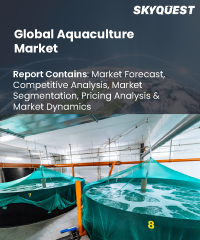
Aquaculture Market
Report ID: SQMIG30H2089
Report ID: SQMIG30H2089
[email protected]
USA +1 351-333-4748
Report ID:
SQMIG30H2089 |
Region:
Global |
Published Date: August, 2025
Pages:
189
|Tables:
68
|Figures:
70


Global Aquaculture Market size was valued at USD 309.88 Billion in 2024 poised to grow between USD 325.99 Billion in 2025 to USD 489.03 Billion by 2033, growing at a CAGR of 5.2% in the forecast period (2026–2033).
The global aquaculture market is primarily driven by the increasing demand for seafood, fuelled by population growth, rising incomes, and greater awareness of its nutritional benefits, such as being high in protein and omega-3 fatty acids. Overfishing and declining wild fish stocks have made traditional capture fisheries unsustainable, pushing the need for alternative sources. As a result, aquaculture offers a controlled and efficient way to meet the surging seafood demand without depleting marine ecosystems. Governments and organizations are also supporting fish farming through favourable policies and subsidies, further accelerating aquaculture’s role as a key solution to global food security.
Technological innovation plays a key trend driving the global aquaculture sector. Modern systems such as Recirculating Aquaculture Systems (RAS), smart sensors, automated feeding systems, and AI-driven water quality monitoring have revolutionized fish farming. These technologies improve productivity, reduce disease outbreaks, and ensure better environmental management by recycling water and minimizing waste. They also lower production costs and increase yield consistency, making aquaculture more profitable and scalable. As global demand rises, such advancements help farmers sustainably intensify production while maintaining fish health and environmental standards, making technology adoption a vital factor in the market’s continued expansion.
How does Early Disease Detection Through AI Impact Mortality Rates?
Artificial Intelligence is directly transforming aquaculture by optimizing feeding, health monitoring, and water quality management. Through machine learning and computer vision, AI systems analyze fish behavior, detect disease early, and automate feeding based on biomass needs. This leads to reduced feed waste, lower mortality, and higher yield efficiency. Indirectly, these improvements enhance farm profitability and sustainability, encouraging larger investments in aquaculture infrastructure. For example, in June 2024, Norway-based Aquaai deployed AI-powered robotic fish to monitor underwater conditions in real time, improving decision-making for fish farmers. As a result, AI is accelerating the shift toward data-driven, efficient, and scalable aquaculture operations.
In July 2025, Remora Robotics (Norway) secured £12 million to scale its AI-powered autonomous net-cleaning robots. These underwater robots use computer vision and machine learning to detect and clean biofouling on fish pens. This innovation improves fish health, reduces mortality, and enhances operational efficiency across large-scale aquaculture farms globally.
Market snapshot - 2026-2033
Global Market Size
USD 294.56 Billion
Largest Segment
Freshwater
Fastest Growth
Marine Water
Growth Rate
5.20% CAGR
To get more insights on this market click here to Request a Free Sample Report
The global aquaculture market is segmented based on environment, fish type, and region. In terms of environment, the market is trifurcated into marine water, freshwater, and brackish water. Based on fish type, the market is grouped into carps-barbels & other cyprinids, brown seaweeds, red seaweeds, marine shrimps & prawns, oysters, tilapias, catfishes, freshwater fishes and freshwater fishes. Based on region, the market is segmented into North America, Europe, Asia-Pacific, Central & South America and the Middle East & Africa.
What are the Cost Advantages of Freshwater Aquaculture Infrastructure?
Based on the global aquaculture market forecast, freshwater environments dominate the industry due to their accessibility, lower infrastructure costs, and suitability for a wide range of high-demand species like carp, tilapia, and catfish. Current innovations include integrated multi-trophic aquaculture (IMTA), biofloc technology, and AI-driven water quality monitoring, which enhance sustainability and yield. These advancements make freshwater farming more efficient and scalable, especially in developing regions where inland water resources support large-scale aquaculture expansion.
Marine water is projected to be the fastest-growing segment in the global aquaculture market due to rising demand for high-value species like salmon, tuna, and shrimp. Technological advances in offshore cages, disease control, and environmental monitoring enable sustainable open-sea farming. Expanding coastal operations and premium seafood consumption are further accelerating marine aquaculture’s global growth trajectory.
Why do Carps, Barbels, and Other Cyprinids Dominate Global Aquaculture Market?
Carps, barbels, and other cyprinids dominate the global aquaculture market due to their adaptability to various freshwater systems, low production costs, and high consumer demand, especially in Asia. Current innovations include genetic improvement for faster growth and disease resistance, alongside polyculture techniques that enhance yield efficiency. Their hardy nature, rapid reproduction, and suitability for low-input farming make them ideal for large-scale, sustainable aquaculture, especially in resource-constrained and rural farming environments.
Brown seaweed is poised to be the fastest‑growing the global aquaculture market due to its rich alginate content used in food, pharmaceuticals, and bioplastics. Its industrial versatility is driving demand, especially as alginate demand surges. Offshore farming techniques and low input requirements—no land, freshwater, or fertilizers—make cultivation scalable and sustainable, propelling brown seaweed’s rapid global expansion
To get detailed segments analysis, Request a Free Sample Report
How does Rising Seafood Demand Influence Aquaculture Growth in Asia-Pacific?
As per the global aquaculture industry analysis, Asia-Pacific leads the market, driven by abundant water resources, favorable climate, and strong government support. Countries like China, India, Indonesia, and Vietnam dominate production of finfish, crustaceans, and seaweed. Technological adoption in feed optimization, disease control, and sustainable farming practices is rising. Growing population, seafood demand, and export-oriented policies position the region as the world’s aquaculture powerhouse with continuous innovation and expansion across freshwater and marine environments.
Japan Aquaculture Market
Japan contributes significantly to the Asia Pacific aquaculture market through its focus on high-value marine species such as yellowtail, sea bream, and eel. The country emphasizes advanced aquaculture technologies, including selective breeding and land-based recirculating systems. Despite declining domestic production, Japan maintains high standards for quality and sustainability. With strong government support and research institutions, Japan is expanding innovation in closed containment and offshore farming to revitalize its aquaculture sector.
South Korea Aquaculture Market
South Korea plays a growing role in the Asia Pacific aquaculture market, primarily through large-scale seaweed production, which accounts for a major share of its output. The country also cultivates shellfish and finfish in coastal and inland systems. Government initiatives support sustainability, disease prevention, and technological innovation. With increasing exports and a focus on eco-friendly practices, South Korea continues to modernize its aquaculture industry and strengthen its position in the Asia-Pacific market.
How are Consumer Preferences Influencing Aquaculture Trends in North America?
North America’s aquaculture market is expanding steadily, driven by rising demand for sustainable seafood, technological innovation, and supportive government policies. The U.S. leads with advancements in recirculating aquaculture systems (RAS) and offshore fish farming, while Canada focuses on high-value species like salmon. Increasing consumer preference for locally sourced, eco-friendly seafood and investments in AI, automation, and disease management are strengthening the region’s position in the global aquaculture landscape.
US Aquaculture Market
The United States significantly contributes to North America’s aquaculture market through advanced technologies, policy support, and increasing seafood demand. The country emphasizes offshore marine aquaculture and recirculating aquaculture systems (RAS) to boost sustainable production. Federal initiatives like NOAA’s Aquaculture Opportunity Areas and USDA research funding support industry expansion. With strong consumer preference for domestic, eco-friendly seafood, the U.S. is steadily growing as a leader in high-value fish farming and innovation.
Canada Aquaculture Market
Canada plays a crucial role in North America’s aquaculture market, particularly through its robust salmon farming industry in British Columbia and Atlantic provinces. The government supports the sector with research grants and environmental regulations encouraging sustainable practices, including closed-containment systems. Canada’s focus on cold-water species, strict quality standards, and strong export networks, especially to the U.S. and Asia, strengthens its position as a reliable and environmentally conscious seafood producer.
In What Ways is Digital Monitoring Improving Aquaculture Efficiency in Europe?
Europe remains a key player in the global aquaculture market, driven by advanced farming practices, regulatory support, and strong consumer demand for sustainable seafood. Countries like Norway, Spain, and Greece lead in marine aquaculture, focusing on high-value species such as salmon, seabass, and mussels. Investments in digital monitoring, environmental protection, and closed-containment systems are enhancing efficiency, making Europe a hub for innovation and environmentally responsible aquaculture production.
France Aquaculture Market
France is a leading the Europe aquaculture market, particularly known for its strong shellfish sector, including oysters and mussels. With a long coastline and favorable marine conditions, France supports large-scale marine aquaculture alongside inland trout farming. Government support, sustainable practices, and technological adoption have strengthened its position in export markets. France's commitment to eco-labeling and marine biodiversity further enhances its role in the global aquaculture industry.
Germany Aquaculture Market
Germany contributes modestly to the Europe aquaculture market, focusing primarily on freshwater species like trout and carp. Its industry is characterized by small-scale, environmentally conscious farms with high standards for quality and sustainability. Innovation in recirculating aquaculture systems and integrated farming supports growth. Although limited by geographical constraints, Germany promotes sustainable aquaculture through research and policy, maintaining steady production and supporting the broader European market with high-quality, eco-certified products.
UK Aquaculture Market
The United Kingdom plays a significant role in the Asia Pacific aquaculture market, driven largely by Scotland’s dominant salmon farming industry. Atlantic salmon is the UK’s primary aquaculture product, contributing substantially to exports. The country invests in sustainable innovations such as land-based and offshore systems. Despite challenges like regulatory changes post-Brexit, the UK remains a high-value producer with a focus on quality, animal welfare, and environmentally responsible aquaculture practices.
To know more about the market opportunities by region and country, click here to
Buy The Complete Report
Aquaculture Market Drivers
Rising Global Seafood Demand
Technological Advancements in Farming Systems
Aquaculture Market Restraints
Environmental and Ecological Concerns
Disease Outbreaks and Biosecurity Risks
Request Free Customization of this report to help us to meet your business objectives.
The global aquaculture market outlook is highly competitive, with key players like Mowi ASA, Thai Union Group, Charoen Pokphand Foods, Nippon Suisan Kaisha, and Grieg Seafood leading the industry. Companies focus on strategies such as vertical integration, sustainable farming, and technological innovation. For instance, Mowi invests in land-based salmon farming, while Thai Union emphasizes eco-certification and supply chain transparency to strengthen global market presence and meet rising demand for responsible aquaculture practices.
As per the global aquaculture industry analysis, the startup landscape is rapidly evolving, with new ventures leveraging AI, IoT, biotechnology, and data analytics to address industry inefficiencies. Startups focus on sustainable feed, disease prediction, real-time monitoring, and digital farm management. Driven by environmental concerns and rising seafood demand, investors are increasingly supporting scalable innovations. These startups are not only improving farm productivity but also setting new standards for traceability, resource efficiency, and responsible aquaculture on a global scale.
Top Player’s Company Profiles
Recent Developments in Aquaculture Market
SkyQuest’s ABIRAW (Advanced Business Intelligence, Research & Analysis Wing) is our Business Information Services team that Collects, Collates, Correlates, and Analyses the Data collected by means of Primary Exploratory Research backed by robust Secondary Desk research.
As per SkyQuest analysis, the global aquaculture industry stands at the intersection of rising seafood demand, technological advancement, and environmental necessity. As traditional fisheries face sustainability challenges, aquaculture emerges as a reliable solution, backed by innovations like RAS, AI, and gene editing tools. Dominant segments such as freshwater farming and cyprinid species benefit from cost-efficiency and adaptability, while marine and seaweed cultivation are gaining momentum.
Government support, startup innovation, and international corporate strategies are fostering market expansion. Regional contributions—from Asia-Pacific’s production dominance to North America and Europe’s technological sophistication—underscore aquaculture’s global footprint. As consumer preferences shift toward traceable, eco-friendly seafood, aquaculture is evolving into a smarter, more sustainable industry that aligns with future food security and environmental goals.
| Report Metric | Details |
|---|---|
| Market size value in 2024 | USD 309.88 Billion |
| Market size value in 2033 | USD 489.03 Billion |
| Growth Rate | 5.2% |
| Base year | 2024 |
| Forecast period | 2026-2033 |
| Forecast Unit (Value) | USD Billion |
| Segments covered |
|
| Regions covered | North America (US, Canada), Europe (Germany, France, United Kingdom, Italy, Spain, Rest of Europe), Asia Pacific (China, India, Japan, Rest of Asia-Pacific), Latin America (Brazil, Rest of Latin America), Middle East & Africa (South Africa, GCC Countries, Rest of MEA) |
| Companies covered |
|
| Customization scope | Free report customization with purchase. Customization includes:-
|
To get a free trial access to our platform which is a one stop solution for all your data requirements for quicker decision making. This platform allows you to compare markets, competitors who are prominent in the market, and mega trends that are influencing the dynamics in the market. Also, get access to detailed SkyQuest exclusive matrix.
Table Of Content
Executive Summary
Market overview
Parent Market Analysis
Market overview
Market size
KEY MARKET INSIGHTS
COVID IMPACT
MARKET DYNAMICS & OUTLOOK
Market Size by Region
KEY COMPANY PROFILES
Methodology
For the Aquaculture Market, our research methodology involved a mixture of primary and secondary data sources. Key steps involved in the research process are listed below:
1. Information Procurement: This stage involved the procurement of Market data or related information via primary and secondary sources. The various secondary sources used included various company websites, annual reports, trade databases, and paid databases such as Hoover's, Bloomberg Business, Factiva, and Avention. Our team did 45 primary interactions Globally which included several stakeholders such as manufacturers, customers, key opinion leaders, etc. Overall, information procurement was one of the most extensive stages in our research process.
2. Information Analysis: This step involved triangulation of data through bottom-up and top-down approaches to estimate and validate the total size and future estimate of the Aquaculture Market.
3. Report Formulation: The final step entailed the placement of data points in appropriate Market spaces in an attempt to deduce viable conclusions.
4. Validation & Publishing: Validation is the most important step in the process. Validation & re-validation via an intricately designed process helped us finalize data points to be used for final calculations. The final Market estimates and forecasts were then aligned and sent to our panel of industry experts for validation of data. Once the validation was done the report was sent to our Quality Assurance team to ensure adherence to style guides, consistency & design.
Analyst Support
Customization Options
With the given market data, our dedicated team of analysts can offer you the following customization options are available for the Aquaculture Market:
Product Analysis: Product matrix, which offers a detailed comparison of the product portfolio of companies.
Regional Analysis: Further analysis of the Aquaculture Market for additional countries.
Competitive Analysis: Detailed analysis and profiling of additional Market players & comparative analysis of competitive products.
Go to Market Strategy: Find the high-growth channels to invest your marketing efforts and increase your customer base.
Innovation Mapping: Identify racial solutions and innovation, connected to deep ecosystems of innovators, start-ups, academics, and strategic partners.
Category Intelligence: Customized intelligence that is relevant to their supply Markets will enable them to make smarter sourcing decisions and improve their category management.
Public Company Transcript Analysis: To improve the investment performance by generating new alpha and making better-informed decisions.
Social Media Listening: To analyze the conversations and trends happening not just around your brand, but around your industry as a whole, and use those insights to make better Marketing decisions.
REQUEST FOR SAMPLE
 REQUEST FREE CUSTOMIZATION


Want to customize this report? This report can be personalized according to your needs. Our analysts and industry experts will work directly with you to understand your requirements and provide you with customized data in a short amount of time. We offer $1000 worth of FREE customization at the time of purchase.
Feedback From Our Clients


 USA (+1) 351-333-4748

