Aquaculture Feed Extrusion Market
Report ID: SQMIG20H2117
Report ID: SQMIG20H2117
[email protected]
USA +1 351-333-4748
Report ID:
SQMIG20H2117 |
Region:
Global |
Published Date: August, 2026
Pages:
157
|Tables:
116
|Figures:
77


Global Aquaculture Feed Extrusion Market size was valued at USD 1.86 Billion in 2024 and is poised to grow from USD 1.99 Billion in 2025 to USD 3.45 Billion by 2033, growing at a CAGR of 7.1% during the forecast period (2026-2033).
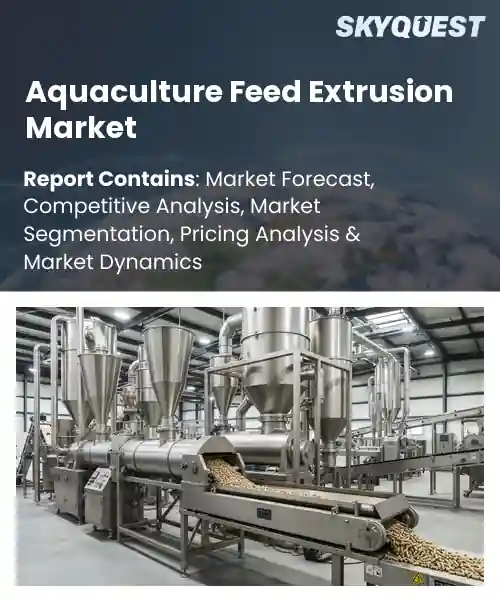
The global aquaculture feed extrusion market is the market for producers of processed, pelletized feeds that are extruded to improve digestibility and nutrient stability for farmed fish, crustaceans and mollusks. What this means is that the demand for seafood is increasing and the pressure on wild fisheries needs to be alleviated. The market arose in the late 1990s when advances in twin-screw technology allowed for accurate control of temperature and moisture, thus making soluble, floating pellets possible for species like salmon and shrimp. In the last decade, Asia and Latin America saw an increase in adoption as governments started to incentivize sustainable sources of protein and extrusion became one of the cornerstones of aquaculture feed production.
The global aquaculture feed extrusion market is driven by increasing consumer demand for seafood sourced. The manufacturers are required to provide feeds that improve feed conversion ratios and reduce environmental discharge. Extrusion technology produces digestible pellets reducing waste excretion and thus reducing eutrophication risks around farms. This need is met by extrusion technology. Companies such as Cargill and Skretting have already started to introduce low fish meal extruded lines to tilapia operations in Vietnam, providing significant cost savings of up to 12% per ton of live weight. The success drives investment in extrusion plants, opens up global future export opportunities and promotes extruded feeds in certifications.
How is AI-driven Automation Improving Efficiency In The Aquaculture Feed Extrusion Market?
The aquaculture feed extrusion market is on the verge of a transformation, with AI-based automation linking sensor data to machine-learning algorithms to continuously optimize temperature, pressure and screw speed. This on-line control cuts energy consumption, eliminates waste of materials and guaranties consistent pellet quality. Predictive maintenance lets operators know ahead of wear that downtime will occur, helping to keep production lines running smoothly. It also includes advanced formulation software that assesses ingredient costs and nutritional goals to generate optimal recipes without trial and error. Combined, these technologies deliver a more responsive and scalable extrusion process to support the rapid growth of the market as global demand for sustainable fish feed rises. Operators can also view performance dashboards that highlight bottlenecks and recommend process changes.
In March 2025, BioMar introduced an environmentally friendly extruded feed range that uses AI-controlled extrusion to deliver nutrients accurately and reduce energy use. Automation platform accelerates production and reduces cycle times, supporting the trend in the market for efficient sustainable feed solutions.
Market snapshot - (2026-2033)
Global Market Size
USD 1.86 Billion
Largest Segment
Twin-Screw Extruders
Fastest Growth
Twin-Screw Extruders
Growth Rate
7.1% CAGR
To get more insights on this market click here to Request a Free Sample Report
Global aquaculture feed extrusion market is segmented by extruder type, feed type, species, end user and region. Based on extruder type, the market is segmented into Single-Screw Extruders and Twin-Screw Extruders. Based on feed type, the market is segmented into Floating Feed and Sinking Feed. Based on species, the market is segmented into Fish, Shrimp, Crustaceans and Others. Based on end user, the market is segmented into Feed Manufacturers, Aquaculture Farms and Research Institutes. Based on region, the market is segmented into North America, Europe, Asia Pacific, Latin America and Middle East & Africa.
Twin Screw Extruders segment leads because their intermeshing design provides superior mixing, temperature control, and shear intensity, which produce highly uniform pellets with optimal nutrient retention. The ability to process a wide range of ingredient viscosities enables manufacturers to formulate specialized feeds that meet precise dietary requirements. Consequently, producers favor twin screw technology to achieve consistent product performance and lower waste, reinforcing its leadership in the market.
However, Single Screw Extruders segment is witnessing the strongest growth momentum because its simpler mechanical architecture reduces capital expenditure and eases maintenance, attracting small to medium producers. Emerging demand for cost effective operations and modular upgrades is driving wider adoption, positioning single screw technology as a catalyst for expanding market penetration.
Floating Feed segment dominates because its buoyancy allows precise placement in water columns, ensuring optimal feed intake by surface feeding species. This characteristic reduces feed loss to the substrate, improves feed conversion efficiency, and simplifies monitoring of consumption rates. Producers value the ability to fine tune feeding schedules and minimize environmental impact, making floating formulations the preferred choice for high density operations. Additionally, the formulation flexibility supports incorporation of functional additives that enhance growth and health, further solidifying its market position.
Meanwhile, Sinking Feed segment is emerging as the key high growth area because its design caters to bottom dwelling species and minimizes feed drift, aligning with sustainability mandates. Innovations in pellet density control and nutrient encapsulation are expanding its applicability across diverse species. This growth fuels broader market expansion as producers seek environmentally responsible solutions that maintain feed efficiency.
To get detailed segments analysis, Request a Free Sample Report
Asia Pacific leads the global aquaculture feed extrusion market through a combination of extensive coastal resources, high domestic consumption of seafood, and entrenched expertise in feed technology. The region benefits from integrated supply chains that connect shrimp and fin‑fish farms with advanced extrusion equipment manufacturers. Strong research institutions and government initiatives support innovation in nutrient‑dense, sustainable pellets. Consumer preference for high‑quality protein fuels demand, while export‑oriented producers leverage economies of scale to lower production costs. Regional trade agreements further streamline cross‑border component sourcing, enhancing product consistency. In addition, rising environmental regulations encourage the adoption of precise extrusion processes that minimize waste and improve feed conversion ratios. The convergence of these technological, regulatory, and market dynamics consolidates Asia Pacific’s position as the primary engine of global aquaculture feed extrusion growth.
Aquaculture Feed Extrusion Market in Japan is shaped by a legacy of high‑tech manufacturing and a strong emphasis on sustainable seafood production. Domestic hatcheries prioritize precision nutrition, prompting feed producers to adopt advanced extrusion lines that deliver consistent pellet quality. Close collaboration between research universities and equipment suppliers accelerates formulation improvements. Consumer demand for traceable, low‑environmental‑impact products further reinforces investment in efficient extrusion technologies across the entire supply chain globally.
Aquaculture Feed Extrusion Market in South Korea benefits from strong government backing and a concentrated cluster of marine farms along its western coastline. The sector emphasizes high‑value species, encouraging feed manufacturers to implement precise extrusion techniques that enhance nutrient availability. Partnerships with leading polymer specialists enable the development of biodegradable binder systems. Growing export ambition drives refinement of pellet durability and water stability, positioning the market as an innovation hub.
Europe experiences rapid expansion of the aquaculture feed extrusion market due to heightened emphasis on sustainable protein sources, rigorous food safety standards, and a mature regulatory framework that encourages innovation. The region’s strong tradition of research collaboration between universities, feed manufacturers, and technology providers accelerates the development of nutritionally optimized, low‑environmental‑impact pellets. Consumer awareness of traceability and ethical sourcing compels producers to adopt advanced extrusion processes that improve feed conversion and reduce waste. Incentive schemes supporting circular economy practices further stimulate investment in recyclable binders and renewable energy‑powered extrusion lines. Combined, these dynamics create a conducive ecosystem where market participants continuously refine product quality and operational efficiency, reinforcing Europe’s position as a leading growth engine. Stakeholders also prioritize knowledge transfer to emerging markets, extending the impact of European advancements.
Aquaculture Feed Extrusion Market in Germany is emerging alongside a focus on aquaculture diversification and fish species. Government programs promote research into feed efficiency, encouraging manufacturers to adopt extrusion technologies that deliver consistent pellet structure. Collaboration with engineering firms supports the integration of precision control systems, enhancing nutrient retention. Growing consumer demand for locally sourced, environmentally responsible seafood drives producers to refine formulation and reduce reliance on imported feed ingredients.
Aquaculture Feed Extrusion Market in United Kingdom is experiencing the fastest growth, propelled by investments in offshore salmon farms and a surge in demand for sustainable protein. Regulatory incentives reward the adoption of energy‑efficient extrusion lines that minimize waste and improve feed conversion. Academic‑industry consortia focus on optimizing pellet digestibility, leveraging local grain supplies for formulations. The emphasis on traceability and low‑environmental‑impact products strengthens market confidence and attracts premium pricing.
Aquaculture Feed Extrusion Market in France remains dominant, supported by a tradition of coastal aquaculture and integrated feed production networks. Leading manufacturers benefit from proximity to major seafood processing hubs, facilitating feedback loops for pellet refinement. Emphasis on circular economy practices encourages the use of locally sourced by‑products as sustainable binders within extrusion processes. Consumer expectations for premium, traceable seafood reinforce investment in extrusion technologies that deliver superior nutritional performance.
North America is strengthening its position in the aquaculture feed extrusion market through a confluence of technology adoption, sustainable sourcing initiatives, and expanding inland aquaculture activities. The region’s robust engineering sector supplies state‑of‑the‑art extrusion equipment that prioritizes energy efficiency and precise nutrient delivery. Collaborative research programs between universities and feed producers accelerate the development of customized formulations for species ranging from trout to tilapia. Policy incentives promote the integration of renewable energy sources into production facilities, reducing operational footprints. As consumer preference shifts toward responsibly farmed seafood, producers increasingly rely on extrusion processes that enhance feed conversion and minimize waste, reinforcing North America’s emerging leadership. Industry alliances also focus on establishing standardized quality metrics, fostering greater confidence among international buyers and encouraging further market penetration.
Aquaculture Feed Extrusion Market in United States is driven by freshwater and marine production systems that demand feed solutions. Leading manufacturers leverage extrusion technology to produce pellets with density and nutrient release. Collaborative efforts with research institutions focus on integrating alternative protein sources, reducing dependency on traditional fishmeal. Strong emphasis on sustainability encourages the adoption of low‑energy extrusion processes, while distribution networks ensure rapid delivery to growers across climatic regions.
Aquaculture Feed Extrusion Market in Canada reflects an emphasis on species and responsible production. Feed producers adopt extrusion systems that maintain pellet integrity under low temperature conditions, ensuring feed conversion for salmon and trout. Partnerships with energy providers support the operation of energy‑efficient extrusion lines, aligning with sustainability goals. Collaborative research with Indigenous communities incorporates locally sourced marine ingredients, enhancing product differentiation and meeting consumer expectations for ethical aquaculture practices.
To know more about the market opportunities by region and country, click here to
Buy The Complete Report
Rising Global Protein Demand
Advancements In Extrusion Technology
High Capital Investment Costs
Regulatory Compliance Complexity
Request Free Customization of this report to help us to meet your business objectives.
The competitive landscape is shaped by large feed producers expanding extrusion capacity while newer entrants leverage data‑driven feed optimization, prompting alliances and technology licensing; Skretting’s recent acquisition of a specialty protein extruder and Cargill’s partnership with a sensor firm to integrate real‑time feed monitoring illustrate how M&A and collaborations intensify rivalry and accelerate product innovation across the sector.
SkyQuest’s ABIRAW (Advanced Business Intelligence, Research & Analysis Wing) is our Business Information Services team that Collects, Collates, Correlates, and Analyses the Data collected by means of Primary Exploratory Research backed by robust Secondary Desk research.
As per SkyQuest analysis, the market is being propelled primarily by rising global protein demand, which pushes producers toward highly digestible extruded feeds, while recent advancements in extrusion technology and AI‑driven automation further boost efficiency and enable rapid formulation changes. The twin‑screw extruder segment continues to dominate because its superior mixing and temperature control deliver uniform pellets with high nutrient retention. Asia Pacific emerges as the leading region, driven by extensive coastal farms, strong government support and integrated supply chains. However, the high capital investment required for extrusion lines remains a significant restraint, especially for small‑to‑mid‑size operators. These dynamics suggest continued growth as manufacturers seek cost‑effective upgrades and sustainable feed solutions.
| Report Metric | Details |
|---|---|
| Market size value in 2024 | USD 1.86 Billion |
| Market size value in 2033 | USD 3.45 Billion |
| Growth Rate | 7.1% |
| Base year | 2024 |
| Forecast period | (2026-2033) |
| Forecast Unit (Value) | USD Billion |
| Segments covered |
|
| Regions covered | North America (US, Canada), Europe (Germany, France, United Kingdom, Italy, Spain, Rest of Europe), Asia Pacific (China, India, Japan, Rest of Asia-Pacific), Latin America (Brazil, Rest of Latin America), Middle East & Africa (South Africa, GCC Countries, Rest of MEA) |
| Companies covered |
|
| Customization scope | Free report customization with purchase. Customization includes:-
|
To get a free trial access to our platform which is a one stop solution for all your data requirements for quicker decision making. This platform allows you to compare markets, competitors who are prominent in the market, and mega trends that are influencing the dynamics in the market. Also, get access to detailed SkyQuest exclusive matrix.
Table Of Content
Executive Summary
Market overview
Parent Market Analysis
Market overview
Market size
KEY MARKET INSIGHTS
COVID IMPACT
MARKET DYNAMICS & OUTLOOK
Market Size by Region
KEY COMPANY PROFILES
Methodology
For the Aquaculture Feed Extrusion Market, our research methodology involved a mixture of primary and secondary data sources. Key steps involved in the research process are listed below:
1. Information Procurement: This stage involved the procurement of Market data or related information via primary and secondary sources. The various secondary sources used included various company websites, annual reports, trade databases, and paid databases such as Hoover's, Bloomberg Business, Factiva, and Avention. Our team did 45 primary interactions Globally which included several stakeholders such as manufacturers, customers, key opinion leaders, etc. Overall, information procurement was one of the most extensive stages in our research process.
2. Information Analysis: This step involved triangulation of data through bottom-up and top-down approaches to estimate and validate the total size and future estimate of the Aquaculture Feed Extrusion Market.
3. Report Formulation: The final step entailed the placement of data points in appropriate Market spaces in an attempt to deduce viable conclusions.
4. Validation & Publishing: Validation is the most important step in the process. Validation & re-validation via an intricately designed process helped us finalize data points to be used for final calculations. The final Market estimates and forecasts were then aligned and sent to our panel of industry experts for validation of data. Once the validation was done the report was sent to our Quality Assurance team to ensure adherence to style guides, consistency & design.
Analyst Support
Customization Options
With the given market data, our dedicated team of analysts can offer you the following customization options are available for the Aquaculture Feed Extrusion Market:
Product Analysis: Product matrix, which offers a detailed comparison of the product portfolio of companies.
Regional Analysis: Further analysis of the Aquaculture Feed Extrusion Market for additional countries.
Competitive Analysis: Detailed analysis and profiling of additional Market players & comparative analysis of competitive products.
Go to Market Strategy: Find the high-growth channels to invest your marketing efforts and increase your customer base.
Innovation Mapping: Identify racial solutions and innovation, connected to deep ecosystems of innovators, start-ups, academics, and strategic partners.
Category Intelligence: Customized intelligence that is relevant to their supply Markets will enable them to make smarter sourcing decisions and improve their category management.
Public Company Transcript Analysis: To improve the investment performance by generating new alpha and making better-informed decisions.
Social Media Listening: To analyze the conversations and trends happening not just around your brand, but around your industry as a whole, and use those insights to make better Marketing decisions.
REQUEST FOR SAMPLE
 REQUEST FREE CUSTOMIZATION
Global Aquaculture Feed Extrusion Market size was valued at USD 1.86 Billion in 2024 and is poised to grow from USD 1.99 Billion in 2025 to USD 3.45 Billion by 2033, growing at a CAGR of 7.1% during the forecast period (2026-2033).
The competitive landscape is shaped by large feed producers expanding extrusion capacity while newer entrants leverage data‑driven feed optimization, prompting alliances and technology licensing; Skretting’s recent acquisition of a specialty protein extruder and Cargill’s partnership with a sensor firm to integrate real‑time feed monitoring illustrate how M&A and collaborations intensify rivalry and accelerate product innovation across the sector. 'Bühler Group', 'Clextral SAS', 'Andritz AG', 'Wenger Manufacturing LLC', 'CPM Holdings, Inc.', 'Bratney Companies', 'Muyang Group', 'Famsun Co., Ltd.', 'Zhengchang Group', 'IDAH International Co., Ltd.', 'Extru-Tech, Inc.', 'KAHL Group', 'Geelen Counterflow', 'Ottevanger Milling Engineers', 'Dinnissen Process Technology', 'Solex Thermal Science', 'Marel hf.', 'Hosokawa Micron Group', 'Baker Perkins Ltd.', 'Almex Group'
The expanding global population elevates the need for protein-rich foods, prompting aquaculture producers to seek efficient feed solutions. Extrusion technology delivers highly digestible, uniform pellets that improve feed conversion ratios, supporting faster growth cycles and reduced waste. As producers aim to meet consumer expectations for sustainable seafood, the ability of extrusion to incorporate alternative ingredients while maintaining nutritional quality drives increased adoption across diverse geographic markets, thereby propelling market expansion. This shift also encourages feed manufacturers to invest in research and development, fostering innovation that enhances performance and market appeal.
Sustainable Ingredient Shift: Consumers and retailers are demanding lower‑impact fish feed, prompting manufacturers to integrate novel protein sources such as insect meals, marine algae, and fermented plant derivatives. These ingredients reduce reliance on wild‑caught fishmeal while maintaining nutritional balance, encouraging suppliers to redesign extrusion formulations. The move aligns with corporate sustainability pledges and opens access to premium market segments that value eco‑friendly sourcing, driving collaboration across agricultural biotech, feed producers, and certification bodies to establish trusted supply chains for future.
Why does Asia Pacific Dominate the Global Aquaculture Feed Extrusion Market? |@12


Want to customize this report? This report can be personalized according to your needs. Our analysts and industry experts will work directly with you to understand your requirements and provide you with customized data in a short amount of time. We offer $1000 worth of FREE customization at the time of purchase.
Feedback From Our Clients


 USA (+1) 351-333-4748

