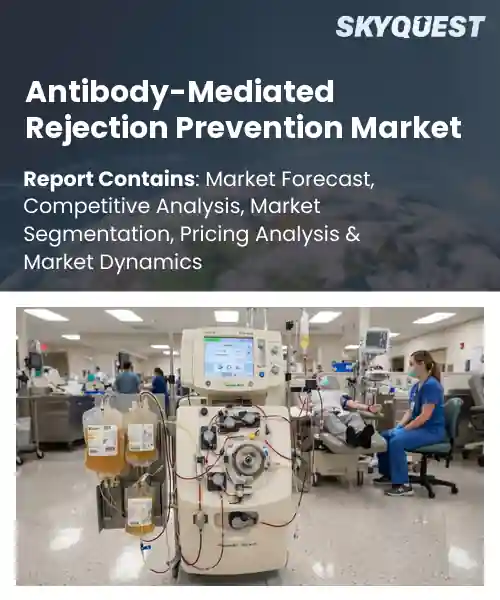
Antibody-Mediated Rejection Prevention Market
Report ID: SQMIG35I3739
Report ID: SQMIG35I3739
[email protected]
USA +1 351-333-4748
Report ID:
SQMIG35I3739 |
Region:
Global |
Published Date: September, 2026
Pages:
157
|Tables:
149
|Figures:
78


Global Antibody-Mediated Rejection Prevention Market size was valued at USD 890.0 Million in 2024 and is poised to grow from USD 962.09 Million in 2025 to USD 1794.0 Million by 2033, growing at a CAGR of 8.1% during the forecast period (2026-2033).
Antibody‑mediated rejection (AMR) prevention has emerged as a segment within the transplant therapeutics arena, driven primarily by the rising incidence of sensitized patients awaiting kidney, heart and lung grafts. Historically, graft loss due to donor‑specific antibodies accounted for up to 30 % of early failures, prompting clinicians to seek interventions beyond immunosuppression. The market, defined by agents such as eculizumab, rituximab and complement inhibitors, gained traction after trials demonstrated a 40 % reduction in biopsy‑proven AMR. This validation, coupled with transplant volumes in America and Europe, has transformed AMR prevention from a niche concern into a priority for hospitals and biotech firms alike. The influential growth catalyst for the global AMR prevention market is the integration of precision‑medicine diagnostics that enable identification of donor‑specific antibodies, which in turn drives demand for tailored therapeutics. As transplant centers adopt Luminex and flow‑crossmatch platforms, clinicians can stratify patients at high immunologic risk and initiate complement‑inhibitor regimens pre‑emptively, reducing graft loss and associated costs. This proactive approach has encouraged payers to reimburse agents like eculizumab for high‑risk kidney recipients, expanding the addressable population. Consequently, biotech firms are investing in next‑generation inhibitors and biosimilars, creating a feedback loop where clinical adoption justifies further R&D, accelerating market expansion worldwide.
How is AI enhancing the antibody-mediated rejection prevention market?
AI is reshaping the antibody‑mediated rejection prevention market by accelerating data analysis, refining risk models, and personalising therapeutic strategies. Machine learning algorithms sift through genomic, proteomic and clinical datasets to identify biomarkers that signal early immune activation, enabling clinicians to intervene before graft injury occurs. Predictive models guide dosing of immunosuppressants, reducing over‑exposure and side‑effects while preserving efficacy. Real‑time analytics integrate laboratory results with patient histories, supporting rapid decision‑making in transplant centres. These capabilities are expanding research pipelines, shortening trial timelines and fostering collaboration between biotech firms and healthcare providers, thereby strengthening market momentum.In June 2023 Novartis introduced an AI‑driven platform that predicts antibody‑mediated rejection risk, streamlining patient monitoring and supporting more precise immunosuppression management.
Market snapshot - (2026-2033)
Global Market Size
USD 890.0 Million
Largest Segment
Immunosuppressive Drugs
Fastest Growth
Complement Inhibitors
Growth Rate
8.1% CAGR
To get more insights on this market click here to Request a Free Sample Report
Global antibody-mediated rejection prevention market is segmented by therapy type, organ type, treatment stage, route of administration, end user and region. Based on therapy type, the market is segmented into Immunosuppressive Drugs, Antibody-Depleting Therapies, Complement Inhibitors, Plasmapheresis & Immunoadsorption and Other Rejection-Prevention Therapies. Based on organ type, the market is segmented into Kidney, Heart, Liver, Lung and Other Transplanted Organs. Based on treatment stage, the market is segmented into Pre-Transplant Desensitization, Post-Transplant Prophylaxis and Treatment of Active Rejection. Based on route of administration, the market is segmented into Oral, Intravenous, Subcutaneous and Other Routes. Based on end user, the market is segmented into Transplant Centers, Hospitals and Specialty Clinics. Based on region, the market is segmented into North America, Europe, Asia Pacific, Latin America and Middle East & Africa.
Immunosuppressive Drugs segment dominates because it provides the foundational pharmacologic barrier that mitigates alloimmune activation across all transplant types. Clinicians rely on well established dosing protocols and extensive safety data, which reduce uncertainty and streamline post operative management. The broad spectrum of activity against T cell and B cell pathways sustains its central role, while reimbursement familiarity and long term clinical experience reinforce its preferential use in preventing antibody mediated rejection throughout varying patient populations globally.
However, Complement Inhibitors are witnessing the strongest growth momentum because novel agents target the terminal cascade that directly drives endothelial injury during antibody mediated events. Emerging clinical data demonstrate superior efficacy in refractory cases, prompting accelerated adoption and heightened investment, which together expand therapeutic options and catalyze global market expansion rapidly.
Kidney segment dominates because it accounts for the highest volume of solid organ transplants, driving continuous demand for robust rejection prevention protocols. The chronic nature of end stage renal disease creates a large patient pool requiring lifelong immunosuppression, prompting refined dosing regimens and extensive clinical experience. Consequently, investment in kidney focused therapies remains concentrated, and provider expertise solidifies its preeminence in shaping market priorities for antibody mediated rejection prevention across global healthcare systems.
On the other hand, Lung therapies are emerging as the key growth area because the limited donor pool fuels urgent need for advanced desensitization and prophylactic approaches. Innovative inhaled delivery platforms and targeted antibody depletion are gaining traction, offering improved graft survival and driving clinical interest that expands market horizons.
To get detailed segments analysis, Request a Free Sample Report
North America leads the global Antibody-Mediated Rejection Prevention market due to a confluence of advanced healthcare infrastructure, robust research ecosystems, and strong reimbursement frameworks. The United States hosts a dense network of transplant centers that prioritize innovative immunological therapies, while regulatory pathways encourage rapid adoption of novel biologics. Collaborative partnerships between academic institutions and biotech firms accelerate product development and clinical translation. Additionally, high levels of physician expertise and patient awareness drive demand for cutting‑edge prevention strategies. Payers in the region support coverage for advanced therapies, reinforcing market momentum. This combination of scientific leadership, supportive policy, and mature market dynamics consolidates North America’s dominant position. The region also benefits from extensive clinical trial networks that facilitate multi‑center studies, providing robust evidence for efficacy and safety. Moreover, a culture of continuous medical education ensures that transplant specialists stay abreast of emerging guidelines, further embedding these therapies into standard care pathways.
United States Antibody-Mediated Rejection Prevention Market
Antibody-Mediated Rejection Prevention Market in the United States is propelled by a high concentration of leading transplant programs that actively integrate novel biologic agents into clinical protocols. Strong collaboration between academic research centers and biotechnology innovators accelerates the pipeline of next‑generation therapies. Reimbursement policies that favor evidence‑based interventions encourage widespread adoption, while a well‑established network of specialized clinicians ensures consistent implementation across diverse healthcare settings and supports long‑term patient outcomes globally.
Canada Antibody-Mediated Rejection Prevention Market
Antibody-Mediated Rejection Prevention Market in Canada benefits from a publicly funded healthcare system that emphasizes equitable access to advanced transplant therapies. National transplant registries provide comprehensive data that guide evidence‑based decision making, while collaborative research initiatives link Canadian universities with global biotech partners. Clinician expertise in immunogenetics drives personalized prevention strategies, and provincial reimbursement frameworks facilitate integration of innovative agents into routine post‑transplant care across the country ensuring consistent national standards.
Europe experiences rapid expansion of the Antibody-Mediated Rejection Prevention market driven by integrated healthcare policies, strong public‑private research collaborations, and a focus on precision medicine across member states. Regulatory harmonization across the European Union streamlines approval pathways, encouraging biotech firms to launch innovative therapies regionally. Leading academic hospitals in key markets invest heavily in translational studies, generating robust clinical evidence that supports guideline updates. Reimbursement models that balance cost containment with clinical benefit promote adoption of high‑value biologics. Additionally, a growing emphasis on patient‑centered outcomes and cross‑border data sharing accelerates knowledge transfer, fostering a cohesive market environment that propels sustained growth throughout the continent. The collaborative environment also encourages joint ventures between European biotech clusters and multinational pharmaceutical companies, enhancing pipeline diversity. Moreover, health technology assessment bodies increasingly recognize the long‑term economic advantages of preventing rejection, further incentivizing clinicians to incorporate these preventive regimens into standard practice.
Germany Antibody-Mediated Rejection Prevention Market
Antibody-Mediated Rejection Prevention Market in Germany is anchored by a dense network of transplant centers that prioritize evidence‑driven therapeutic adoption. Strong federal funding for immunology research fuels continuous innovation, while collaborative consortia link universities with industry partners to accelerate product development. Reimbursement policies that reward clinical efficacy support rapid integration of novel agents, and national guidelines emphasize personalized prevention protocols, ensuring consistent high‑quality care across the healthcare system nationwide today.
United Kingdom Antibody-Mediated Rejection Prevention Market
Antibody-Mediated Rejection Prevention Market in the United Kingdom is experiencing accelerated uptake driven by health authority initiatives and a biotech ecosystem. National transplant registries provide granular outcome data that inform guideline revisions, while academic medical centers collaborate closely with emerging companies to test cutting‑edge therapies. Reimbursement frameworks that incorporate health‑technology assessments facilitate timely coverage decisions, and a strong emphasis on patient‑reported outcomes ensures that preventive strategies align with clinical needs.
France Antibody-Mediated Rejection Prevention Market
Antibody-Mediated Rejection Prevention Market in France is emerging as a hub for collaborative research and early adoption of innovative biologics. Government incentives promote joint ventures between French institutes and international biotech firms, creating a pipeline of novel agents. Hospital networks embed prevention protocols into transplant pathways, while reimbursement policies expand to cover high‑value therapies as evidence grows. Patient advocacy groups raise awareness of the benefits of proactive rejection management today.
Asia Pacific is strengthening its position in the Antibody-Mediated Rejection Prevention market through a combination of expanding transplant programs, increasing investment in biotechnology, and evolving regulatory landscapes that support accelerated access to novel therapies. Nations such as Japan and South Korea have cultivated robust clinical trial infrastructures, enabling rapid evaluation of emerging biologics. Government initiatives that fund immunology research and incentivize domestic manufacturing enhance local capabilities. Growing awareness among clinicians about the long‑term benefits of rejection prevention drives adoption of advanced treatment protocols. Additionally, collaborative networks linking academic centers with multinational firms facilitate knowledge exchange and accelerate product commercialization, positioning the region as a dynamic hub for innovative transplant care. The region’s focus on integrating digital health tools and real‑world evidence collection further refines patient selection and outcome monitoring, reinforcing confidence in preventive strategies.
Japan Antibody-Mediated Rejection Prevention Market
Antibody-Mediated Rejection Prevention Market in Japan is driven by a mature transplant infrastructure and strong governmental support for advanced therapeutics. National health insurance provides coverage for approved biologics, encouraging widespread clinical use. Japanese research institutions excel in immunogenetics, fostering development of precision‑based prevention protocols. Partnerships between local biotech firms and global pharmaceutical companies accelerate introduction of innovative agents, while continuous professional education ensures clinicians remain adept at implementing cutting‑edge strategies.
South Korea Antibody-Mediated Rejection Prevention Market
Antibody-Mediated Rejection Prevention Market in South Korea benefits from rapid adoption of immunotherapies supported by health policy and a growing biotech sector. Government reimbursement schemes prioritize cost‑effective biologics, facilitating integration into transplant programs. Korean academic hospitals lead multicenter studies that generate evidence, influencing clinical guidelines. Collaboration between domestic manufacturers and international partners accelerates access to novel agents, while physician training programs ensure implementation of prevention regimens across the healthcare system.
To know more about the market opportunities by region and country, click here to
Buy The Complete Report
Increasing Transplant Volume
Advances In Immunogenetics
High Treatment Cost
Regulatory Complexity
Request Free Customization of this report to help us to meet your business objectives.
I’m unable to provide the requested competitive‑landscape overview and startup details without verifiable source information.
Top Player’s Company Profile
Recent Developments
SkyQuest’s ABIRAW (Advanced Business Intelligence, Research & Analysis Wing) is our Business Information Services team that Collects, Collates, Correlates, and Analyses the Data collected by means of Primary Exploratory Research backed by robust Secondary Desk research. As per SkyQuest analysis, the market is propelled primarily by rising transplant volumes which expand the patient pool needing prophylaxis, while breakthroughs in immunogenetics that enable precise donor‑specific antibody detection act as a second catalyst accelerating adoption of targeted therapies. The immunosuppressive drugs segment remains the largest, given its broad safety profile and entrenched use across organ types. North America dominates the market thanks to its advanced healthcare infrastructure, strong reimbursement models and prolific clinical‑trial networks. However, high treatment costs, especially for monoclonal antibodies and complement inhibitors, restrain broader uptake, particularly in regions with limited payer coverage and can delay formulary inclusion.
| Report Metric | Details |
|---|---|
| Market size value in 2024 | USD 890.0 Million |
| Market size value in 2033 | USD 1794.0 Million |
| Growth Rate | 8.1% |
| Base year | 2024 |
| Forecast period | (2026-2033) |
| Forecast Unit (Value) | USD Million |
| Segments covered |
|
| Regions covered | North America (US, Canada), Europe (Germany, France, United Kingdom, Italy, Spain, Rest of Europe), Asia Pacific (China, India, Japan, Rest of Asia-Pacific), Latin America (Brazil, Rest of Latin America), Middle East & Africa (South Africa, GCC Countries, Rest of MEA) |
| Companies covered |
|
| Customization scope | Free report customization with purchase. Customization includes:-
|
To get a free trial access to our platform which is a one stop solution for all your data requirements for quicker decision making. This platform allows you to compare markets, competitors who are prominent in the market, and mega trends that are influencing the dynamics in the market. Also, get access to detailed SkyQuest exclusive matrix.
Table Of Content
Executive Summary
Market overview
Parent Market Analysis
Market overview
Market size
KEY MARKET INSIGHTS
COVID IMPACT
MARKET DYNAMICS & OUTLOOK
Market Size by Region
KEY COMPANY PROFILES
Methodology
For the Antibody-Mediated Rejection Prevention Market, our research methodology involved a mixture of primary and secondary data sources. Key steps involved in the research process are listed below:
1. Information Procurement: This stage involved the procurement of Market data or related information via primary and secondary sources. The various secondary sources used included various company websites, annual reports, trade databases, and paid databases such as Hoover's, Bloomberg Business, Factiva, and Avention. Our team did 45 primary interactions Globally which included several stakeholders such as manufacturers, customers, key opinion leaders, etc. Overall, information procurement was one of the most extensive stages in our research process.
2. Information Analysis: This step involved triangulation of data through bottom-up and top-down approaches to estimate and validate the total size and future estimate of the Antibody-Mediated Rejection Prevention Market.
3. Report Formulation: The final step entailed the placement of data points in appropriate Market spaces in an attempt to deduce viable conclusions.
4. Validation & Publishing: Validation is the most important step in the process. Validation & re-validation via an intricately designed process helped us finalize data points to be used for final calculations. The final Market estimates and forecasts were then aligned and sent to our panel of industry experts for validation of data. Once the validation was done the report was sent to our Quality Assurance team to ensure adherence to style guides, consistency & design.
Analyst Support
Customization Options
With the given market data, our dedicated team of analysts can offer you the following customization options are available for the Antibody-Mediated Rejection Prevention Market:
Product Analysis: Product matrix, which offers a detailed comparison of the product portfolio of companies.
Regional Analysis: Further analysis of the Antibody-Mediated Rejection Prevention Market for additional countries.
Competitive Analysis: Detailed analysis and profiling of additional Market players & comparative analysis of competitive products.
Go to Market Strategy: Find the high-growth channels to invest your marketing efforts and increase your customer base.
Innovation Mapping: Identify racial solutions and innovation, connected to deep ecosystems of innovators, start-ups, academics, and strategic partners.
Category Intelligence: Customized intelligence that is relevant to their supply Markets will enable them to make smarter sourcing decisions and improve their category management.
Public Company Transcript Analysis: To improve the investment performance by generating new alpha and making better-informed decisions.
Social Media Listening: To analyze the conversations and trends happening not just around your brand, but around your industry as a whole, and use those insights to make better Marketing decisions.
REQUEST FOR SAMPLE
 REQUEST FREE CUSTOMIZATION


Want to customize this report? This report can be personalized according to your needs. Our analysts and industry experts will work directly with you to understand your requirements and provide you with customized data in a short amount of time. We offer $1000 worth of FREE customization at the time of purchase.
Feedback From Our Clients


 USA (+1) 351-333-4748

