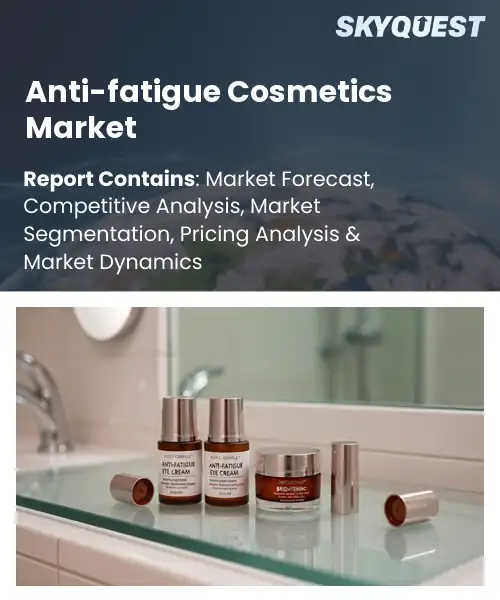
Anti-fatigue Cosmetics Market
Report ID: SQMIG30L2382
Report ID: SQMIG30L2382
[email protected]
USA +1 351-333-4748
Report ID:
SQMIG30L2382 |
Region:
Global |
Published Date: May, 2026
Pages:
157
|Tables:
119
|Figures:
77


Global Anti-Fatigue Cosmetics Market size was valued at USD 4.82 Billion in 2024 and is poised to grow from USD 5.2 Billion in 2025 to USD 9.52 Billion by 2033, growing at a CAGR of 7.88% during the forecast period (2026-2033).
The increasing need for products that can help improve the appearance of consumers due to stress from their daily routines is the leading cause of the rising popularity of anti-fatigue cosmetic products. Anti-fatigue products include skin care products like energy-boosting eye creams, revitalizing serums, facial mist sprays, and face masks aimed at minimizing conditions such as puffiness, dark circles, and lackluster skin. The industry has transformed significantly from its initial offerings, which included only concealers, to today's scientifically proven ingredients like actives, caffeine, peptides, and hyaluronic acid.
The next step from evolving customer expectations is the most important growth driver which revolves around ingredient and formulation innovations that result in increased efficacy which then encourages consumer trial, repurchasing, and higher pricing. As a result of combining fast-acting caffeine with peptides or microencapsulations, the visible decrease in puffiness and darkness under the eyes causes store reports of large basket sizes and customer loyalty. There are many real-life cases of customers who use patches in airplanes to prevent any swelling or mist sprays for shift-workers who need to refresh their appearance. Furthermore, peer-reviewed clinical research improves sales in online environments.
How is AI Enhancing Product Development in the Anti-fatigue Cosmetics Market?
AI is redefining the world of anti-fatigue cosmetics through fast ingredient discovery and formulation, while allowing for the development of personalized anti fatigue skin care and improving overall sensory performance. These include the predictive modeling of skin fatigue markers, the virtual testing of textures and feel, as well as consumer analytics to optimize product claims. Current trends involve the development of more precise skincare solutions designed to treat dull, puffy, and tired looking skin while ensuring a pleasant user experience. By applying technologies like generative and diagnostic AI, brands and their tech partners have been able to reduce development time and create more advanced recommendation algorithms, making it easier to bring new concepts to market as finished products. Larger beauty corporations and beauty tech companies apply the use of AI within diagnostics and personalization. Shiseido January 2026 employed AI, including its VOYAGER AI formulation platform, to develop and reduce thousands of possible formulations for a scent and color led suncare product.
Market snapshot - (2026-2033)
Global Market Size
USD 4.82 Billion
Largest Segment
Face Creams & Moisturizers
Fastest Growth
Eye Creams & Serums
Growth Rate
7.88% CAGR
To get more insights on this market click here to Request a Free Sample Report
Global anti-fatigue cosmetics market is segmented by product type, key ingredient, distribution, consumer and region. Based on product type, the market is segmented into Eye Creams & Serums, Face Creams & Moisturizers, BB & CC Creams, Primers and Eye Drops. Based on key ingredient, the market is segmented into Caffeine, Vitamin C, Retinol and Hyaluronic Acid. Based on distribution, the market is segmented into Online, Specialty Beauty Stores and Department Stores. Based on consumer, the market is segmented into Women and Men. Based on region, the market is segmented into North America, Europe, Asia Pacific, Latin America and Middle East & Africa.
Eye creams & serums is the largest segment since the formulation focuses all their powerful active ingredients and delivery system specifically for the periorbital region and delivers fast results against puffiness, dark circles, and fine lines that will bring back the fresh-looking face. They also tend to focus on clinical claims and efficacy to gain consumer confidence and make them incorporate the products into their skincare routines.
On the other hand, Primers have become a huge success recently owing to multi-function formulas that not only mask the look of tiredness and smooth out the texture but also prolong the wear of cosmetics.
The Hyaluronic Acid category takes the lead due to its potent hydrating and plumping benefits that work against any indications of dull skin by increasing volume and softening lines. Being compatible with many different types of formulas as well as having a good safety record, it proves popular among cosmetic scientists who require efficacy from ingredients and want to use an ingredient with high safety profile.
Caffeine is the category growing at the highest pace owing to its specific decongesting effects that decrease puffiness and make one's skin regain a fresh appearance. Due to its innovative forms and use in cosmetics for the eye area and in makeup formulas as well as positive consumer perception, caffeine-based products are introduced frequently.
To get detailed segments analysis, Request a Free Sample Report
The Asia Pacific holds the dominant position because of the combination of its longstanding skin care tradition, the widespread urban lifestyle which makes people look for skin restoration remedies, and the high level of innovations facilitated by the top formulation centers. Skincare consumers in key markets have a preference for protective ingredients and skin reviving effects, thus prompting their interest in anti-fatigue formulas. Japanese and Korean countries take the lead in advanced ingredient studies, clinical trials, and skin feel technologies, with beauty fashion trends and omnichannel sales accelerating the uptake process. Local skincare producers quickly convert scientific ideas into consumer products thanks to the vibrant e-commerce, speciality stores, and professional distribution channels.
The Anti-Fatigue Cosmetics Market in Japan is marked by rigorous formulation science, love for light textures that work effectively, and strong belief among consumers in the power of clinical testing. Domestic brands blend traditional herbal knowledge with active ingredients in order to solve problems related to fatigue, such as dull and lackluster skin. The distribution network consists of department stores, beauty stores, dermatologists’ offices, and includes beauty editors who influence consumer behavior.
The Anti-Fatigue Cosmetics Market in South Korea is helped by a culture of fast-paced innovation, trend setting, and consumers' keen interest in skin revitalizers with multiple benefits. The focus is on new technology and light formulation that tackles signs of fatigue. Influencers in social media and beauty publications drive the discovery of these products, whereas the extensive network of specialty stores and online distribution drives their turnover rate.
The rapid growth witnessed in North America is supported by a combination of consumer health-consciousness, sophisticated retail environments, and high adoption of digital marketing and e-commerce. Consumers demand multifunctional skincare products to combat fatigue as well as enhance skin wellness, thus encouraging a need for clinically-proven formulations and clear ingredient stories. Innovations are facilitated by the collaboration of dermatologists, product developers, and retailers who can develop appropriate positioning strategies for these skincare products in mass, prestige, and specialist retail environments. Social media marketing is used to hasten consumer adoption and trial, while sustainability in product formulation meets consumer demands. Successful branding, diverse distribution models, and widespread adoption of skincare protocols by consumers in diverse demographics make for a powerful growth engine.
Market of Anti-Fatigue Cosmetics in the United States demonstrates high consumer interest in clinically proven multi-purpose skincare products. Companies capitalize on collaboration with dermatologists, education through influencers, and omnipresence in retail to gain authority and accessibility. Specialty, prestige, and direct-to-consumer sales channels allow for quick discovery and experience. Stressing clean formulations, customization, and visible results allows for positioning as luxury goods, while new ventures and established brands keep the market dynamic and fast-paced.
Canadian Anti-Fatigue Cosmetics Market is driven by consumer demand for safe cosmetics that rejuvenate weary-looking skin. The retail channel consists of a mix of pharmacy and specialized beauty stores with robust e-commerce presence, offering support to both established and innovative brands. Consumer trust in cosmetic brands is fostered through their commitment to transparent ingredient disclosure, sustainability, and scientific legitimacy. Cosmetic companies align marketing messages with local consumer sentiments using professional recommendations as part of the sales process.
Europe continues to build upon its strength due to a combination of stringent quality control measures, increased consumer expectations for sustainability and clinically valid products, and the long history of high-quality skincare formulations. Focus on safety and honest labeling creates a need for extensive product testing and validation, thus building greater trust. The market is further characterized by innovations created by the synergy of research institutes, dermatologist offices, and specialists in formulations, leading to unique solutions addressing the effects of fatigue and a preference for gentle but efficacious and eco-friendly products. A wide range of retail opportunities, including luxurious counter displays and pharmacies, together with the active professional services market, provides for the discovery and promotion of skincare products.
German Anti-fatigue Cosmetics Market highlights formulation based on scientific principles and a high degree of association with dermato-clinical sciences. The consumers are more concerned about the clinicalsubstantiation and tolerance, which makes performance a core area of emphasis. The distribution channels revolve around pharmaceutical and specialty stores that provide professional advice. Functionality of ingredients, sustainability in the sourcing, and collaboration with academia for innovations characterize the product development process.
UK Anti-Fatigue Cosmetics Industry merges traditional skills and knowledge in beauty with cutting-edge clinical research and strategic marketing techniques. There is an inclination towards anti-fatigue cosmetics that provide both revitalizing effects and clear ingredient stories. Such cosmetics can be purchased via high street shops and department stores or even on-line. The cooperation of cosmetologists and clinical experts brings about tailored products, and sustainable sourcing becomes a crucial factor for brands' positioning.
Market for Anti-Fatigue Cosmetics in France capitalizes on the country’s history of high-end skincare solutions, an appreciation for fragrances, and a culture of meticulous formulation techniques. Expectations of luxurious sensory experience accompanied by tangible rejuvenation effects abound in such products. Both luxury and pharmacy are key channels of distribution in this market. Backing from spas and treatments is necessary to ensure efficacy and credibility.
To know more about the market opportunities by region and country, click here to
Buy The Complete Report
Increasing Consumer Preference for Wellness
The trend towards well-being and comfort in everyday living has seen the rise in consumers looking for anti-fatigue cosmetics. The rise in such trends has seen brands take up efforts to expand their product ranges, develop soothing and calming ingredients, and formulate these into their products, making them part of self-care routines. These efforts on the side of retailers have seen more space given to such products as they market their benefits, making it easy for consumers to embrace the products and try them out.
Innovation in Formulation and Packaging
Innovations in product formulation and packaging ensure brands tackle fatigue-related skin issues with innovative product formulations that have new textures and functionalities while making their application more convenient for users. Innovative packaging that maintains the quality of the ingredients ensures high-value addition while being user friendly to ensure adoption even by consumers who have very busyschedules. Unique product differentiation helps brands adopt a premium product strategy and penetrate retail outlets with increased marketing momentum.
Regulatory Complexity and Safety
The high level of regulation and strict safety regulations for making any claims about cosmetics and the approval of ingredients as well as labeling lead to increased time to market and compliance cost burden, which is particularly heavy on small players in the market. There is uncertainty surrounding the maximum allowable active concentration and different allowable substances in neighboring countries. This leads to an adverse effect on the risk-taking nature of the brands and discourages them from experimenting with new actives that could deal with fatigue.
High Production Costs and Scaling
Increased costs associated with high-quality ingredients, advanced processes for extraction, and mildness in formulating cause higher costs of production and reduced profit margins especially for new entrants. Procurement challenges due to sourcing of natural plant extracts and stabilization of active ingredients make supply chains susceptible to disruption and lengthy procurement periods, discouraging substantial capital investments and limiting growth in capacities. Higher costs limit pricing flexibility, making it harder to negotiate favorable terms when distributing and even leading to cost cuts that adversely affect product quality, making growth and penetration difficult.
Request Free Customization of this report to help us to meet your business objectives.
The competitive intensity of the anti-fatigue cosmetics industry is fueled by issues such as the importance of strategic investment, innovation, and partnership across sectors. Major players engage in minority investments and joint ventures in order to gain expertise in skin care solutions for injectables and actives; meanwhile, ingredient companies promote innovative anti-fatigue actives for formulation. For instance, LOréal acquired a strategic stake in Galderma, and innovative ingredients include Eyeglorius and Noxifense.
Personalization through Skin Diagnostics: Companies are moving away from a one-size-fits-all formula towards customized anti-fatigue treatments, thanks to consumer demand for personalized efficacy. The development of non-invasive skin evaluation technologies, AI analysis of skin conditions on a routine basis, and the use of at-home devices for diagnostic purposes make it possible to create formulas that target individual fatigue markers like skin texture, dullness, and microcirculation. Partnerships between retailers and cosmetic brands are helping develop personalized treatment protocols that change overtime.
Sustainable Ingredient and Packaging Demand: Environmentally conscious consumers encourage eco-beauty development using biodegradable actives, sustainably grown botanical ingredients, and reusable packaging. Companies rely on supply chain transparency and environmental stewardship to distinguish their anti-fatigue lines from competitors while minimizing their environmental impact. Emphasis is placed on recycling and minimal packaging, leading to new partnerships and pilot initiatives in sustainable practices. Effective promotion requires emphasizing the efficacy combined with the ethics of the product.
SkyQuest’s ABIRAW (Advanced Business Intelligence, Research & Analysis Wing) is our Business Information Services team that Collects, Collates, Correlates, and Analyses the Data collected by means ofPrimary Exploratory Research backed by robust Secondary Desk research.
As per SkyQuest analysis, the primary force driving the global anti-fatigue cosmetics market is increased consumer demand for products that can rejuvenate their skin as increasing busy lifestyles lead to more signs of tiredness, while the other important driving force is advancements in formulations and delivery techniques which enhance performance and reduce time to market. Regulatory challenges and safety issues continue to be a significant constraint, resulting in compliance expenses and delaying the introduction of new ingredients. The Asia Pacific region leads the market owing to its established skincare tradition, fast product development cycles, while Eye Creams & Serums dominate in terms of segments because of quick results.
| Report Metric | Details |
|---|---|
| Market size value in 2024 | USD 4.82 Billion |
| Market size value in 2033 | USD 9.52 Billion |
| Growth Rate | 7.88% |
| Base year | 2024 |
| Forecast period | (2026-2033) |
| Forecast Unit (Value) | USD Billion |
| Segments covered |
|
| Regions covered | North America (US, Canada), Europe (Germany, France, United Kingdom, Italy, Spain, Rest of Europe), Asia Pacific (China, India, Japan, Rest of Asia-Pacific), Latin America (Brazil, Rest of Latin America), Middle East & Africa (South Africa, GCC Countries, Rest of MEA) |
| Companies covered |
|
| Customization scope | Free report customization with purchase. Customization includes:-
|
To get a free trial access to our platform which is a one stop solution for all your data requirements for quicker decision making. This platform allows you to compare markets, competitors who are prominent in the market, and mega trends that are influencing the dynamics in the market. Also, get access to detailed SkyQuest exclusive matrix.
Table Of Content
Executive Summary
Market overview
Parent Market Analysis
Market overview
Market size
KEY MARKET INSIGHTS
COVID IMPACT
MARKET DYNAMICS & OUTLOOK
Market Size by Region
KEY COMPANY PROFILES
Methodology
For the Anti-fatigue Cosmetics Market, our research methodology involved a mixture of primary and secondary data sources. Key steps involved in the research process are listed below:
1. Information Procurement: This stage involved the procurement of Market data or related information via primary and secondary sources. The various secondary sources used included various company websites, annual reports, trade databases, and paid databases such as Hoover's, Bloomberg Business, Factiva, and Avention. Our team did 45 primary interactions Globally which included several stakeholders such as manufacturers, customers, key opinion leaders, etc. Overall, information procurement was one of the most extensive stages in our research process.
2. Information Analysis: This step involved triangulation of data through bottom-up and top-down approaches to estimate and validate the total size and future estimate of the Anti-fatigue Cosmetics Market.
3. Report Formulation: The final step entailed the placement of data points in appropriate Market spaces in an attempt to deduce viable conclusions.
4. Validation & Publishing: Validation is the most important step in the process. Validation & re-validation via an intricately designed process helped us finalize data points to be used for final calculations. The final Market estimates and forecasts were then aligned and sent to our panel of industry experts for validation of data. Once the validation was done the report was sent to our Quality Assurance team to ensure adherence to style guides, consistency & design.
Analyst Support
Customization Options
With the given market data, our dedicated team of analysts can offer you the following customization options are available for the Anti-fatigue Cosmetics Market:
Product Analysis: Product matrix, which offers a detailed comparison of the product portfolio of companies.
Regional Analysis: Further analysis of the Anti-fatigue Cosmetics Market for additional countries.
Competitive Analysis: Detailed analysis and profiling of additional Market players & comparative analysis of competitive products.
Go to Market Strategy: Find the high-growth channels to invest your marketing efforts and increase your customer base.
Innovation Mapping: Identify racial solutions and innovation, connected to deep ecosystems of innovators, start-ups, academics, and strategic partners.
Category Intelligence: Customized intelligence that is relevant to their supply Markets will enable them to make smarter sourcing decisions and improve their category management.
Public Company Transcript Analysis: To improve the investment performance by generating new alpha and making better-informed decisions.
Social Media Listening: To analyze the conversations and trends happening not just around your brand, but around your industry as a whole, and use those insights to make better Marketing decisions.
REQUEST FOR SAMPLE
 REQUEST FREE CUSTOMIZATION
Global Anti-Fatigue Cosmetics Market size was valued at USD 4.82 Billion in 2024 and is poised to grow from USD 5.2 Billion in 2025 to USD 9.52 Billion by 2033, growing at a CAGR of 7.88% during the forecast period (2026-2033).
Competitive intensity in the global anti fatigue cosmetics market is driven by strategic stakes, ingredient innovation and cross sector partnerships. Large groups pursue minority investments and co development to access dermatology capabilities for injectables and actives, while ingredient houses commercialize novel anti fatigue actives for formulators. Examples include LOréal acquiring a strategic stake in Galderma and ingredient launches such as Eyeglorius and Noxifense. 'L'Oréal Paris', 'Estée Lauder Companies', 'Clinique (Estée Lauder)', 'Kiehl's (L'Oréal)', 'Origins (Estée Lauder)', 'Shiseido Company', 'NARS Cosmetics', 'Lancôme (L'Oréal)', 'Neutrogena (J&J)', 'Olay (Procter & Gamble)', 'Garnier (L'Oréal)', 'Pond's (Unilever)', 'Dr. Brandt Skincare', 'Perricone MD', 'Ole Henriksen (LVMH)', '100% Pure', 'RoC Skincare', 'Peter Thomas Roth', 'Drunk Elephant (Shiseido)', 'Youth To The People'
Consumers are increasingly prioritizing well being and comfort in daily routines, elevating demand for anti fatigue cosmetics that promise soothing and restorative effects. This shift in preferences encourages manufacturers to expand portfolios, invest in gentle active ingredients and calming formulations, and promote products as part of self care regimens. Retailers respond by allocating shelf space and merchandising to highlight these solutions, while marketing emphasizes experiential benefits, which strengthens consumer acceptance. The resulting broader availability and visibility drive category growth through improved trial and repeat purchase behavior.
Personalization Through Skin Diagnostics: Brands are shifting from one size fits all formulations to individualized anti-fatigue solutions driven by consumer demand for targeted efficacy. Advances in noninvasive skin assessment, AI-driven routine analysis, and at-home diagnostic tools enable formulations to address unique fatigue markers such as texture, dullness and microcirculation. Retailers and beauty firms collaborate to create bespoke regimens and subscription models that adjust over time. This personalization builds loyalty through visible results and emotional connection, elevating product value and encouraging premium positioning across segments.
Why does Asia Pacific Dominate the Global Anti-fatigue Cosmetics Market? |@12


Want to customize this report? This report can be personalized according to your needs. Our analysts and industry experts will work directly with you to understand your requirements and provide you with customized data in a short amount of time. We offer $1000 worth of FREE customization at the time of purchase.
Feedback From Our Clients


 USA (+1) 351-333-4748

