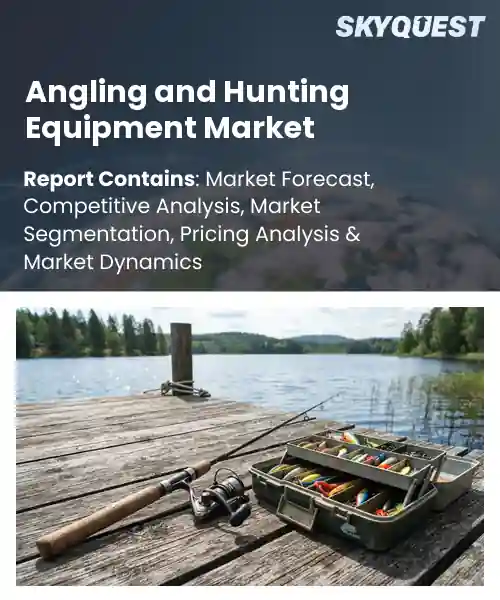
Angling and Hunting Equipment Market
Report ID: SQMIG25J2327
Report ID: SQMIG25J2327
[email protected]
USA +1 351-333-4748
Report ID:
SQMIG25J2327 |
Region:
Global |
Published Date: August, 2026
Pages:
157
|Tables:
120
|Figures:
77


Global Angling And Hunting Equipment Market size was valued at USD 9.64 Billion in 2024 and is poised to grow from USD 10.25 Billion in 2025 to USD 16.71 Billion by 2033, growing at a CAGR of 6.3% during the forecast period (2026-2033).
Building on this evolution, the factor shaping the global angling and hunting equipment market is the merger of smart technology with sustainability goals. Manufacturers embedding sensors, Bluetooth and AI analytics into rods, reels and optics let anglers locate fish instantly and hunters gauge distance and wind drift accurately, which raises purchase intent and supports price points. At time, wildlife‑management rules push firms to offer biodegradable lures and low‑impact ammunition, creating niche segments with better margins. Online retail accelerates diffusion by providing virtual try‑ons and product data, turning innovation into measurable sales growth across North America, Europe and Asian global markets. Over the past two decades the global angling and hunting equipment market has grown from a niche pastime to an industry, driven primarily by rising participation in outdoor recreation among middle‑class consumers. The market includes fishing rods, reels, lures, hunting firearms, optics, and apparel, all of which generate tax revenue and sustain rural supply chains. As disposable incomes rose, buyers moved from basic wooden rods to carbon‑fiber reels and from steel rifles to lightweight platforms fitted with rangefinders. This shift reflects technological progress and evolving expectations for performance, safety, and sustainability, positioning the sector as a barometer of lifestyle trends.
How is AI-driven automation improving performance in the angling and hunting equipment market?
AI driven automation is reshaping the angling and hunting equipment market by streamlining design, production and after‑sale support. Machine learning models analyze user behavior and environmental data to create gear that matches specific conditions, while robotics in factories cut cycle times and improve consistency. Predictive maintenance alerts hunters and anglers to wear before failure, extending product life. Inventory systems powered by AI forecast demand across regions, reducing stockouts and excess inventory. These capabilities make product launches faster and enhance the overall experience for consumers, reinforcing the market’s upward trajectory. The integration of sensor data into hunting rifles enables real time feedback on shot placement, helping users refine technique. Similarly, smart reels capture catch metrics that inform future gear adjustments.In March 2025 a leading angling equipment manufacturer introduced an AI powered smart fishing reel that automatically adjusts drag based on water conditions, improving catch efficiency and reducing user fatigue, a development that illustrates how automation is driving performance gains and supporting market growth.
Market snapshot - (2026-2033)
Global Market Size
USD 9.64 Billion
Largest Segment
Fishing Equipment
Fastest Growth
Others
Growth Rate
6.3% CAGR
To get more insights on this market click here to Request a Free Sample Report
Global angling and hunting equipment market is segmented by product type, equipment category, end user, distribution channel and region. Based on product type, the market is segmented into Fishing Equipment, Hunting Equipment and Others. Based on equipment category, the market is segmented into Consumables, Durable Equipment and Apparel & Accessories. Based on end user, the market is segmented into Recreational Anglers, Recreational Hunters, Professional & Guided Operators and Others. Based on distribution channel, the market is segmented into Specialty Sporting Goods Stores, Online Retail, Hypermarkets & Supermarkets, Direct Sales and Others. Based on region, the market is segmented into North America, Europe, Asia Pacific, Latin America and Middle East & Africa.
Durable equipment segment dominates because anglers prioritize long‑lasting rods, reels, and tackle that withstand harsh weather and frequent use. This preference drives manufacturers to invest in robust materials and engineering, creating products that promise reliability and reduced replacement cycles. Consequently, retailers and brands focus their portfolios on high‑performance gear, reinforcing the segment’s central role in the market’s value proposition and influencing purchasing decisions across both casual and professional anglers.
However, consumables segment is witnessing the strongest growth momentum because bait, lures, and line accessories are experiencing innovation and demand spikes. New formulations and eco‑friendly designs attract environmentally conscious anglers, while digital marketing accelerates product discovery. This surge fuels repeat purchases, expanding the market’s consumption and creating fresh opportunities for niche manufacturers.
Online retail segment leads because it offers hunters immediate access to a broad catalog of gear, from firearms to camouflage apparel, without geographic constraints. The convenience of home delivery, detailed product reviews, and price transparency encourages both novice and seasoned hunters to explore new technologies. E‑commerce platforms also enable personalized recommendations through data analytics, reinforcing buyer confidence and driving higher conversion rates across the hunting equipment market.
Meanwhile, specialty sporting goods stores segment emerges as the key high‑growth area because enthusiasts value product trials and expert advice that cannot be replicated online. In‑store events and community workshops foster brand loyalty, while exclusive product lines attract dedicated hunters seeking premium experiences. This dynamic fuels foot traffic and amplifies overall market expansion.
To get detailed segments analysis, Request a Free Sample Report
North America benefits from a deeply entrenched outdoor culture that elevates both angling and hunting as integral leisure pursuits. The market is supported by extensive distribution networks, advanced product innovation, and a high level of consumer willingness to adopt premium equipment. Retail channels are well‑aligned with enthusiast communities, fostering rapid feedback loops that drive continuous improvement. Strong brand heritage combined with robust aftermarket services enhances customer loyalty, while regulatory frameworks provide a stable environment for product development and sales. The convergence of these factors creates a resilient ecosystem that consistently positions North America at the forefront of the global market.
Angling and Hunting Equipment Market in the United States thrives on a broad spectrum of recreational activities that span from coastal fisheries to inland wildlife pursuits. Consumers exhibit a keen appetite for technologically sophisticated gear, prompting manufacturers to focus on precision engineering and durability. Retail experiences are complemented by a vibrant online presence, enabling seamless access to specialized products. Collaborative partnerships between industry associations and conservation groups reinforce responsible use, further solidifying market depth.
Angling and Hunting Equipment Market in Canada reflects a strong connection to expansive natural terrains and a heritage of seasonal outdoor pursuits. Enthusiasts prioritize robust, weather‑resistant equipment tailored to diverse climatic conditions. The market benefits from a network of knowledgeable retailers who provide expert guidance and after‑sale support. Collaborative initiatives between manufacturers and local wildlife agencies promote sustainable practices, fostering consumer confidence and long‑term market stability.
Europe’s expansion is propelled by a resurgence of outdoor recreation, heightened environmental awareness, and a growing preference for high‑quality, sustainable gear. Consumer demand concentrates on ergonomically designed products that align with evolving regulatory standards concerning wildlife conservation. Strong heritage brands leverage their legacy while integrating modern materials and digital customization tools, appealing to a discerning customer base. Cross‑border trade within the region facilitates access to diverse product lines, and collaborative research efforts among European firms advance technological innovation. These dynamics collectively accelerate market growth across the continent.
Angling and Hunting Equipment Market in Germany is characterized by a tradition of meticulous craftsmanship and a preference for precision engineering. Consumers seek equipment that balances performance with ecological responsibility, prompting manufacturers to incorporate eco‑friendly materials and advanced manufacturing processes. Retail channels are distinguished by specialized outlets that offer tailored expertise, reinforcing brand credibility. Strong cooperation between industry bodies and conservation agencies supports sustainable usage, reinforcing market resilience.
Angling and Hunting Equipment Market in the United Kingdom experiences vigorous growth driven by renewed interest in countryside pursuits and a dynamic consumer base eager for innovative solutions. The market emphasizes lightweight, versatile gear suited to varied terrains, attracting both seasoned enthusiasts and new participants. Retail ecosystems blend traditional specialty stores with vibrant e‑commerce platforms, expanding product accessibility. Collaborative ventures between manufacturers and outdoor advocacy groups enhance responsible practices, fostering confidence and sustained demand.
Angling and Hunting Equipment Market in France is emerging as a notable segment, buoyed by a cultural affinity for fishing and hunting traditions. Consumers prioritize comfort and durability, leading manufacturers to focus on modular designs that adapt to diverse environments. Boutique retailers and regional distributors play a pivotal role in curating product selections that reflect local preferences. Partnerships with environmental organizations promote ethical sourcing and usage, strengthening market credibility and encouraging broader adoption.
The Asia Pacific region advances through a blend of rising disposable income, expanding outdoor leisure culture, and an emphasis on technologically advanced equipment. Market participants respond to consumer expectations for lightweight, high‑performance gear that integrates smart features and material innovation. Growing urban populations increasingly seek nature‑based experiences, driving demand for accessible yet premium products. Retail structures combine traditional specialty outlets with robust digital platforms, facilitating rapid market penetration. Collaborative research across the region accelerates product development, while cultural appreciation for fishing and hunting reinforces sustained growth.
Angling and Hunting Equipment Market in Japan reflects a sophisticated consumer base that values precision, quality, and aesthetic appeal. Products often incorporate cutting‑edge materials and fine‑tuned engineering to meet demanding performance criteria. Retail environments include knowledgeable specialty stores that provide personalized service and product education. Integration of technology, such as electronic fish finders and smart tracking devices, resonates with tech‑savvy enthusiasts, enhancing market appeal and differentiation.
Angling and Hunting Equipment Market in South Korea benefits from a youthful demographic enthusiastic about outdoor activities and modern gear. Consumers gravitate toward compact, high‑efficiency equipment that leverages innovative design and durability. Retail channels are heavily digitized, offering seamless online purchasing experiences alongside curated offline experiences. Collaborative initiatives between manufacturers and sporting associations encourage responsible practices, fostering market confidence and encouraging continued expansion.
To know more about the market opportunities by region and country, click here to
Buy The Complete Report
Rising Recreational Participation
Technological Innovation Enhancing Performance
Stringent Environmental Regulations
Fluctuating Raw Material Costs
Request Free Customization of this report to help us to meet your business objectives.
The competitive landscape is shaped by intense rivalry among established outdoor retailers and specialist gear manufacturers, driving frequent M&A activity, strategic partnerships, and rapid tech integration to capture market share; recent collaborations between leading hunting gear firms and AI startups have accelerated product innovation, while acquisitions of niche fishing brands by large distributors have expanded portfolio breadth and distribution reach.
Top Player’s Company Profile
Recent Developments
SkyQuest’s ABIRAW (Advanced Business Intelligence, Research & Analysis Wing) is our Business Information Services team that Collects, Collates, Correlates, and Analyses the Data collected by means of Primary Exploratory Research backed by robust Secondary Desk research. As per SkyQuest analysis, the market’s growth is propelled primarily by rising recreational participation as consumers increasingly pursue outdoor fishing and hunting, driving demand for robust gear. A second catalyst is the rapid integration of smart technology and advanced materials that boost performance and appeal. The durable equipment segment leads the market because anglers and hunters prioritize long‑lasting rods, reels and firearms. North America remains the dominant region thanks to its deep outdoor culture, extensive distribution networks and willingness to adopt premium products. However, stringent environmental regulations on lead ammunition and certain fishing gear act as a restraint, adding compliance costs and limiting product availability.
| Report Metric | Details |
|---|---|
| Market size value in 2024 | USD 9.64 Billion |
| Market size value in 2033 | USD 16.71 Billion |
| Growth Rate | 6.3% |
| Base year | 2024 |
| Forecast period | (2026-2033) |
| Forecast Unit (Value) | USD Billion |
| Segments covered |
|
| Regions covered | North America (US, Canada), Europe (Germany, France, United Kingdom, Italy, Spain, Rest of Europe), Asia Pacific (China, India, Japan, Rest of Asia-Pacific), Latin America (Brazil, Rest of Latin America), Middle East & Africa (South Africa, GCC Countries, Rest of MEA) |
| Companies covered |
|
| Customization scope | Free report customization with purchase. Customization includes:-
|
To get a free trial access to our platform which is a one stop solution for all your data requirements for quicker decision making. This platform allows you to compare markets, competitors who are prominent in the market, and mega trends that are influencing the dynamics in the market. Also, get access to detailed SkyQuest exclusive matrix.
Table Of Content
Executive Summary
Market overview
Parent Market Analysis
Market overview
Market size
KEY MARKET INSIGHTS
COVID IMPACT
MARKET DYNAMICS & OUTLOOK
Market Size by Region
KEY COMPANY PROFILES
Methodology
For the Angling and Hunting Equipment Market, our research methodology involved a mixture of primary and secondary data sources. Key steps involved in the research process are listed below:
1. Information Procurement: This stage involved the procurement of Market data or related information via primary and secondary sources. The various secondary sources used included various company websites, annual reports, trade databases, and paid databases such as Hoover's, Bloomberg Business, Factiva, and Avention. Our team did 45 primary interactions Globally which included several stakeholders such as manufacturers, customers, key opinion leaders, etc. Overall, information procurement was one of the most extensive stages in our research process.
2. Information Analysis: This step involved triangulation of data through bottom-up and top-down approaches to estimate and validate the total size and future estimate of the Angling and Hunting Equipment Market.
3. Report Formulation: The final step entailed the placement of data points in appropriate Market spaces in an attempt to deduce viable conclusions.
4. Validation & Publishing: Validation is the most important step in the process. Validation & re-validation via an intricately designed process helped us finalize data points to be used for final calculations. The final Market estimates and forecasts were then aligned and sent to our panel of industry experts for validation of data. Once the validation was done the report was sent to our Quality Assurance team to ensure adherence to style guides, consistency & design.
Analyst Support
Customization Options
With the given market data, our dedicated team of analysts can offer you the following customization options are available for the Angling and Hunting Equipment Market:
Product Analysis: Product matrix, which offers a detailed comparison of the product portfolio of companies.
Regional Analysis: Further analysis of the Angling and Hunting Equipment Market for additional countries.
Competitive Analysis: Detailed analysis and profiling of additional Market players & comparative analysis of competitive products.
Go to Market Strategy: Find the high-growth channels to invest your marketing efforts and increase your customer base.
Innovation Mapping: Identify racial solutions and innovation, connected to deep ecosystems of innovators, start-ups, academics, and strategic partners.
Category Intelligence: Customized intelligence that is relevant to their supply Markets will enable them to make smarter sourcing decisions and improve their category management.
Public Company Transcript Analysis: To improve the investment performance by generating new alpha and making better-informed decisions.
Social Media Listening: To analyze the conversations and trends happening not just around your brand, but around your industry as a whole, and use those insights to make better Marketing decisions.
REQUEST FOR SAMPLE
 REQUEST FREE CUSTOMIZATION


Want to customize this report? This report can be personalized according to your needs. Our analysts and industry experts will work directly with you to understand your requirements and provide you with customized data in a short amount of time. We offer $1000 worth of FREE customization at the time of purchase.
Feedback From Our Clients


 USA (+1) 351-333-4748

