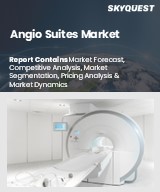
Angio Suites Market
Report ID: SQMIG35G2319
Report ID: SQMIG35G2319
[email protected]
USA +1 351-333-4748
Report ID:
SQMIG35G2319 |
Region:
Global |
Published Date: May, 2025
Pages:
192
|Tables:
122
|Figures:
77


Global Angio Suites Market size was valued at USD 2.43 Billion in 2024 and is poised to grow from USD 2.56 Billion in 2025 to USD 3.97 Billion by 2033, growing at a CAGR of 5.6% during the forecast period (2026–2033).
The Angio Suit Market is experiencing the dynamic growth, with an increase in cardiovascular diseases, shift towards minimal invasive procedures and increasing requirement for hybrid operating rooms. Angio suits, sophisticated imaging and surgical features have emerged significantly in contemporary health environment, especially for traditional radiology, cardiology and neurovascular intervention. According to the World Health Organization (2023), the death of heart diseases remains the major cause of the world, which is responsible for the estimated 17.9 million deaths every year. This load is forcing hospitals to invest in the state-of-the-art angiography system embedded in hybrid suites to facilitate real-time accurate-guided interventions.
Technological innovation is another important driver of development. In 3D rotational angiography, modern medical development has led to transformational effects on procedural practices as well as clinical practices with real-time image fusion and AI-enhanced Workflow Adaptation. AI-managed angio suit technology developed by Siemens Healthineers and Philips Healthcare allows doctors to make better diagnosis decisions through increased diagnosis accuracy during the requirement of less contrasting materials. For example, in 2024, Philips introduced the "Azurian 7b20/15" system with optimized workflow and underlying smart imaging for patient safety. Such innovation not only enhances patient results, but also procedural time and cost, important ideas in high-volume tertiary centers.
However, the market has its shortcomings. High capital prohibits investment and infrastructure demands, especially in emerging economies. Installing a complete working angio suit can run from USD 2–5 million, including the cost including preservation, HVAC and IT integration. Emerging markets also have an old deficit of skilled traditional radiologists and technicians, which presents a barrier to scaling operations. Regulatory approval deadline and interoperability issues between imaging platforms and hospital information systems are also maintained to adopt slowly.
Despite these challenges, positive public health care expenses and especially the private sector participation in Asia-Pacific and Latin America is likely to increase. Government programs like India's "Ayushman Bharat" and China's "Healthy China 2030" initiative are creating a supporting environment for the development of advanced clinical and traditional abilities within public hospitals.
How Technological Advancements in Imaging and Interventional Radiology is Transforming Angio Suites Services?
Technological innovation in imaging and interventional radiology remains an important force driving development in the Global Angio Suit Market. Contemporary angio suits are equipped with high-resolution, multi-modality imaging systems that are capable of supporting complex heart and neurovascular processes. When beyond the customary 2D imaging, state-of-the-art suites now include real-time 3D imaging, flat-pan panel detectors and rotational angiography to give unmatched visualization and accuracy during intervention.
Leading companies in the medical imaging sector including Siemens Healthineers, GE Healthcare and Philips are leading this revolution. In 2024, Siemens Healthineers launched its new ARTIS Icono Biplane system, which is aimed at stroke and neuro intervention to provide better visualization and fast status, which is ultimately a low treatment time. In the same vein, GE Healthcare has introduced the Allia IGS 7 system, which is designed in collaboration with traditionalists with the target of simplifying the workflow and increasing ergonomics by providing high image quality and low radiation doses. On the other hand, Philips extended its image-directed therapy platform Azurian with AI capabilities, supporting live 3D navigation and accurate device placement by providing physicians in complex endovascular processes by providing accurate device placements.
Machine learning and artificial intelligence are becoming an integral part of the advancement of angio suites. Applications powered by AI now assist in detecting vascular pathology, determining the optimal dose of radiation, and automating workflow processes like mapping and image segmentation. This is especially useful in procedures such as endovascular aneurysm repair (EVAR), transcatheter aortic valve replacement (TAVR), and mechanical thrombectomy, where accuracy is crucial. For instance, Canon Medical recently announced innovations in its Alphenix platform with better dose management and advanced AI-based imaging for stroke care and neurointervention.
Another huge step is the increasing use of robotic-assisted angiography systems, which offer millimeter-level precision, minimize operator fatigue, and increase safety for patients and clinicians. These innovations are not only enhancing procedural results but also shaping capital expenditures by hospitals and surgery centers. With increasing pressure to enhance efficiency, safety, and patient satisfaction, healthcare providers are making next-gen angio suites a priority purchase to support a broad array of minimally invasive procedures.
How Government Initiatives and Healthcare Infrastructure helps in the Expansion in Emerging Markets?
Governments worldwide are boosting the Angio Suites market through large-scale healthcare initiatives. India’s Ayushman Bharat, China’s Healthy China 2030, and Brazil’s SUS reforms prioritize expanding access to advanced diagnostic tools like angiographic imaging. These efforts include funding, tax waivers, and public-private partnerships. In Africa and Southeast Asia, mobile angio units are being deployed with international support to reach remote areas. Rising insurance coverage, private investment, and the training of interventional specialists are further enhancing infrastructure. Together, these initiatives are promoting wider adoption of Angio Suites and transforming access to interventional care across emerging markets, driving significant market growth.
Market snapshot - 2026-2033
Global Market Size
USD 2.30 Billion
Largest Segment
Single Plane Angio Suites
Fastest Growth
Single Plane Angio Suites
Growth Rate
5.6% CAGR
To get more insights on this market click here to Request a Free Sample Report
Global Angio Suites Market is segmented by Product Type, Application, End User, Technology and region. Based on Product Type, the market is segmented into Single Plane Angio Suites and Biplane Angio Suites. Based on Application, the market is segmented into Angioplasty, Cardiology, Neurology, Oncology, Peripheral Vascular Procedures and Others. Based on End User, the market is segmented into Hospitals, Ambulatory Surgical Centers (ASCs), Specialty Clinics and Academic & Research Institutes. Based on Technology, the market is segmented into Digital Subtraction Angiography (DSA), Flat Panel Detector Angiography, 3D Rotational Angiography, Hybrid Operating Rooms (Hybrid ORs) and Others. Based on region, the market is segmented into North America, Europe, Asia Pacific, Latin America and Middle East & Africa.
Angioplasty remains the dominant application segment in the global Angio Suites market, driven by the rising global burden of cardiovascular diseases (CVDs) and increased demand for minimally invasive procedures. According to the World Health Organization (2023), CVDs are the leading cause of death globally, accounting for approximately 17.9 million deaths per year. Angioplasty, particularly percutaneous coronary intervention (PCI), is a critical treatment method to restore blood flow in narrowed or blocked coronary arteries. The proliferation of catheter-based interventions and the evolution of image-guided therapy have significantly increased the dependence on Angio Suites, especially for interventional cardiology. In the United States alone, the American Heart Association reported that over 965,000 angioplasties were performed in 2022, a figure that has been steadily climbing.
Major healthcare institutions and hospitals are rapidly upgrading their cath labs to advanced angio suite systems to support complex procedures. For example, in 2023, Cleveland Clinic integrated Siemens Healthineers' ARTIS icono system—designed for high-resolution imaging and low radiation dose—for cardiac and neurovascular interventions. The high utilization of Angio Suites for angioplasty is also spurred by increasing geriatric populations in regions like Europe and Japan, where heart disease prevalence is significantly higher. This trend is expected to sustain angioplasty as the leading application over the forecast period.
Single Plane Angio Suites hold the lion’s share in the product type segment due to their cost-effectiveness, operational simplicity, and high suitability for routine cardiovascular and peripheral vascular procedures. These systems offer high-resolution imaging in a single plane, making them ideal for most diagnostic and interventional cardiology procedures that don’t require complex 3D navigation. According to GE Healthcare’s 2023 product overview, their single-plane system, the Allia IGS 5, has seen increased adoption in emerging markets due to its lower upfront and maintenance costs compared to biplane systems.
Moreover, hospitals with limited budgets or those in mid-tier cities prefer single-plane systems due to space-saving designs and streamlined integration into existing infrastructure. In 2023, Philips announced the installation of its Azurion single-plane suite in several community hospitals across Southeast Asia, highlighting the system's scalability and efficiency in high-volume procedure environments. These factors, coupled with the system’s adaptability to a wide range of vascular and oncology applications, reinforce single-plane suites as the dominant product type in the global market.
To get detailed segments analysis, Request a Free Sample Report
North America leads the global angio suites market, contributing 38% of the total market share in 2024. This dominance is driven by a high prevalence of cardiovascular diseases (CVDs), with approximately 20.5 million Americans affected by coronary artery disease (CAD) and around 805,000 experiencing myocardial infarctions annually. The region's advanced healthcare infrastructure, significant investments in medical technology, and early adoption of AI-integrated diagnostic tools further bolster market growth
The U.S. is at the forefront of angio suite adoption, propelled by a substantial burden of heart diseases and continuous technological advancements. In March 2022, Philips received FDA 510(k) clearance for its Capsule Surveillance solution, enhancing real-time patient monitoring by integrating data from various medical devices. Such innovations are pivotal in improving diagnostic accuracy and patient outcomes. The country's robust healthcare expenditure and emphasis on minimally invasive procedures further stimulate the demand for state-of-the-art angio suites.
Canada is experiencing notable growth in the angio suites market, driven by a rising incidence of CVDs, affecting approximately 2.4 million Canadians as of 2022. In June 2022, Canon Medical Systems partnered with The Harley Street Healthcare Group to establish advanced diagnostic centers across Ontario, featuring cutting-edge angiography suites equipped with the latest imaging technologies. Such collaborations underscore Canada's commitment to enhancing diagnostic capabilities and expanding access to advanced cardiovascular care.
Asia Pacific is the fastest-growing region in the angio suites market. This growth is fueled by increasing healthcare investments, a rising geriatric population, and a surge in lifestyle-related diseases. Countries like India, China, and Japan are witnessing rapid advancements in healthcare infrastructure, adoption of AI-driven diagnostic tools, and government initiatives aimed at improving cardiovascular health, collectively propelling the demand for angio suites.
China's angio suites market is expanding due to a significant increase in CVD cases and government-led healthcare reforms. The country's focus on enhancing medical infrastructure, coupled with investments in advanced imaging technologies, is facilitating the integration of modern angio suites in hospitals. Collaborations between domestic and international medical device manufacturers are further accelerating the availability and adoption of innovative diagnostic solutions across the nation.
Japan's aging population has led to a heightened demand for advanced cardiovascular diagnostic tools. The country's healthcare system is increasingly incorporating AI and robotics into angio suites to improve precision and efficiency. Japanese manufacturers are at the forefront of developing compact, high-resolution imaging systems, catering to the need for minimally invasive procedures and enhancing patient care outcomes.
India is poised for significant growth in the angio suites market, driven by a high prevalence of heart diseases and government initiatives to improve healthcare access. In October 2021, Yashoda Hospitals in Secunderabad launched a Bi-Plane Neuro Angio Procedure Suite, enabling rapid and advanced treatment for neurological emergencies. Such developments, along with increasing investments in healthcare infrastructure and technology, are enhancing India's capacity to provide timely and effective cardiovascular care.
To know more about the market opportunities by region and country, click here to
Buy The Complete Report
Rising Cardiovascular Disease Burden and Aging Population
Technological Advancements and Product Innovation by Key Players
High Capital Investment and Operational Costs
Shortage of Skilled Interventional Radiologists and Technologists
Request Free Customization of this report to help us to meet your business objectives.
The competitive landscape of the Angio Suites market is shaped by rapid technological innovation and strategic consolidation. Siemens Healthineers, GE Healthcare, Philips, Canon Medical, and Shimadzu dominate the U.S. market, with Siemens strengthening its lead through the launch of its ARTIS icono biplane system in March 2023. It is designed for high-precision 3D imaging in neurovascular and cardiac procedures. This move responds to the global surge in demand for minimally invasive, image-guided interventions, particularly in stroke and structural heart disease treatment.
Meanwhile, GE Healthcare reinforced its position through the USD 1.45 billion acquisition of BK Medical in 2023, enabling it to integrate real-time intraoperative imaging with its existing systems. This reflects a broader industry shift toward hybrid operating rooms and all-in-one imaging platforms. Philips, Canon Medical, and Shimadzu continue to compete through innovation in detector technology and workflow automation, with Canon focusing on AI-based imaging enhancements. The market remains highly dynamic, with product differentiation and cross-modality integration key to competitive advantage.
Future Trends in Digital Health Technology 2025-2032
While there are multiple trends to focus on in the rapidly evolving Angio Suites industry, here are some key industry trends that could boost revenue generation for all types of companies.
Integration of AI and Automation: AI is rapidly transforming Angio Suites by enhancing procedural planning, reducing operator fatigue, and enabling predictive diagnostics. Philips and GE Healthcare integrated AI into their latest suites to automate image acquisition and optimize dose management. In 2024, Siemens’ AI-Rad Companion received FDA clearance, showcasing real-time organ segmentation in angiographic workflows.
Shift Toward Outpatient and Ambulatory Care: Hospitals are increasingly adopting compact Angio Suites to support outpatient interventions. This trend is driven by the need to reduce hospital stays and procedural costs. According to the American College of Cardiology (2023), same-day discharge for PCI procedures increased by 27% in the U.S., prompting rapid investment in modular, mobile Angio solutions.
Rise of Hybrid OR Configurations: Healthcare facilities are investing in hybrid operating rooms that combine surgical and imaging capabilities. In 2023, Cleveland Clinic commissioned two new hybrid Angio Suites designed for both cardiac and neurovascular interventions. These setups improve clinical flexibility and allow multidisciplinary teams to perform complex procedures without patient transfer delays.
SkyQuest’s ABIRAW (Advanced Business Intelligence, Research & Analysis Wing) is our Business Information Services team that Collects, Collates, Correlates, and Analyses the Data collected by means of Primary Exploratory Research backed by robust Secondary Desk research.
As per SkyQuest analysis, the global Angio Suites market is undergoing transformative growth, propelled by rising cardiovascular disease prevalence, advancements in interventional imaging technologies, and strong government healthcare initiatives, especially in emerging markets. The integration of AI, robotics, and real-time 3D imaging is revolutionizing patient care by enabling minimally invasive, high-precision procedures. While high capital costs and a shortage of skilled personnel pose challenges, increased public-private investments and demand for hybrid ORs are bridging these gaps. Market leaders like Siemens, GE Healthcare, and Philips continue to innovate, making Angio Suites central to modern diagnostics and therapy. As outpatient care rises and digital health expands, Angio Suites are poised to become vital infrastructure in both developed and developing healthcare systems—delivering efficiency, safety, and better outcomes across cardiology, neurology, and oncology.
| Report Metric | Details |
|---|---|
| Market size value in 2024 | USD 2.43 Billion |
| Market size value in 2033 | USD 3.97 Billion |
| Growth Rate | 5.6% |
| Base year | 2024 |
| Forecast period | 2026-2033 |
| Forecast Unit (Value) | USD Billion |
| Segments covered |
|
| Regions covered | North America (US, Canada), Europe (Germany, France, United Kingdom, Italy, Spain, Rest of Europe), Asia Pacific (China, India, Japan, Rest of Asia-Pacific), Latin America (Brazil, Rest of Latin America), Middle East & Africa (South Africa, GCC Countries, Rest of MEA) |
| Companies covered |
|
| Customization scope | Free report customization with purchase. Customization includes:-
|
To get a free trial access to our platform which is a one stop solution for all your data requirements for quicker decision making. This platform allows you to compare markets, competitors who are prominent in the market, and mega trends that are influencing the dynamics in the market. Also, get access to detailed SkyQuest exclusive matrix.
Table Of Content
Executive Summary
Market overview
Parent Market Analysis
Market overview
Market size
KEY MARKET INSIGHTS
COVID IMPACT
MARKET DYNAMICS & OUTLOOK
Market Size by Region
KEY COMPANY PROFILES
Methodology
For the Angio Suites Market, our research methodology involved a mixture of primary and secondary data sources. Key steps involved in the research process are listed below:
1. Information Procurement: This stage involved the procurement of Market data or related information via primary and secondary sources. The various secondary sources used included various company websites, annual reports, trade databases, and paid databases such as Hoover's, Bloomberg Business, Factiva, and Avention. Our team did 45 primary interactions Globally which included several stakeholders such as manufacturers, customers, key opinion leaders, etc. Overall, information procurement was one of the most extensive stages in our research process.
2. Information Analysis: This step involved triangulation of data through bottom-up and top-down approaches to estimate and validate the total size and future estimate of the Angio Suites Market.
3. Report Formulation: The final step entailed the placement of data points in appropriate Market spaces in an attempt to deduce viable conclusions.
4. Validation & Publishing: Validation is the most important step in the process. Validation & re-validation via an intricately designed process helped us finalize data points to be used for final calculations. The final Market estimates and forecasts were then aligned and sent to our panel of industry experts for validation of data. Once the validation was done the report was sent to our Quality Assurance team to ensure adherence to style guides, consistency & design.
Analyst Support
Customization Options
With the given market data, our dedicated team of analysts can offer you the following customization options are available for the Angio Suites Market:
Product Analysis: Product matrix, which offers a detailed comparison of the product portfolio of companies.
Regional Analysis: Further analysis of the Angio Suites Market for additional countries.
Competitive Analysis: Detailed analysis and profiling of additional Market players & comparative analysis of competitive products.
Go to Market Strategy: Find the high-growth channels to invest your marketing efforts and increase your customer base.
Innovation Mapping: Identify racial solutions and innovation, connected to deep ecosystems of innovators, start-ups, academics, and strategic partners.
Category Intelligence: Customized intelligence that is relevant to their supply Markets will enable them to make smarter sourcing decisions and improve their category management.
Public Company Transcript Analysis: To improve the investment performance by generating new alpha and making better-informed decisions.
Social Media Listening: To analyze the conversations and trends happening not just around your brand, but around your industry as a whole, and use those insights to make better Marketing decisions.
REQUEST FOR SAMPLE
 REQUEST FREE CUSTOMIZATION


Want to customize this report? This report can be personalized according to your needs. Our analysts and industry experts will work directly with you to understand your requirements and provide you with customized data in a short amount of time. We offer $1000 worth of FREE customization at the time of purchase.
Feedback From Our Clients


 USA (+1) 351-333-4748

