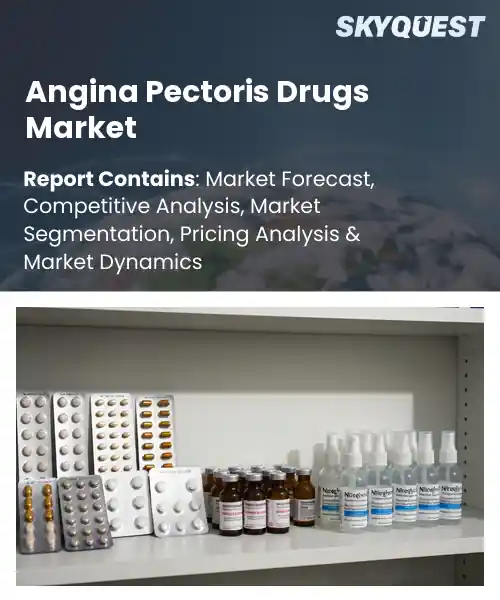
Angina Pectoris Drugs Market
Report ID: SQMIG35I2693
Report ID: SQMIG35I2693
[email protected]
USA +1 351-333-4748
Report ID:
SQMIG35I2693 |
Region:
Global |
Published Date: May, 2026
Pages:
157
|Tables:
119
|Figures:
77


Global Angina Pectoris Drugs Market size was valued at USD 8.52 Billion in 2024 and is poised to grow from USD 8.99 Billion in 2025 to USD 13.85 Billion by 2033, growing at a CAGR of 5.52% during the forecast period (2026-2033).
The primary driver for the global angina pectoris drugs market growth is the growing and aging global population, and the rising burden of ischemic heart disease, which in turn pushes more demand for symptomatic and preventive therapies. The market includes short acting nitrates, long acting nitrates, beta blockers, calcium channel blockers, and newer options like ranolazine and ivabradine, and it matters because effective pharmacologic management can reduce hospitalization and improve quality of life, in everyday terms.
In addition, a major factor driving the global Angina Pectoris Drugs Market penetration is genericization along with expanding healthcare access in emerging economies, which supports volume growth and also creates room for differentiation. When high cost branded molecules lose exclusivity , prices tend to drop , and payers broaden their formularies, which lets clinicians prescribe well established beta blockers and calcium channel blockers more widely. For example, metoprolol generics in India started replacing costlier branded options . With that shift, utilization can lower per patient drug spend but increase aggregate demand, then manufacturers respond by competing via fixed dose combinations, extended release formulations, and adherence programs, which then help outcomes and also reduce downstream hospital costs.
AI is accelerating angina pectoris drug discovery and development by streamlining target discovery, molecule design, preclinical prediction, and clinical stratification. Machine learning and generative models, can help spot cardiac relevant targets and propose optimized small molecules with fewer safety risks. On top of that, integrating multimodal patient data supports smarter biomarker selection and more efficient trial enrollment, so development becomes less wasteful and more patient centered. This matters because the market still needs novel mechanisms and better long term symptom control. Companies are moving toward AI enabled pipelines, and collaborations show how teams are blending clinical data with generative chemistry to shrink timelines and focus resources on the most promising candidates.
Market snapshot - (2026-2033)
Global Market Size
USD 8.52 Billion
Largest Segment
Beta-Blockers
Fastest Growth
Ranolazine (Ranexa)
Growth Rate
5.52% CAGR
To get more insights on this market click here to Request a Free Sample Report
Global angina pectoris drugs market is segmented by drug class, type, route, distribution and region. Based on drug class, the market is segmented into Nitrates, Beta-Blockers, Calcium Channel Blockers, Ranolazine (Ranexa) and Ivabradine. Based on type, the market is segmented into Stable Angina, Unstable Angina and Vasospastic (Variant) Angina. Based on route, the market is segmented into Oral, Sublingual, and Transdermal. Based on distribution, the market is segmented into Hospital Pharmacies, Retail Pharmacies and Online. Based on region, the market is segmented into North America, Europe, Asia Pacific, Latin America and Middle East & Africa.
As per the angina pectoris drugs market analysis, the Nitrates segment dominates because their quick vasodilatory action has long been the cornerstone for getting symptom relief in angina, it also shapes prescribing habits and emergency protocols. People are already familiar with them clinically and they’re broadly available, so demand stays steady both in acute and chronic care places, and dosing formats are simple, and low cost generics keep it accessible. All of this makes physicians and patients lean on nitrates for near immediate symptom control, which reinforces the market presence and keeps them in the formulary consistently.
Still, beta-blockers are coming up as the fastest growing area , mainly because guidelines are adding more endorsement for ischemic risk reduction. There are also newer formulations that improve tolerability , and they’re getting used more often in combination therapies. Better patient education and prescribing that’s tuned to comorbid conditions, helps adoption move faster, and that creates room for innovation and broader therapeutic positioning across long term angina management.
According to the angina pectoris drugs market forecast, the Sublingual segment dominates because their rapid mucosal absorption gives near immediate symptom relief, so they stay central to acute angina care, and even emergency response. Patients also tend to be comfortable with self administration, the formulations are compact enough to carry around, and clinician protocols usually integrate them strongly. This reliability in onset and general patient acceptance keeps demand consistent in urgent care settings, and it basically keeps sublingual therapies as the default acute treatment option.
However, the transdermal delivery category is predicted to take the largest angina pectoris drugs market share, because new patch technologies can stretch antianginal effects for longer, improve adherence and reduce how often patients have to dose, in fact. Better formulation science and favorable tolerability profiles makes it feel more appealing for long term management, letting manufacturers expand their portfolios while clinicians shift toward maintenance options. Those changes, also open up extra commercial and therapeutic possibilities as well.
To get detailed segments analysis, Request a Free Sample Report
As per the angina pectoris drugs market regional forecast, North America keeps a lead role in the market, more or less because research keeps getting deeper, the commercial backbone stays solid, and a lot of industry know-how stays in the same hands. There is a deep presence of multinational along with specialty pharmaceutical companies, and it supports continued invention and faster launch of newer treatment options. Reimbursement rules are already well set, and with different payer structures there is room for wide access and more tailored pricing plays. Doctors seem very tuned in too, there are large cardiology networks, and hospitals that are more integrated, so guideline based use sticks, and long term treatment gets adjusted better over time. On top of that, the clinical trial scene is strong, and venture as well as capital market activity helps move products faster, and it makes partnerships easier to form. Diagnostic resources are also comprehensive, then add patient teaching campaigns and post market surveillance, and that overall raises the regional baseline for care across the market.
United States Angina Pectoris Drugs Market
The Angina Pectoris Drugs sector in the United States leans on a tightly linked research to commercial path, extensive specialist networks, and concentrated centers that focus on cardiovascular excellence. When industry, academia, and clinical investigators collaborate, evidence gets produced quicker, and guidelines get folded in sooner. As payer options are varied, companies can shape access tactics, while more advanced diagnostic and interventional services enable end to end disease management and quicker uptake of therapeutic innovations across different care venues, at real scale.
Canada Angina Pectoris Drugs Market
The Angina Pectoris Drugs industry in Canada runs within a universal health framework, and it tends to stress fair formulary handling and reimbursement that is evidence based. Provincial decision making and health technology assessment ends up steering adoption and pricing behavior. Primary care networks and cardiac rehabilitation programs are also quite strong, which supports how patients are managed. When companies enter, they usually try to line up with national clinical pathways and bring in stakeholders early, so products stay available across different care contexts, even while handling regional procurement and formulary discussions.
Europe is seeing strong expansion in the angina pectoris drugs market, and it is being pushed by aligned regulatory structures, public health systems that are already functioning well, and consistent uptake of clinical guidelines across member states. There is also a lively mix of domestic and multinational pharmaceutical players, which brings variety to the product lineup and keeps competitive pricing in motion so access is easier. Health technology assessment and more centralized approval routes help shorten market entry timelines, while reimbursement systems at the national level help adoption keep moving. Demand is getting broader too, because there is more emphasis on earlier detection, integrated care pathways and outpatient style management, so both symptom easing options and disease modifying therapies are being pulled in more often. Research collaborations, cross border clinical trial activity, and strategic ties between industry and academic centers keep accelerating innovation, which supports faster spread of new therapeutic advances through the region. Affordability efforts help as well, and increasing comfort with biosimilar and generic alternatives, and patient advocacy that is actively shaping the treatment journey. All of this creates a space where clinical innovation can translate into more patient access, even across diverse healthcare models.
Germany Angina Pectoris Drugs Market
In the Angina Pectoris Drugs Market in Germany, the advantages come from a robust clinical base, notable pharmaceutical production, and a high concentration of specialists across both hospitals and outpatient cardiology centers. Diagnostic strength is solid and there is a strong habit of following guidelines, which helps enable earlier intervention and more complex therapeutic plans. Reimbursement systems and hospital purchasing choices at a regional level affect how quickly things get adopted, and when industry teams up with academic institutions it reinforces clinical research and innovation, so Germany stays positioned as a hub for cardiovascular therapies.
United Kingdom Angina Pectoris Drugs Market
The Angina Pectoris Drugs Market United Kingdom is shaped by centralized health service structures, serious health technology assessment practices, and guideline bodies that actively influence prescribing behavior. Cost effectiveness and real world evidence then become key inputs for adoption pathways, while established cardiovascular networks help run connected outpatient care models. Innovation hubs and partnerships that involve biotech groups and academic centers encourage clinical development, and evolving community care programs are expanding access beyond hospitals, even if it feels a bit gradual in some areas.
France Angina Pectoris Drugs Market
The Angina Pectoris Drugs Market France is generally described by proactive reimbursement policies, strong public hospital networks, and a focus on coordinated outpatient management. National clinical pathways and meaningful primary care involvement support timely diagnosis and better long term therapy adjustments. Local manufacturing and research capability also supports product availability, while negotiations driven by payers and regional health programs help widen adoption. Patient advocacy and clinician cooperation further encourage uptake of newer therapeutic approaches across multiple care settings.
Asia Pacific is strengthening its position in the angina pectoris drugs market with coordinated investment in healthcare infrastructure, and a push to expand local pharmaceutical and biotech know how, and also regulatory modernization that smooths clinical development. More access to diagnostics and specialist consultations, along with growing clinician knowhow and adoption of international treatment standards, is quietly widening the patient base for both established and newer therapies. Strategic partnerships between multinational firms and domestic producers are speeding up knowledge transfer and the scale up of production, while focused reimbursement changes and trial based pricing pilots are making things feel more affordable. More trial enrollment across varied populations, and better post market surveillance, is raising regional evidence creation, so adoption can happen sooner and therapies can be more tuned to local clinical and economic conditions.
Japan Angina Pectoris Drugs Market
The Angina Pectoris Drugs Market in Japan shows a mature healthcare environment with high levels of clinical practice, solid domestic pharmaceutical research, and a cautious but still rigorous regulatory structure. The focus on proof coming from local clinical work, and cooperation between university hospitals and industry, helps ensure new treatments are brought in in a methodical way. With integrated care routes and strong outpatient cardiology services, patients get continuity of therapy, while strategic funding in diagnostic technology supports early detection and management across different care settings.
South Korea Angina Pectoris Drugs Market
The Angina Pectoris Drugs Market in South Korea is pushed forward by an energetic biotech scene, quick regulatory review, and hospital centric clinical networks that help clinical evaluation move fast. Ongoing collaboration between multinational companies and local manufacturers supports commercialization, and scale up of production too, and reimbursement initiatives that are getting more progressive help expand access. There’s also a steady emphasis on digital health integration, and concentrated clinical trial activity, which improves evidence generation and supports tailored therapeutic options. This, in turn, helps innovations diffuse into everyday cardiology work faster.
To know more about the market opportunities by region and country, click here to
Buy The Complete Report
Drivers
Increasing Cardiovascular Disease Burden
Advancements In Therapeutic Options
Restraints
High Treatment Costs and Affordability
Side Effects And Safety Concerns
Request Free Customization of this report to help us to meet your business objectives.
The competitive landscape in the global angina pectoris drugs market is defined by strategic consolidation, selective buyouts and tech forward partnerships , all aimed at tackling those stubborn unmet needs in refractory and long running angina. There is a device drug convergence and industry acquisitions that lock in adjacent portfolios, while venture backed biotechs try fresh mechanisms and alliance led development to move things faster from trials to real world commercialization, and sometimes it all feels a bit relentless.
Top Player’s Company Profile
Recent Developments in the Angina Pectoris Drugs Market
SkyQuest’s ABIRAW (Advanced Business Intelligence, Research & Analysis Wing) is our Business Information Services team that Collects, Collates, Correlates, and Analyses the Data collected by means of Primary Exploratory Research backed by robust Secondary Desk research.
As per SkyQuest analysis, the global angina pectoris drugs market is expanding, with the aging population and a rising burden of ischemic heart disease as a key driver. That situation pushes demand for symptom relief and preventive treatments. Another driver is the widespread genericization , along with expanding healthcare access across emerging markets, which boosts volumes and broadens formularies too. A restraint that keeps showing up is persistent high treatment costs, and affordability barriers that can limit patient access and reduce payer coverage. North America still holds the dominant position because of strong research infrastructure and reimbursement systems. Meanwhile, the nitrates segment stays the leading segment , because it gives fast symptom relief, it remains relatively low cost, and it has entrenched clinical use .
| Report Metric | Details |
|---|---|
| Market size value in 2024 | USD 8.52 Billion |
| Market size value in 2033 | USD 13.85 Billion |
| Growth Rate | 5.52% |
| Base year | 2024 |
| Forecast period | (2026-2033) |
| Forecast Unit (Value) | USD Billion |
| Segments covered |
|
| Regions covered | North America (US, Canada), Europe (Germany, France, United Kingdom, Italy, Spain, Rest of Europe), Asia Pacific (China, India, Japan, Rest of Asia-Pacific), Latin America (Brazil, Rest of Latin America), Middle East & Africa (South Africa, GCC Countries, Rest of MEA) |
| Companies covered |
|
| Customization scope | Free report customization with purchase. Customization includes:-
|
To get a free trial access to our platform which is a one stop solution for all your data requirements for quicker decision making. This platform allows you to compare markets, competitors who are prominent in the market, and mega trends that are influencing the dynamics in the market. Also, get access to detailed SkyQuest exclusive matrix.
Table Of Content
Executive Summary
Market overview
Parent Market Analysis
Market overview
Market size
KEY MARKET INSIGHTS
COVID IMPACT
MARKET DYNAMICS & OUTLOOK
Market Size by Region
KEY COMPANY PROFILES
Methodology
For the Angina Pectoris Drugs Market, our research methodology involved a mixture of primary and secondary data sources. Key steps involved in the research process are listed below:
1. Information Procurement: This stage involved the procurement of Market data or related information via primary and secondary sources. The various secondary sources used included various company websites, annual reports, trade databases, and paid databases such as Hoover's, Bloomberg Business, Factiva, and Avention. Our team did 45 primary interactions Globally which included several stakeholders such as manufacturers, customers, key opinion leaders, etc. Overall, information procurement was one of the most extensive stages in our research process.
2. Information Analysis: This step involved triangulation of data through bottom-up and top-down approaches to estimate and validate the total size and future estimate of the Angina Pectoris Drugs Market.
3. Report Formulation: The final step entailed the placement of data points in appropriate Market spaces in an attempt to deduce viable conclusions.
4. Validation & Publishing: Validation is the most important step in the process. Validation & re-validation via an intricately designed process helped us finalize data points to be used for final calculations. The final Market estimates and forecasts were then aligned and sent to our panel of industry experts for validation of data. Once the validation was done the report was sent to our Quality Assurance team to ensure adherence to style guides, consistency & design.
Analyst Support
Customization Options
With the given market data, our dedicated team of analysts can offer you the following customization options are available for the Angina Pectoris Drugs Market:
Product Analysis: Product matrix, which offers a detailed comparison of the product portfolio of companies.
Regional Analysis: Further analysis of the Angina Pectoris Drugs Market for additional countries.
Competitive Analysis: Detailed analysis and profiling of additional Market players & comparative analysis of competitive products.
Go to Market Strategy: Find the high-growth channels to invest your marketing efforts and increase your customer base.
Innovation Mapping: Identify racial solutions and innovation, connected to deep ecosystems of innovators, start-ups, academics, and strategic partners.
Category Intelligence: Customized intelligence that is relevant to their supply Markets will enable them to make smarter sourcing decisions and improve their category management.
Public Company Transcript Analysis: To improve the investment performance by generating new alpha and making better-informed decisions.
Social Media Listening: To analyze the conversations and trends happening not just around your brand, but around your industry as a whole, and use those insights to make better Marketing decisions.
REQUEST FOR SAMPLE
 REQUEST FREE CUSTOMIZATION
Global Angina Pectoris Drugs Market size was valued at USD 8.52 Billion in 2024 and is poised to grow from USD 8.99 Billion in 2025 to USD 13.85 Billion by 2033, growing at a CAGR of 5.52% during the forecast period (2026-2033).
Competitive landscape in the global angina pectoris drugs market is characterized by strategic consolidation, targeted acquisitions and technology driven partnerships that respond to persistent unmet needs in refractory and chronic angina. Recent examples include device drug convergence and industry buyouts to secure complementary portfolios, while venture backed biotechs push novel mechanisms and alliance driven development to accelerate clinical translation and commercialization. 'Pfizer Inc.', 'AstraZeneca', 'Novartis AG', 'Gilead Sciences (Ranexa)', 'Servier Laboratories (Ivabradine)', 'Bayer AG', 'Sanofi SA', 'Merck & Co.', 'GlaxoSmithKline', 'Teva Pharmaceutical', 'Mylan (Viatris)', 'Watson Pharmaceuticals', 'Forest Laboratories (Allergan)', 'Actavis (Allergan)', 'Noven Pharmaceuticals', 'Par Pharmaceutical', 'Lannett Company', 'Hi-Tech Pharmacal', 'Cadila Healthcare', 'Intas Pharmaceuticals'
Increasing prevalence of ischemic heart disease and aging populations have raised clinical demand for angina pectoris therapies, prompting broader adoption of pharmacological management as a primary strategy for symptom control and risk reduction. Greater awareness among clinicians and patients leads to earlier diagnosis and initiation of treatment, expanding prescription volumes. This sustained demand encourages pharmaceutical companies to prioritize development, production, and marketing of established and novel agents, reinforcing treatment availability and fostering competitive efforts that further support market expansion over time.
Personalized Therapeutics Adoption: Adoption of personalized therapeutics is reshaping angina management by enabling treatment plans tailored to patient biology and comorbidity profiles. Integration of biomarker-driven stratification and pharmacogenomic insights supports more predictable responses and reduced therapeutic trialing. Collaboration between diagnostics, technology firms, and pharmaceutical developers is accelerating availability of companion diagnostics and targeted formulations. Payers and clinicians increasingly value precision approaches for optimizing outcomes, prompting strategic investments in niche therapies and clinical decision support that streamline individualized prescribing pathways across care settings broadly.
Why does North America Dominate the Global Angina Pectoris Drugs Market? |@12


Want to customize this report? This report can be personalized according to your needs. Our analysts and industry experts will work directly with you to understand your requirements and provide you with customized data in a short amount of time. We offer $1000 worth of FREE customization at the time of purchase.
Feedback From Our Clients


 USA (+1) 351-333-4748

