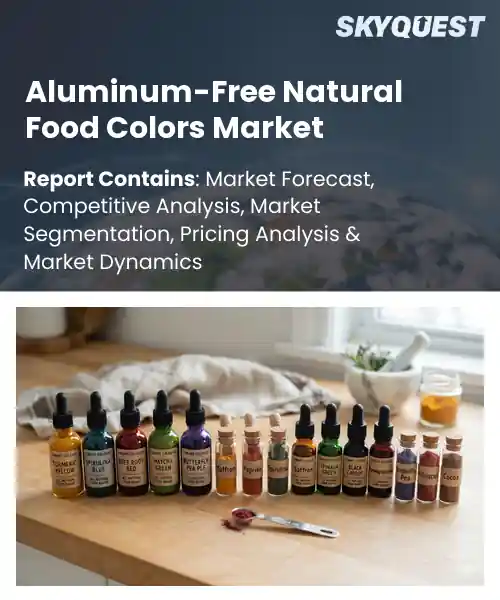
Aluminum-Free Natural Food Colors Market
Report ID: SQMIG15E4464
Report ID: SQMIG15E4464
[email protected]
USA +1 351-333-4748
Report ID:
SQMIG15E4464 |
Region:
Global |
Published Date: September, 2026
Pages:
157
|Tables:
123
|Figures:
77


Global Aluminum-Free Natural Food Colors Market size was valued at USD 410.0 Million in 2024 and is poised to grow from USD 440.34 Million in 2025 to USD 779.52 Million by 2033, growing at a CAGR of 7.4% during the forecast period (2026-2033).
The aluminum‑free natural food colors market comprises pigments derived from plant, mineral or microbial sources that replace synthetic dyes containing aluminum or heavy metals. Consumers increasingly demand clean‑label ingredients, prompting food manufacturers to reformulate products such as confectionery, beverages and dairy with beetroot, spirulina and turmeric extracts. Over the past decade, regulatory scrutiny intensified after incidents of aluminum exposure linked to certain artificial colors, driving a shift toward certified organic colorants. This transition is evident in the surge of “natural‑color” claims on snack packaging, where brands cite both safety and sustainability as differentiators for modern health‑conscious consumers worldwide and markets. Regulatory harmonization across the EU, US and Asia emerges as the key catalyst propelling the global aluminum‑free natural food colors market forward. As authorities tighten limits on permissible aluminum residues, manufacturers must adopt compliant pigments, prompting investment in high‑yield extraction technologies and scalable fermentation processes. This compliance pressure fuels collaborations between ingredient firms and agritech startups, exemplified by the joint development of a low‑cost, anthocyanin‑rich purple carrot variant used in plant‑based yogurts across Europe. The resulting cost efficiencies lower entry barriers for small‑batch producers, expand product portfolios, and open export opportunities to regions where natural labeling commands premium pricing globally.
How is AI-driven formulation accelerating the aluminum‑free natural food colors market?
AI driven formulation is reshaping the aluminum free natural food colors market by rapidly testing pigment blends, predicting stability, and matching flavor profiles without metal additives. Manufacturers now rely on machine learning models that simulate heat, pH and light exposure, cutting lab cycles and waste. This approach speeds product launches, supports clean label trends and enables small producers to compete with large brands. Recent pilot projects show that color intensity can be tuned to match seasonal produce, and supply chains benefit from reduced inventory of trial batches. As consumer demand for transparent ingredients grows, AI tools become a strategic advantage.Chr. Hansen June 2023, introduced an AI driven formulation platform that creates aluminum free color palettes in minutes, allowing food processors to replace synthetic dyes with stable natural shades. The tool accelerates time to market and reduces formulation waste, reinforcing growth across clean label products worldwide.
Market snapshot - (2026-2033)
Global Market Size
USD 410.0 Million
Largest Segment
Carotenoids
Fastest Growth
Anthocyanins
Growth Rate
7.4% CAGR
To get more insights on this market click here to Request a Free Sample Report
Global aluminum-free natural food colors market is segmented by color type, form, application, end user and region. Based on color type, the market is segmented into Carotenoids, Anthocyanins, Chlorophylls, Curcumin, Betalains and Other Natural Colors. Based on form, the market is segmented into Liquid, Powder and Gel. Based on application, the market is segmented into Beverages, Bakery & Confectionery, Dairy & Frozen Products, Processed Foods, Meat & Seafood Products and Other Applications. Based on end user, the market is segmented into Food & Beverage Manufacturers, Foodservice and Other End Users. Based on region, the market is segmented into North America, Europe, Asia Pacific, Latin America and Middle East & Africa.
Carotenoids segment dominates because they provide vibrant yellows, oranges, and reds that closely mimic synthetic dyes while offering strong oxidative stability. Their natural origin aligns with clean‑label demands, and manufacturers favor them for broad functionality across diverse food matrices. This combination of visual appeal, performance reliability, and consumer trust drives their leadership in the aluminum‑free natural food colors market and supports long shelf life for end‑products, reinforcing its market preference.
However, betalains segment emerges as the most rapidly expanding area because its intense pink to violet hues fulfill niche demand for natural coloration in specialty foods. Innovative extraction techniques lower cost, and growing consumer interest in exotic flavors fuels adoption, positioning betalains as a key driver of future market growth.
Liquid segment dominates because its fluid nature enables seamless integration into beverage lines and high‑throughput processing, eliminating the need for additional solubilization steps. The ready‑to‑use characteristic speeds up production cycles, reduces equipment wear, and aligns with clean‑label narratives that favor minimal processing. These operational efficiencies and consumer‑friendly attributes cement liquid as the preferred choice in the market. Its stability across a wide pH range also supports diverse formulations, further strengthening its market leadership.
Meanwhile, powder segment shows the strongest growth momentum because advancements in micro‑encapsulation improve dispersibility and protect sensitive pigments, expanding applicability beyond traditional uses. Rising demand for cost‑effective, shelf‑stable solutions in dry mixes and snack formulations drives adoption, positioning powder as a catalyst for broader market expansion and innovative product development.
To get detailed segments analysis, Request a Free Sample Report
Asia Pacific dominance stems from a confluence of sophisticated consumer preferences for clean‑label products and a robust supply chain anchored in abundant botanical resources. The region’s leading food manufacturers leverage advanced extraction technologies that translate local plant diversity into vibrant pigments, meeting both aesthetic and health expectations. Strong governmental guidance encourages natural ingredient adoption, while collaborative research ecosystems accelerate innovation. Cultural emphasis on visual appeal in cuisine further fuels demand, enabling rapid product development across confectionery, beverages and snack categories. This synergy of market demand, regulatory support and technical expertise positions Asia Pacific at the forefront of natural color innovation.
Aluminum-Free Natural Food Colors Market in Japan benefits from a deep tradition of culinary aesthetics that prioritize visual appeal, coupled with stringent food safety regulations that favor natural solutions. Leading food processors collaborate with domestic biotech firms to develop vibrant plant‑based pigments, while consumer awareness of additive‑free products drives demand across snacks, confectionery and beverages. The supply chain leverages locally sourced botanical extracts, reinforcing the market’s resilience and innovation.
Aluminum-Free Natural Food Colors Market in South Korea is propelled by a strong emphasis on clean label trends and a vibrant K‑food culture that celebrates vivid presentation. Domestic manufacturers invest heavily in research partnerships with universities to extract pigments from traditional herbs and marine algae, offering alternatives that align with consumer health consciousness. Export‑focused companies also leverage these innovations to meet the rising demand for natural coloration in regional food hubs.
Europe’s rapid expansion of the Aluminum-Free Natural Food Colors market is anchored in heightened consumer scrutiny of additive usage and a robust regulatory environment that promotes natural alternatives. Leading food brands across the continent are reformulating products to meet clean‑label expectations, fostering strong demand for plant‑derived pigments. Collaborative research initiatives between universities and biotech firms accelerate the discovery of novel colorants sourced from locally cultivated botanicals. Sustainability commitments further motivate manufacturers to adopt renewable sourcing practices, while premium positioning of natural hues enhances product differentiation in competitive categories such as confectionery, dairy and beverages. Retailers are also incorporating clear labeling that highlights natural color claims, which reinforces consumer trust and drives shelf‑space allocation for products featuring these pigments. The convergence of health‑focused marketing and environmental stewardship creates a fertile landscape for continuous innovation and market penetration across both mainstream and niche segments.
Aluminum-Free Natural Food Colors Market in Germany benefits from a strong heritage of food quality standards and extensive research infrastructure that supports the development of high‑purity botanical extracts. Major confectionery and bakery producers prioritize natural pigments to align with consumer expectations for transparency. Collaborative clusters linking ingredient suppliers with academic institutes accelerate formulation of stable color solutions, reinforcing Germany’s role as a benchmark for natural color adoption across the European Union.
Aluminum-Free Natural Food Colors Market in the United Kingdom is driven by a fast‑moving consumer base that embraces innovative food experiences and values clean‑label transparency. Leading retailers actively promote products featuring natural pigments, creating a marketplace that rewards rapid product development cycles. Research partnerships between British universities and ingredient firms focus on extracting vibrant hues from indigenous herbs, enabling manufacturers to differentiate their offerings while adhering to stringent food safety guidance.
Aluminum-Free Natural Food Colors Market in France is emerging as culinary creators seek to enhance artisanal products with vivid, natural hues. The French emphasis on terroir and premium positioning encourages the use of locally sourced plant extracts, fostering collaborations between boutique ingredient houses and traditional food producers. Consumer acceptance of natural coloration is reinforced by regulatory advocacy for additive‑free labeling, supporting a steady increase in market relevance across pastry, dairy and beverage segments.
North America is strengthening its position in the Aluminum-Free Natural Food Colors market through a confluence of consumer health awareness and innovative ingredient sourcing strategies. Food manufacturers are increasingly reformulating products to meet clean‑label expectations, spurring demand for vibrant, plant‑based pigments that substitute synthetic alternatives. Strong academic‑industry collaborations accelerate the discovery of novel extracts from indigenous crops, while advanced processing technologies ensure color stability across a wide range of applications. Retail channels emphasize transparent labeling, reinforcing consumer confidence and encouraging broader adoption of natural color solutions across snack, beverage and prepared food categories. The regulatory environment also supports the transition by providing clear guidance on permissible natural colorants, enabling faster product approvals. Additionally, sustainability initiatives encourage the use of renewable botanical sources, aligning ingredient selection with broader corporate responsibility goals and further cementing North America’s leadership in clean‑label innovation.
Aluminum-Free Natural Food Colors Market in the United States is propelled by a dynamic consumer base that actively seeks additive‑free products across diverse food categories. Major food conglomerates collaborate with domestic biotech firms to scale extraction of bright pigments from native crops, ensuring supply chain control and alignment with clean‑label commitments. The extensive retail network highlights natural color claims, fostering widespread acceptance and reinforcing market momentum. These efforts are reinforced through strategic partnerships with ingredient specialists.
Aluminum-Free Natural Food Colors Market in Canada benefits from a strong emphasis on food safety and natural ingredient sourcing driven by consumer demand for transparent labeling. Collaborative research programs between Canadian universities and coastal harvest firms focus on marine‑derived pigments that offer unique hues while supporting sustainable fishing practices. Retailers showcase natural color advantages, encouraging manufacturers to integrate these alternatives across snack, dairy and beverage lines and meet evolving industry standards.
To know more about the market opportunities by region and country, click here to
Buy The Complete Report
Health Conscious Consumers Favor Natural
* The increasing awareness of health risks associated with synthetic colorants drives consumers to seek alternatives that are derived from plants and fruits, creating a strong demand for aluminum‑free natural food colors. Manufacturers respond by reformulating products to meet these expectations, which in turn expands market visibility and encourages further product innovation. This consumer‑centered shift not only supports sustained growth but also reinforces brand credibility in premium segments, fostering long‑term loyalty and encouraging broader distribution networks across both retail and foodservice channels worldwide.
Clean Label Regulations Accelerate Adoption
* Governments and regulatory agencies around the globe are implementing stricter labeling requirements that demand transparent disclosure of additives, prompting manufacturers to replace aluminum-based colors with natural alternatives to avoid negative consumer perception. This regulatory environment encourages product reformulation, stimulates investment in research and development of stable plant‑derived pigments, and creates a competitive advantage for companies that can demonstrate compliance. Consequently, the market experiences accelerated expansion as firms align their portfolios with emerging standards, reinforcing consumer confidence and facilitating entry into new geographic markets.
Higher Cost of Natural Dyes
* The production of natural pigments often involves labor‑intensive extraction processes, limited raw material availability, and stringent quality controls, which together raise the overall cost compared with conventional synthetic alternatives. This price differential poses a challenge for manufacturers seeking cost‑effective formulations, especially in price‑sensitive market segments. As a result, some producers may hesitate to fully transition to aluminum‑free options, opting instead for blended solutions or maintaining existing color palettes, which can temper market growth and limit broader adoption across low‑margin product lines.
Limited Shelf Life Stability
* Natural colorants derived from fruits, vegetables, or spices are inherently more susceptible to oxidation, enzymatic degradation, and color shift when exposed to heat, light, or varying pH levels during processing and storage. This limited stability complicates formulation efforts for manufacturers aiming to preserve visual appeal over extended product lifespans. Consequently, companies may need to invest in additional preservation technologies or accept reduced shelf life, both of which increase production complexity and may deter widespread utilization of aluminum‑free colors in certain food categories, thereby slowing market momentum.
Request Free Customization of this report to help us to meet your business objectives.
The competitive landscape is shaped by aggressive M&A, strategic alliances and rapid tech innovation, driving firms to secure differentiated natural pigment portfolios. DSM’s 2020 acquisition of Naturex expanded its algae‑derived color range, while Sensient’s 2021 purchase of Vantage Specialty Ingredients added high‑purity anthocyanin assets. Cargill’s 2022 partnership with Givaudan launched a plant‑based color platform, and BASF’s 2023 micro‑encapsulation technology enhanced stability of aluminum‑free hues, intensifying rivalry and accelerating market adoption.
Top Player’s Company Profile
Recent Developments
SkyQuest’s ABIRAW (Advanced Business Intelligence, Research & Analysis Wing) is our Business Information Services team that Collects, Collates, Correlates, and Analyses the Data collected by means of Primary Exploratory Research backed by robust Secondary Desk research. As per SkyQuest analysis the global aluminum‑free natural food colors market is being propelled primarily by health‑conscious consumers who prefer plant‑derived pigments, while stricter clean‑label regulations serve as a second driver accelerating reformulation across product lines. The market is led by the carotenoids segment, which offers vibrant yellows, oranges and reds with strong oxidative stability, and Asia Pacific emerges as the dominating region thanks to abundant botanical resources and supportive regulatory frameworks. However, the higher cost of natural dyes compared with synthetic alternatives remains a notable restraint, limiting adoption in price‑sensitive categories and prompting manufacturers to seek cost‑effective extraction technologies.
| Report Metric | Details |
|---|---|
| Market size value in 2024 | USD 410.0 Million |
| Market size value in 2033 | USD 779.52 Million |
| Growth Rate | 7.4% |
| Base year | 2024 |
| Forecast period | (2026-2033) |
| Forecast Unit (Value) | USD Million |
| Segments covered |
|
| Regions covered | North America (US, Canada), Europe (Germany, France, United Kingdom, Italy, Spain, Rest of Europe), Asia Pacific (China, India, Japan, Rest of Asia-Pacific), Latin America (Brazil, Rest of Latin America), Middle East & Africa (South Africa, GCC Countries, Rest of MEA) |
| Companies covered |
|
| Customization scope | Free report customization with purchase. Customization includes:-
|
To get a free trial access to our platform which is a one stop solution for all your data requirements for quicker decision making. This platform allows you to compare markets, competitors who are prominent in the market, and mega trends that are influencing the dynamics in the market. Also, get access to detailed SkyQuest exclusive matrix.
Table Of Content
Executive Summary
Market overview
Parent Market Analysis
Market overview
Market size
KEY MARKET INSIGHTS
COVID IMPACT
MARKET DYNAMICS & OUTLOOK
Market Size by Region
KEY COMPANY PROFILES
Methodology
For the Aluminum-Free Natural Food Colors Market, our research methodology involved a mixture of primary and secondary data sources. Key steps involved in the research process are listed below:
1. Information Procurement: This stage involved the procurement of Market data or related information via primary and secondary sources. The various secondary sources used included various company websites, annual reports, trade databases, and paid databases such as Hoover's, Bloomberg Business, Factiva, and Avention. Our team did 45 primary interactions Globally which included several stakeholders such as manufacturers, customers, key opinion leaders, etc. Overall, information procurement was one of the most extensive stages in our research process.
2. Information Analysis: This step involved triangulation of data through bottom-up and top-down approaches to estimate and validate the total size and future estimate of the Aluminum-Free Natural Food Colors Market.
3. Report Formulation: The final step entailed the placement of data points in appropriate Market spaces in an attempt to deduce viable conclusions.
4. Validation & Publishing: Validation is the most important step in the process. Validation & re-validation via an intricately designed process helped us finalize data points to be used for final calculations. The final Market estimates and forecasts were then aligned and sent to our panel of industry experts for validation of data. Once the validation was done the report was sent to our Quality Assurance team to ensure adherence to style guides, consistency & design.
Analyst Support
Customization Options
With the given market data, our dedicated team of analysts can offer you the following customization options are available for the Aluminum-Free Natural Food Colors Market:
Product Analysis: Product matrix, which offers a detailed comparison of the product portfolio of companies.
Regional Analysis: Further analysis of the Aluminum-Free Natural Food Colors Market for additional countries.
Competitive Analysis: Detailed analysis and profiling of additional Market players & comparative analysis of competitive products.
Go to Market Strategy: Find the high-growth channels to invest your marketing efforts and increase your customer base.
Innovation Mapping: Identify racial solutions and innovation, connected to deep ecosystems of innovators, start-ups, academics, and strategic partners.
Category Intelligence: Customized intelligence that is relevant to their supply Markets will enable them to make smarter sourcing decisions and improve their category management.
Public Company Transcript Analysis: To improve the investment performance by generating new alpha and making better-informed decisions.
Social Media Listening: To analyze the conversations and trends happening not just around your brand, but around your industry as a whole, and use those insights to make better Marketing decisions.
REQUEST FOR SAMPLE
 REQUEST FREE CUSTOMIZATION


Want to customize this report? This report can be personalized according to your needs. Our analysts and industry experts will work directly with you to understand your requirements and provide you with customized data in a short amount of time. We offer $1000 worth of FREE customization at the time of purchase.
Feedback From Our Clients


 USA (+1) 351-333-4748

