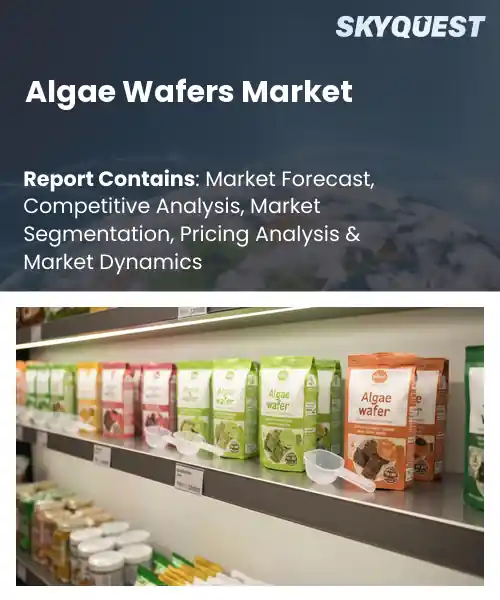
Algae Wafers Market
Report ID: SQMIG30H2377
Report ID: SQMIG30H2377
[email protected]
USA +1 351-333-4748
Report ID:
SQMIG30H2377 |
Region:
Global |
Published Date: February, 2026
Pages:
157
|Tables:
148
|Figures:
78


Global Algae Wafers Market size was valued at USD 660.30 Million in 2024 and is poised to grow from USD 696.62 Million in 2025 to USD 1069.09 Million by 2033, growing at a CAGR of 5.5% during the forecast period (2026-2033).
The primary driver of the algae wafers market is growing demand for specialized, nutritionally complete feeds among hobbyist and commercial aquatic keepers, which has turned a niche product into an essential category. Algae wafers are compressed pellets formulated to supply plant nutrients to herbivorous freshwater species such as plecos, shrimp and tangs, improving species-specific diets while minimizing excess waste that harms water quality. The last few years have seen a shift in the feed formulation from homemade mixes to manufactured, branded and scientifically designed foods with added vitamins and probiotics. The most notable example is the reformulation of food lines by several manufacturers (including Nature's Way) to include spirulina, kelp extracts, and stabilized carotenoids for use in sensitive ecosystems across the globe.
A key trend driving the global algae wafers sector is formulation innovation, because enhanced nutrient profiles and functional additives directly improve animal health and prompt buyers to pay premiums. Aquarists report more vibrant colors in fish that were fed spirulina, carotenoids, and probiotics than in those who were not. They also reported less algae consumption and decreased mortality rates. Retailers in turn are incentivized to begin selling these higher-margin special wafers to aquarists. Similarly, commercial shrimp farms testing stabilized algal feed sources report more consistent growth rates and reduced labor requirements for changing out feed. As a result, procurement teams will tend to select pre-made or pre-mixed wafers over custom blends. These quantifiable results create opportunities for private label (branded) products by selling through e-commerce, subscriptions, and partnering with aquaculture integrators.
How is AI Improving Demand Forecasting in the Algae Wafers Market?
Demand forecasting for algae wafers hinges on matching production to aquaculture and pet food demand while avoiding overstock and spoilage. AI enhances this through the merger of sales signals with on-farm sensing data and seasonal or weather patterns to expose demand drivers. Machine learning models record the shifts in preferences and channels for manufacturers to analyze their raw material sourcing plans and reformulate. In practice, this manifests itself in the form of more intelligent placement of inventory, more closely aligned production runs with feeding cycles, and shorter turnaround times to respond to promotions from retailers. These capabilities will allow for increased adaptability of forecasts and decrease the historical friction small producers of algae ingredients have experienced when operating in the supply chain.
In January 2025, Algatech launched a new algae based wafer ingredient that broadened supplier offerings and market attention. AI driven demand forecasting helps firms translate that product innovation into efficient production and distribution by improving order timing and reducing waste, supporting faster adoption and steadier market growth.
Market snapshot - (2026-2033)
Global Market Size
USD 660.3 Million
Largest Segment
Algae Wafer Tablets
Fastest Growth
Algae Wafer Pellets
Growth Rate
5.5% CAGR
To get more insights on this market click here to Request a Free Sample Report
Global algae wafers market is segmented by product type, ingredient, application, end-user, distribution channel and region. Based on product type, the market is segmented into algae wafer tablets, algae wafer pellets and algae flake & wafer blends. Based on ingredient, the market is segmented into spirulina, nori, chlorella and other algae types. Based on application, the market is segmented into aquarium fish food, pond fish food, shrimp & invertebrate feed and other aquatic pets.
Based on end-user, the market is segmented into pet owners, pet stores & retailers, online retailers and distributors & dealers. Based on distribution channel, the market is segmented into online channels, pet specialty stores, supermarkets & hypermarkets and direct OEM sales. Based on region, the market is segmented into North America, Europe, Asia Pacific, Latin America and Middle East & Africa.
As per the global algae wafers market growth, algae wafer tablets segment dominates because their compact form enables precise dosing and stable nutrient delivery, meeting hobbyist and commercial feeding needs. AI enhances this through the merger of sales signals with on-farm sensing data and seasonal or weather patterns to expose demand drivers. Machine learning models record the shifts in preferences and channels for manufacturers to analyze their raw material sourcing plans and reformulate.
In practice, this manifests itself in the form of more intelligent placement of inventory, more closely aligned production runs with feeding cycles, and shorter turnaround times to respond to promotions from retailers. These capabilities will allow for increased adaptability of forecasts and decrease the historical friction small producers of algae ingredients have experienced when operating in the supply chain.
However, algae wafer pellets are emerging as the most rapidly expanding format, driven by manufacturing innovations that enable varied sinking rates and texture profiles. Their adaptability supports multi species diets and custom nutrient blends, appealing to specialized hobbyists and retailers. This innovation and product diversity unlock new shelf space and online niches.
Shrimp & invertebrate feed segment dominates because algae wafers match the dietary needs of detritivorous and herbivorous invertebrates, offering nutrient dense, sinkable formats that encourage consistent consumption. Breeders and hobbyists emphasize formulations that aid in molting, coloration and reproduction, thus leading manufacturers to do R&D on recipes specific to a particular species. This has created a more extensive product line and thus the need for retailers to stock more items; this has resulted in the category being a major contributor to growth within the industry and for the aquaculture industry overall).
On the other hand, aquarium fish food is witnessing the strongest growth as hobbyist demand for premium ornamental diets rises. The use of algae blends that have been specifically formulated for a variety of fish species allows for greater adoption of algae blends and is expected to lead to additional development of value-added formulations, greater expansion of product offerings, greater retailer collaboration, and greater subscription implementations.
To get detailed segments analysis, Request a Free Sample Report
As per the global algae wafers market share, North America dominates the global algae wafers market due to a combination of robust retail and distribution infrastructure, mature aquaculture and ornamental fish care sectors, and concentrated investment in product innovation. Well established brands and private label suppliers coexist with specialty manufacturers, enabling broad product variety and shelf presence across mainstream and specialty channels.
High consumer willingness to pay for premium, natural ingredients and clear labeling supports higher value propositions. The vast array of e-commerce platforms and partnerships with pet specialty retailers make it easier for consumers to find new products and buy them again. Research organizations are working with product manufacturers to develop formulations and certifying products as sustainable. Manufacturers are diversified in their scale of production, they are large enough to produce products that are sold in mass-market channels (e.g. supermarkets) as well as small enough to create specialty products for an artisan market.
Algae wafers market in United States sees strong retail penetration across pet specialty channels and mass retailers, supported by established brand recognition and broad online availability. Formulations are differentiated and made with premium quality ingredients, as well as collaboration with universities and research institutions to improve products through R&D. Manufacturers are marketing their products with a focus on using natural ingredients and being sustainable to reach out to ethical consumers and commercial aquaculture businesses. As a result, demand continues to be strong from a variety of consumer groups and through joint ventures with retailers.
Algae wafers market in Canada is characterized by niche manufacturers focusing on high quality, sustainably sourced ingredients and strong engagement with local aquarist communities. Through partnerships with conservation organizations and research institutions, the producers have been working together to validate the advantages of the formulation, and the marketing of this product targets consumers who are educated about the product. Consumers are looking for premium products that align with their values for being environmentally responsible, therefore creating a steady opportunity for adoption among hobbyists and aquaculture operators worldwide.
Based on global algae wafers regional forecast, expansion in Europe is propelled by heightened consumer preference for sustainable pet nutrition, strong specialty retail networks, and vigorous product innovation among regional manufacturers. Together, they provide the foundation for a premium position that spans both mainstream distribution channels and niche markets. The ability to utilize robust e-commerce platforms and a variety of distribution methods, helps expand market presence; as do retailer partnerships and private label product strategies, which enable enhanced shelf presence.
Collaborating with independent research organizations and certification agencies adds to credibility; while local manufacturing clusters create an environment that promotes speed-to-market for production and formulation development. Urban center targeted marketing and consumer education/outreach programs increase awareness of the nutritional benefits of consuming these products and serve as a catalyst for product usage; while regulatory harmonization among countries reduces barriers to product labeling and distribution.
Algae wafers market in Germany benefits from advanced manufacturing capabilities, extensive distribution networks, and a strong culture of aquarium hobbyist engagement. Brands with established reputations, as well as retailers with strong relationships, are assured of shelf space in both specialty and mainstream channels. The ability to deliver products efficiently through the supply chain also supports the German economic system's ability to serve as the European base for the manufacture and sale of algae-based wafer products.
Algae wafers market in United Kingdom is notable for rapid e commerce adoption, dynamic premiumization trends, and active engagement from urban hobbyist communities. Integration of online and offline retail formats is very important for retailers to operate as well as have curated inventory for specialty retailers; while manufacturers want to offer unique formulas using sustainable practices to reach consumers who want to find great products; Finally, creating a partnership with aquaculture producer will allow them to verify their performance statements. The combination of these activities will allow for rapid product trials and ability to scale quickly, making UK amongst the most active markets now.
Algae wafers market in France shows emerging momentum driven by a strong preference for natural product positioning and a growing base of artisanal manufacturers. Retailers that sell special products and curated online platforms are favored by distributors as consumers want to know the ingredients in the product and that the brand is environmentally conscious. Manufacturers of special products also place an emphasis on using gentle formulations and are partnering with conservation organizations and research groups to prove their claims.
As per global algae wafers regional outlook, Asia Pacific is strengthening its position through increasing regional production capacity, targeted product innovation, and rapid adoption of digital sales channels. Manufacturers serve important markets with specialized products developed specifically to meet regional species preferences and water conditions, thus increasing consumer relevance for both hobbyists and production aquaculture operators. Increased investment in research partnerships and traceability of ingredients help support the credibility of products, while the ability to utilize efficient logistics and develop cross border trade channels expands reach into global markets.
Increased sophistication of consumers and demand for high-quality, sustainably sourced products drive manufacturing differentiation enabling manufacturers to compete on quality, formulating specific products, and transparency within their supply chains across the region. Close relationships between manufacturers and universities provide the basis for differentiated products and support for the development of export-oriented strategies which will enhance the competitive position of the region.
Algae wafers market in Japan emphasizes formulation precision to meet varied species requirements and diverse water chemistries, supported by strong research capabilities and collaboration between manufacturers and academic laboratories. Using sophisticated e commerce platforms and specialized retailers for product distribution allow fast discovery of the product and the potential for repeat purchases. Manufacturers are committed to traceability, quality assurance, and positioning products towards more discerning hobbyists and aquaculture professionals who appreciate proven performance and ingredient transparency in domestic markets.
Algae wafers market in South Korea combines agile manufacturing with advanced private label development and a digital retail environment supporting product rollout. The regional preferences and preferences of local individuals for different types of textures and nutrient profiles guide local brands’ innovation in these areas. The strong logistics networks within an area provide for easy and wide availability of product through both e-commerce and specialty retail distribution channels. Through partnerships with research centres, local producers can develop formulation science and support efficacy claims.
To know more about the market opportunities by region and country, click here to
Buy The Complete Report
Rising Demand for Aquarium Nutrition
Growing Use In Aquaculture Feeding
High Production and Quality Costs
Regulatory Hurdles and Certification
Request Free Customization of this report to help us to meet your business objectives.
Competition in the global algae wafers market outlook is intensifying as ingredient innovation, strategic partnerships and portfolio reshuffles drive supplier differentiation. Established ingredient companies are shifting toward algal omega three products and divesting legacy units while deep tech startups commercialize strain and process breakthroughs that feed wafer formulators and co development deals. Recent corporate launches and asset transactions are actively reshaping supply chains and ingredient access.
SkyQuest’s ABIRAW (Advanced Business Intelligence, Research & Analysis Wing) is our Business Information Services team that Collects, Collates, Correlates, and Analyses the Data collected by means of Primary Exploratory Research backed by robust Secondary Desk research.
As per SkyQuest analysis, the global algae wafers industry is being propelled by rising demand for specialized, nutritionally complete feeds for hobbyist and commercial aquatic keepers. One key driver is consumer preference for plant based, species specific nutrition that improves health and reduces waste. One restraint is high production and quality costs associated with algae cultivation and processing that can limit scale and raise prices. The dominating region is North America while the dominating segment is Algae Wafer Tablets due to dosing precision and stable nutrient delivery. A second driver is formulation innovation including added spirulina, carotenoids and probiotics that enhance performance and justify premium pricing.
| Report Metric | Details |
|---|---|
| Market size value in 2024 | USD 660.3 Million |
| Market size value in 2033 | USD 1069.09 Million |
| Growth Rate | 5.5% |
| Base year | 2024 |
| Forecast period | (2026-2033) |
| Forecast Unit (Value) | USD Million |
| Segments covered |
|
| Regions covered | North America (US, Canada), Europe (Germany, France, United Kingdom, Italy, Spain, Rest of Europe), Asia Pacific (China, India, Japan, Rest of Asia-Pacific), Latin America (Brazil, Rest of Latin America), Middle East & Africa (South Africa, GCC Countries, Rest of MEA) |
| Companies covered |
|
| Customization scope | Free report customization with purchase. Customization includes:-
|
To get a free trial access to our platform which is a one stop solution for all your data requirements for quicker decision making. This platform allows you to compare markets, competitors who are prominent in the market, and mega trends that are influencing the dynamics in the market. Also, get access to detailed SkyQuest exclusive matrix.
Table Of Content
Executive Summary
Market overview
Parent Market Analysis
Market overview
Market size
KEY MARKET INSIGHTS
COVID IMPACT
MARKET DYNAMICS & OUTLOOK
Market Size by Region
KEY COMPANY PROFILES
Methodology
For the Algae Wafers Market, our research methodology involved a mixture of primary and secondary data sources. Key steps involved in the research process are listed below:
1. Information Procurement: This stage involved the procurement of Market data or related information via primary and secondary sources. The various secondary sources used included various company websites, annual reports, trade databases, and paid databases such as Hoover's, Bloomberg Business, Factiva, and Avention. Our team did 45 primary interactions Globally which included several stakeholders such as manufacturers, customers, key opinion leaders, etc. Overall, information procurement was one of the most extensive stages in our research process.
2. Information Analysis: This step involved triangulation of data through bottom-up and top-down approaches to estimate and validate the total size and future estimate of the Algae Wafers Market.
3. Report Formulation: The final step entailed the placement of data points in appropriate Market spaces in an attempt to deduce viable conclusions.
4. Validation & Publishing: Validation is the most important step in the process. Validation & re-validation via an intricately designed process helped us finalize data points to be used for final calculations. The final Market estimates and forecasts were then aligned and sent to our panel of industry experts for validation of data. Once the validation was done the report was sent to our Quality Assurance team to ensure adherence to style guides, consistency & design.
Analyst Support
Customization Options
With the given market data, our dedicated team of analysts can offer you the following customization options are available for the Algae Wafers Market:
Product Analysis: Product matrix, which offers a detailed comparison of the product portfolio of companies.
Regional Analysis: Further analysis of the Algae Wafers Market for additional countries.
Competitive Analysis: Detailed analysis and profiling of additional Market players & comparative analysis of competitive products.
Go to Market Strategy: Find the high-growth channels to invest your marketing efforts and increase your customer base.
Innovation Mapping: Identify racial solutions and innovation, connected to deep ecosystems of innovators, start-ups, academics, and strategic partners.
Category Intelligence: Customized intelligence that is relevant to their supply Markets will enable them to make smarter sourcing decisions and improve their category management.
Public Company Transcript Analysis: To improve the investment performance by generating new alpha and making better-informed decisions.
Social Media Listening: To analyze the conversations and trends happening not just around your brand, but around your industry as a whole, and use those insights to make better Marketing decisions.
REQUEST FOR SAMPLE
 REQUEST FREE CUSTOMIZATION
Global Algae Wafers Market size was valued at USD 660.3 Million in 2024 and is poised to grow from USD 696.62 Million in 2025 to USD 1069.09 Million by 2033, growing at a CAGR of 5.5% during the forecast period (2026-2033).
Competition in the global algae wafers market is intensifying as ingredient innovation, strategic partnerships and portfolio reshuffles drive supplier differentiation. Established ingredient companies are shifting toward algal omega three products and divesting legacy units while deep tech startups commercialize strain and process breakthroughs that feed wafer formulators and co development deals. Recent corporate launches and asset transactions are actively reshaping supply chains and ingredient access. 'Algama', 'TerraVia', 'Algae AquaCulture Tech', 'Algenol', 'Ecoduna', 'Green Plains Renewable Energy', 'Cellana', '3F Bio', 'Phytonix Corporation', 'Algae Farms', 'Triton Algae Innovations', 'Ocean Harvest Technologies', 'Targeted Growth', 'Algae Biomass Organization', 'Bioenzymes', 'AquaBioTech', 'Algafuel', 'Heliae Development', 'AlgaEnergy', 'Kewalo Basin Marine Mammal Laboratory'
Algae wafers have become a preferred staple among aquarium hobbyists and professional aquarists because they provide concentrated, plant-based nutrition for herbivorous and omnivorous species. This preference drives market growth by encouraging manufacturers to expand product lines, improve formulations, and distribute more widely through specialty retailers and online channels. As hobbyist communities prioritize health, sustainability, and convenience, demand for reliable, shelf-stable algae-based feeds increases, prompting investment in research, branding, and supply chain development that further strengthens market presence and consumer adoption.
Sustainable Feed Ingredient Shift: Manufacturers and feed formulators are prioritizing sustainable ingredient substitutes, driving interest in algae wafers as an environmentally preferable feed component for ornamental fish and aquatic species. Algae provide a renewable source of proteins, lipids and micronutrients that align with consumer demand for traceable, responsibly sourced inputs. This trend encourages collaboration between ingredient suppliers and brands to develop certified supply chains, enhance product differentiation through sustainability claims, and improve formulations that maintain nutritional performance while reducing dependence on finite marine resources.
Why does North America Dominate the Global Algae Wafers Market? |@12


Want to customize this report? This report can be personalized according to your needs. Our analysts and industry experts will work directly with you to understand your requirements and provide you with customized data in a short amount of time. We offer $1000 worth of FREE customization at the time of purchase.
Feedback From Our Clients


 USA (+1) 351-333-4748

