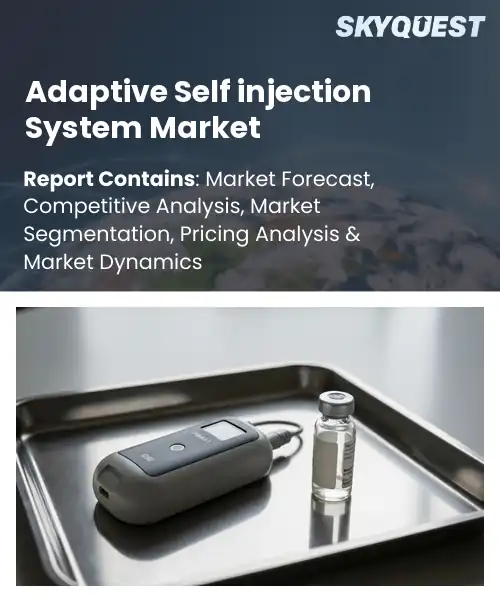
Adaptive Self injection System Market
Report ID: SQMIG35A3347
Report ID: SQMIG35A3347
[email protected]
USA +1 351-333-4748
Report ID:
SQMIG35A3347 |
Region:
Global |
Published Date: March, 2026
Pages:
157
|Tables:
117
|Figures:
77


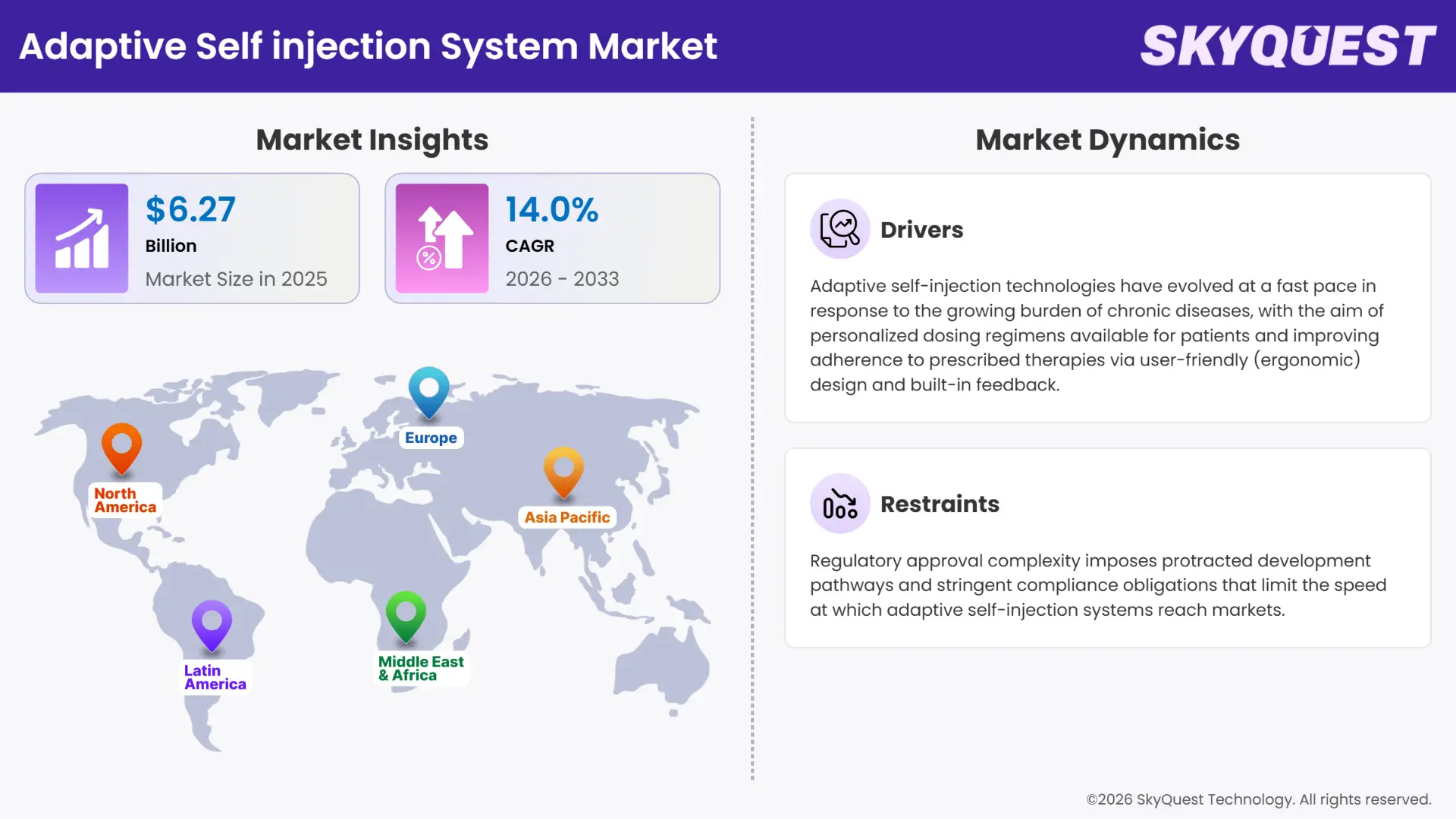
Global Adaptive Self Injection System Market size was valued at USD 5.5 Billion in 2024 and is poised to grow from USD 6.27 Billion in 2025 to USD 17.89 Billion by 2033, growing at a CAGR of 14.0% during the forecast period (2026-2033).
Key Takeaways: Market Trends & Insights
The adaptive self injection system market centers on devices that enable patients to administer subcutaneous therapies with automated dose control, sensors and connectivity. Its primary driver is the global shift toward biologic therapies and chronic disease self-management, which raises demand for safer, more user-friendly administration. Over the past two decades the market evolved from simple syringes to autoinjectors and now to adaptive platforms that tailor injection speed and depth to individual needs. Examples include insulin pens moving to smart pens and autoinjectors for rheumatoid arthritis biologics; this evolution matters because it reduces dosing errors, improves adherence, and supports decentralized care today.
Connectivity and data-driven personalization constitute the key trend driving the global adaptive self injection system sector growth, because real-time injection records and sensor feedback enable clinicians to monitor adherence and optimize dosing remotely. Through implementation of Bluetooth, cloud data, analysis and decision-support algorithms, patients experience a reduced number of missed dose occasions as well as early intervention by their clinician reducing potential complications and healthcare use. This cause-and-effect dynamic opens commercial opportunities such as bundled device-drug offerings, value-based contracting, and remote patient support services. In practice smart pens adjust insulin timing, connected autoinjectors inform biologic titration for multiple sclerosis, and aggregated device data improves clinical trial retention and post-market surveillance capabilities.
How is AI-Enabled Automation Improving Safety in the Adaptive Self Injection System Market?
AI enabled automation is improving safety in adaptive self injection systems by combining intelligent sensing real time feedback and predictive analytics. Key aspects include automated detection of user errors guided step by step prompts and telemetry that records injection events for clinician review. The market is shifting from mechanical autoinjectors toward connected platforms that support at home use and decentralized trials. Human factors validations and product pages report that digital guidance reduces hesitation and use errors while building patient confidence. These capabilities give clinicians better situational awareness so they can intervene earlier and tailor support for safer therapy use.
In September 2025, Ypsomed received FDA 510k clearance for SmartPilot a connected add on that logs injection outcomes detects user errors and provides immediate visual and acoustic guidance while securely transmitting adherence data to care teams which strengthens safety oversight and supports faster clinical and commercial rollout.
To get more insights on this market click here to Request a Free Sample Report
Global adaptive self injection system market is segmented by device type, technology integration, therapeutic indication, end-user and region. Based on device type, the market is segmented into smart autoinjectors, on-body wearable injectors and variable dose self-injectors. Based on technology integration, the market is segmented into automatic needle shielding/retraction, dose tracking & compliance monitoring and audio/visual patient guidance. Based on therapeutic indication, the market is segmented into diabetes management, autoimmune diseases and oncology & rare diseases. Based on end-user, the market is segmented into home healthcare/patient self-administration, specialty clinics and hospitals & ASCs. Based on region, the market is segmented into North America, Europe, Asia Pacific, Latin America and Middle East & Africa.
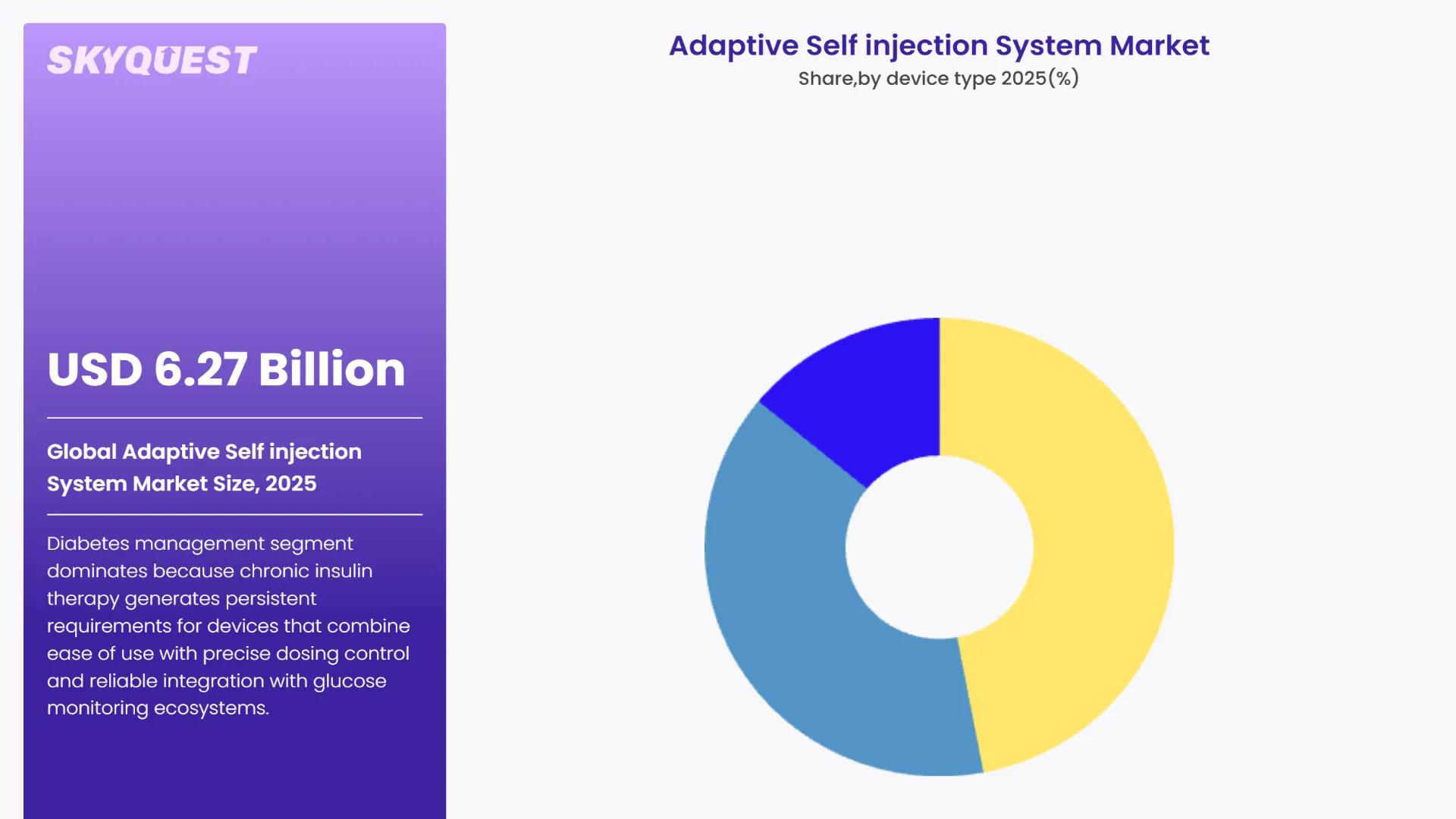
Diabetes management segment dominates because chronic insulin therapy generates persistent requirements for devices that combine ease of use with precise dosing control and reliable integration with glucose monitoring ecosystems. Minimizing daily administrative work is an important part of the approach taken by product designers to create user-friendly and functional products. They also want to create safe products and offer options that can work together with electronic health records (EHR). As a result, many manufacturers are focusing their R&D efforts and marketing strategies on product solutions for people with diabetes.
However, autoimmune diseases is the fastest growing area as expanding biologic therapies demand tailored delivery solutions. Rising therapeutic complexity and patient preference for less invasive chronic administration stimulate rapid device innovation focused on personalized dosing and monitoring. That momentum accelerates adaptive feature development and opens partnerships and differentiated value propositions that broaden long term market opportunity.
Dose tracking & compliance monitoring segment dominates because it furnishes the data backbone that enables adaptive behaviors, clinician oversight, and payer value narratives in self injection systems. Continuous, reliable adherence insights translate into measurable care pathways, bolster clinical confidence, and support reimbursement discussions, prompting manufacturers to embed tracking capabilities as a core differentiator and to build ecosystems that leverage captured real world data for iterative improvement.
Meanwhile, audio/visual patient guidance is emerging as the most rapidly expanding area because user centric interfaces reduce training burden and improve patient confidence in home administration. Increasing emphasis on human factors, accessibility for diverse cohorts, and seamless mobile integration drives adoption of rich guidance features. Enhanced guidance expands the addressable base and catalyzes new product iterations focused on usability and adherence.
To get detailed segments analysis, Request a Free Sample Report
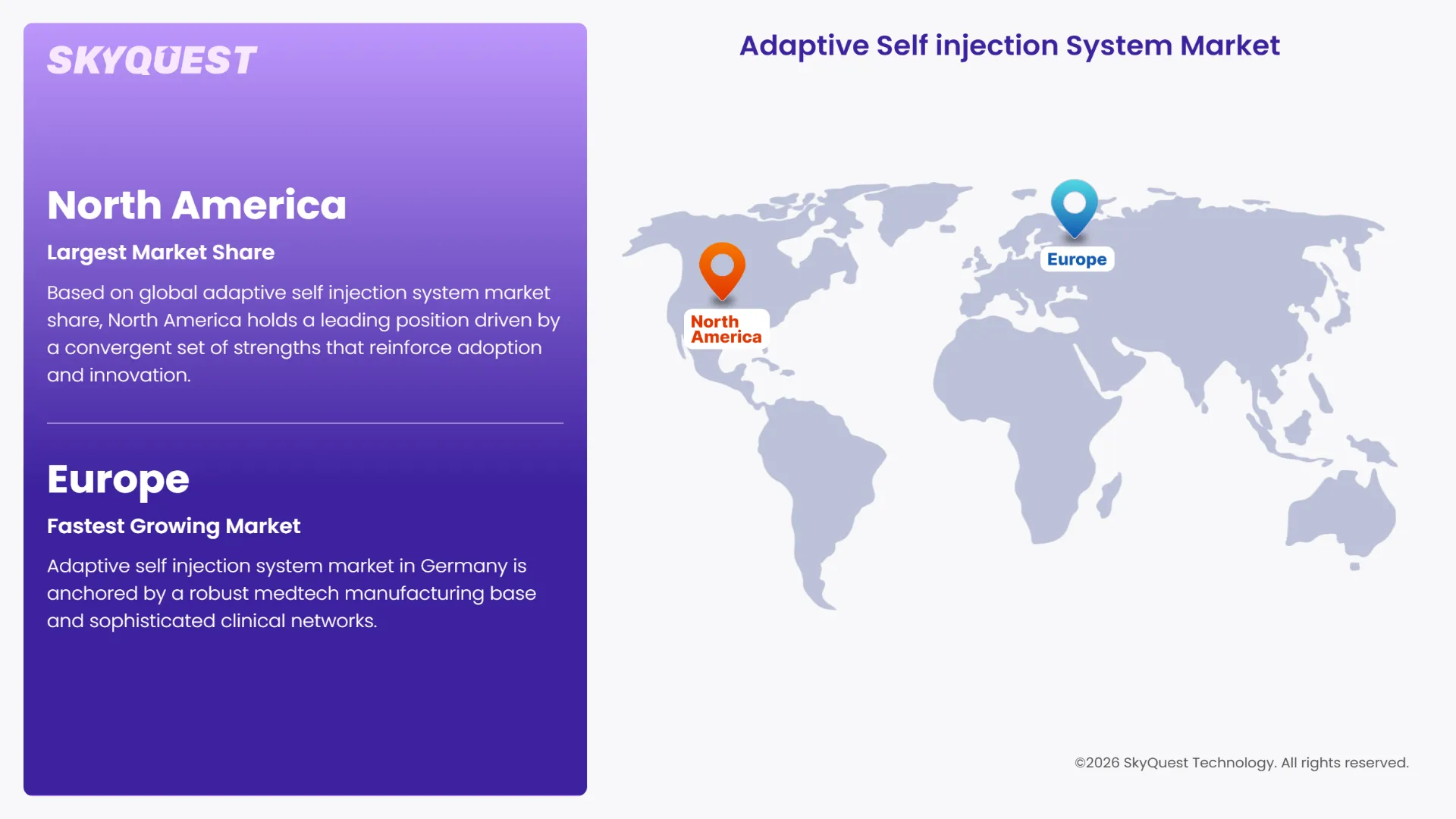
Based on global adaptive self injection system market share, North America holds a leading position driven by a convergent set of strengths that reinforce adoption and innovation. A large group of medical device companies and start ups exist in this region that put importance on innovation, usability and product design to the health care sector. Health care providers, both public and private, provide the environment needed for efficient roll-out of technology and easier accessibility to patients. Through clear guidelines and intellectual property protection, companies are encouraged to create rapid improvements in new medical devices using both traditional and new technologies. Evidence-based research through established clinical trial systems creates support for both the development of new products and their use outside of the clinical surroundings. There is also a formal infrastructure in place that provides for reliable delivery of products after they have been marketed and serviced.
Adaptive self injection system market in United States is characterized by intense innovation activity and extensive commercialization pathways. Medical device companies and technology firms actively pursue user centric design and integration with digital health platforms. Healthcare providers and specialized clinics support adoption through training and home care programs. Private sector investment and established reimbursement mechanisms enable market scale and rapid iteration. Strong focus on usability testing and real world performance drives continuous enhancement and patient acceptance.
Adaptive self injection system market in Canada reflects a measured adoption pattern aligned with national procurement practices and provincial healthcare delivery. Public health organizations work with manufacturers to prove clinical benefit and comply with safety and other requirements. There is greatly increasing interest in user-friendly devices with remote support models, especially for rural access and equity. Collaborating with local research institutions and pilot programs helps to create evidence of value. The market is focused on the interoperability of care and telehealth services and developing devices that simplify training and long-term adherence.
Based on global adaptive self injection system market regional forecast, expansion in Europe is propelled by regulatory harmonization, strong clinical infrastructures, and an emphasis on patient centered care innovations. Facilitating market access through regional conformity processes along with varying national reimbursement structures means having tailored access strategies. There is a strong emphasis on self care and home based delivery by healthcare systems, creating demand for intuitive and safe injection technologies. Partnerships between European and multinational manufacturers allow local manufacturing and distribution to be leveraged. Investing in real world evidence will also help provide payers with more confidence in these types of products by integrating health technology assessments. Digital health is seeing accelerated adoption and pilot programs across all settings providing device connectivity and patient support services.
Adaptive self injection system market in Germany is anchored by a robust medtech manufacturing base and sophisticated clinical networks. Manufacturers also have access to local engineering and quality assurance personnel to ensure both high standards of quality for their products. Stakeholder involvement from the clinical community and payers assists in speeding the adoption of these technologies, and the market is focused on providing clinicians with reliable, consistent, accurate, and safe products that correlate with how they were trained in order to meet the needs of the clinicians and patients.
Adaptive self injection system market in United Kingdom is distinguished by rapid adoption driven by digital health initiatives and a focus on patient self management. By using remote monitoring and supporting programs, health-related services and community initiatives encourage uptake. As an example, manufacturers and health professionals collaborate to conduct pilot programs which result in faster implementation into real-world settings. The health care industry desires an integrated system with health-management systems and effective usability data to maximize usability. The private sector complements the work of the public sector by working collaboratively to support innovative device manufacturing.
Adaptive self injection system market in France is emerging through a balance of regulatory rigor and targeted pilot programs that demonstrate clinical and economic value. Emphasis on patient safety and rigorous assessment informs procurement decisions. Local manufacturers and international firms pursue partnerships with healthcare institutions to adapt devices to national care pathways. The market is responsive to evidence generated through real world studies and places high importance on comprehensive patient education and post market support to ensure adherence and confidence in self injection solutions.
As per global adaptive self injection system market regional outlook, Asia Pacific is enhancing its market presence through a combination of domestic innovation, regulatory modernization, and strategic collaboration with global players. Faster timelines for gaining access to health technologies are being supported by improvements in regulatory structure and clearer approval pathways. Investments in local manufacturing capacity and supply chain resiliency will help scale with future deployments of health technologies. More users will use telehealth to meet their care needs and an increased focus on home based care creates demand for simpler to use devices and services to support patients. Cross border partnerships, targeted clinical initiatives, and technology transfer efforts further accelerate capability building and position the region as a progressively important contributor to the global market.
Adaptive self injection system market in Japan benefits from strong medtech expertise and a patient population that values high quality, reliable devices. Local manufacturers support and allow careful assessment and adoption through regulatory pathways and clinical engagement. Considerable emphasis is placed on the safety, ergonomics (device design), and compatibility with existing healthcare workflows of a product as many manufacturers will design their product (devices) specifically to meet the needs of both patients and healthcare providers.
Adaptive self injection system market in South Korea is advanced by a lively convergence of electronics, biotech, and digital health innovation. Governmental and private sector programs promote faster creation of prototypes and testing in hospital and community settings. The marketplace values interoperability of systems, user-centered design and rapid prototype testing; therefore, newer technologies enable the quick integration of new technologies within existing healthcare technologies while patient and physician acceptance is strong because of the use of technology by both patients and providers.
To know more about the market opportunities by region and country, click here to
Buy The Complete Report
Rising Chronic Disease Prevalence
Adaptive self-injection technologies have evolved at a fast pace in response to the growing burden of chronic diseases, with the aim of personalized dosing regimens available for patients and improving adherence to prescribed therapies via user-friendly (ergonomic) design and built-in feedback. The introduction of these technologies has reduced the complexity of the patient experience and decreased the level of anxiety associated with self-administered injections for both the patient and the healthcare provider, thus contributing to heightened acceptance of self-administered therapies among both healthcare providers and patients.
Technological Integration With Digital Health
Ecosystem integration - digital health ecosystems provide adaptive self-injection opportunities through features such as remote monitoring, automated reminders and secure data exchange that promote continued engagement with your healthcare provider and/or related health services and clinical decisions. Manufacturers partnering with software platforms can deliver coherent solutions that align with value-based care goals and streamline clinician workflows, thereby raising stakeholder confidence in device utility. This alignment encourages payers and providers to adopt delivery systems that facilitate better patient outcomes and care coordination, ultimately expanding market penetration as technology-enabled advantages become core differentiators among competing offerings.
Regulatory Approval Complexity
Regulatory approval complexity imposes protracted development pathways and stringent compliance obligations that limit the speed at which adaptive self-injection systems reach markets. Diverse regional regulatory expectations around software validation, device-drug combinations, and human factors testing require extensive coordination and documentation, diverting developer resources toward compliance activities rather than product innovation or commercialization. Smaller firms could find it more difficult to overcome these obstacles than larger firms, creating additional barriers to competing, increasing the time it takes to sell or deliver their products. Therefore, because of the lengthy timeframes and increased cost to commercialize their products when they are mature and ready for clinical use, the market will have experienced a slower rate of growth.
High Development And Production Costs
High development and production costs constrain investment in adaptive self-injection systems by increasing the financial risk associated with long product lifecycles and uncertain reimbursement pathways. Elevated expenses for specialized materials, manufacturing processes, and integrated electronics raise the threshold for profitability, prompting some firms to deprioritize or delay projects. In conclusion, these cost barriers impact the number of companies entering the market as well as their ability to expand into new locations since they’ll be concentrating on only established locations to recover their investment before entering any new markets. As such, barriers to costs in the long-run will slow down the rate at which new products are introduced and, ultimately, will reduce growth rate of the overall market.
Request Free Customization of this report to help us to meet your business objectives.
Competitive landscape in global adaptive self injection system market outlook is marked by incumbent device manufacturers and agile startups competing for pharma licensing and integration deals, driving M&A, exclusive licensing and co development. Pharma demand for connected, on body and smartphone integrated self injection solutions accelerates deal activity. Recent concrete moves include Stevanato Group partnering with Owen Mumford on an auto injector and university licensing deals such as Thomas Jefferson licensing to Sempresto for a smartphone integrated epinephrine device.
SkyQuest’s ABIRAW (Advanced Business Intelligence, Research & Analysis Wing) is our Business Information Services team that Collects, Collates, Correlates, and Analyses the Data collected by means of Primary Exploratory Research backed by robust Secondary Desk research.
As per SkyQuest analysis, the global adaptive self injection system industry is propelled primarily by the growing adoption of biologic therapies and the shift toward chronic disease self-management, which drive demand for safer, user-friendly delivery platforms. The second major growth driver for medications will be powered by connectivity and data-driven personalization through remote monitoring, adherence insights, and custom dosing. The dominant region of North America continues to lead with a dominant medtech ecosystem and favorable reimbursement paths. Dosing tracking and compliance tracking continue as the top segment due to the data backbone given by adaptive functionality. However, regulatory approval complexity continues to be a barrier to the pharmaceutical industry from accelerating since it causes longer time frames and higher compliance costs.
| Report Metric | Details |
|---|---|
| Market size value in 2024 | USD 5.5 Billion |
| Market size value in 2033 | USD 17.89 Billion |
| Growth Rate | 14.0% |
| Base year | 2024 |
| Forecast period | 2026-2033 |
| Forecast Unit (Value) | USD Billion |
| Segments covered |
|
| Regions covered | North America (US, Canada), Europe (Germany, France, United Kingdom, Italy, Spain, Rest of Europe), Asia Pacific (China, India, Japan, Rest of Asia-Pacific), Latin America (Brazil, Rest of Latin America), Middle East & Africa (South Africa, GCC Countries, Rest of MEA) |
| Companies covered |
|
| Customization scope | Free report customization with purchase. Customization includes:-
|
To get a free trial access to our platform which is a one stop solution for all your data requirements for quicker decision making. This platform allows you to compare markets, competitors who are prominent in the market, and mega trends that are influencing the dynamics in the market. Also, get access to detailed SkyQuest exclusive matrix.
Table Of Content
Executive Summary
Market overview
Parent Market Analysis
Market overview
Market size
KEY MARKET INSIGHTS
COVID IMPACT
MARKET DYNAMICS & OUTLOOK
Market Size by Region
KEY COMPANY PROFILES
Methodology
For the Adaptive Self injection System Market, our research methodology involved a mixture of primary and secondary data sources. Key steps involved in the research process are listed below:
1. Information Procurement: This stage involved the procurement of Market data or related information via primary and secondary sources. The various secondary sources used included various company websites, annual reports, trade databases, and paid databases such as Hoover's, Bloomberg Business, Factiva, and Avention. Our team did 45 primary interactions Globally which included several stakeholders such as manufacturers, customers, key opinion leaders, etc. Overall, information procurement was one of the most extensive stages in our research process.
2. Information Analysis: This step involved triangulation of data through bottom-up and top-down approaches to estimate and validate the total size and future estimate of the Adaptive Self injection System Market.
3. Report Formulation: The final step entailed the placement of data points in appropriate Market spaces in an attempt to deduce viable conclusions.
4. Validation & Publishing: Validation is the most important step in the process. Validation & re-validation via an intricately designed process helped us finalize data points to be used for final calculations. The final Market estimates and forecasts were then aligned and sent to our panel of industry experts for validation of data. Once the validation was done the report was sent to our Quality Assurance team to ensure adherence to style guides, consistency & design.
Analyst Support
Customization Options
With the given market data, our dedicated team of analysts can offer you the following customization options are available for the Adaptive Self injection System Market:
Product Analysis: Product matrix, which offers a detailed comparison of the product portfolio of companies.
Regional Analysis: Further analysis of the Adaptive Self injection System Market for additional countries.
Competitive Analysis: Detailed analysis and profiling of additional Market players & comparative analysis of competitive products.
Go to Market Strategy: Find the high-growth channels to invest your marketing efforts and increase your customer base.
Innovation Mapping: Identify racial solutions and innovation, connected to deep ecosystems of innovators, start-ups, academics, and strategic partners.
Category Intelligence: Customized intelligence that is relevant to their supply Markets will enable them to make smarter sourcing decisions and improve their category management.
Public Company Transcript Analysis: To improve the investment performance by generating new alpha and making better-informed decisions.
Social Media Listening: To analyze the conversations and trends happening not just around your brand, but around your industry as a whole, and use those insights to make better Marketing decisions.
REQUEST FOR SAMPLE
 REQUEST FREE CUSTOMIZATION
Global Adaptive Self Injection System Market size was valued at USD 5.5 Billion in 2024 and is poised to grow from USD 6.27 Billion in 2025 to USD 17.89 Billion by 2033, growing at a CAGR of 14.0% during the forecast period (2026-2033).
Competitive landscape is marked by incumbent device manufacturers and agile startups competing for pharma licensing and integration deals, driving M&A, exclusive licensing and co development. Pharma demand for connected, on body and smartphone integrated self injection solutions accelerates deal activity. Recent concrete moves include Stevanato Group partnering with Owen Mumford on an auto injector and university licensing deals such as Thomas Jefferson licensing to Sempresto for a smartphone integrated epinephrine device. 'Amgen Inc.', 'Johnson & Johnson', 'Medtronic', 'Bayer AG', 'Sanofi', 'Abbott Laboratories', 'Eli Lilly and Company', 'Genentech', 'Novo Nordisk', 'Merck & Co.', 'Wayfair Health', 'United Therapeutics Corporation', 'Insulet Corporation', 'BioDelivery Sciences International', 'Sandoz', 'AcelRx Pharmaceuticals', 'Antares Pharma, Inc.', 'Ypsomed AG', 'Incyte Corporation', 'Z syringe Solutions'
Advances in adaptive self-injection systems respond to increasing chronic disease burden by enabling personalized dosing schedules and improving therapy adherence through ergonomic designs and integrated feedback. These systems reduce patient complexity and anxiety associated with injections, fostering greater acceptance among clinicians and patients. As a result, healthcare providers are more likely to recommend therapies supported by user-friendly delivery platforms, which in turn expands prescription footholds and supplier investments. The cumulative effect is sustained market expansion driven by clearer value propositions around adherence and patient-centric care.
Personalized Dosing Algorithms: Adaptive self injection systems are increasingly leveraging individualized dosing algorithms that tailor delivery profiles to patient physiology, lifestyle and adherence patterns. Machine learning models analyze user behavior and biometric inputs to recommend variable dosing schedules and injection parameters, improving therapeutic outcomes and reducing adverse reactions. This shift prioritizes patient centricity, enabling real time adjustments and personalized feedback through device firmware and companion applications, fostering higher acceptance among clinicians and patients while creating differentiation opportunities for manufacturers focusing on software performance.
North America Dominate the Global Adaptive Self injection System Market.
Variable Dose Self-injectors currently account for the largest market share due to their ability to deliver personalized dosing, improve treatment flexibility, and support patient-specific therapy requirements.
On-body Wearable Injectors are expected to witness the fastest growth owing to their convenience, ability to administer large-volume biologics, and suitability for long-duration drug delivery.
AI-enabled automation improves safety by providing intelligent sensing, real-time feedback, predictive analytics, error detection, and guided injection support, helping patients administer therapies more accurately and confidently.


Want to customize this report? This report can be personalized according to your needs. Our analysts and industry experts will work directly with you to understand your requirements and provide you with customized data in a short amount of time. We offer $1000 worth of FREE customization at the time of purchase.
Feedback From Our Clients


 USA (+1) 351-333-4748

