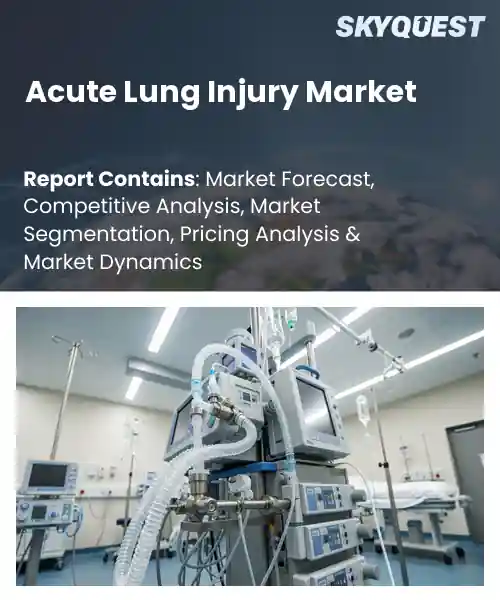
Acute Lung Injury Market
Report ID: SQMIG35H2653
Report ID: SQMIG35H2653
[email protected]
USA +1 351-333-4748
Report ID:
SQMIG35H2653 |
Region:
Global |
Published Date: July, 2026
Pages:
157
|Tables:
122
|Figures:
77


Global Acute Lung Injury Market size was valued at USD 632.7 Million in 2024 and is poised to grow from USD 660.54 Million in 2025 to USD 932.19 Million by 2033, growing at a CAGR of 4.4% during the forecast period (2026-2033).
The increasing prevalence of severe respiratory infections, sepsis, pneumonia, trauma, and other critical illnesses is the primary driver of the Global Acute Lung Injury Market. These conditions frequently trigger uncontrolled inflammatory responses that damage the lung's alveolar-capillary membrane, leading to acute lung injury (ALI) and acute respiratory distress syndrome (ARDS). As the number of critically ill patients rises, hospitals require more effective therapeutic options to reduce mortality, improve oxygenation, and shorten intensive care unit stays. This growing clinical burden has accelerated investment in innovative drugs, biologics, and supportive care therapies, driving market growth worldwide.
The rapid advancement of clinical research focused on targeted biologics, cell-based therapies, and immunomodulators is a key trend driving the global acute lung injury sector. Conventional treatment remains largely supportive, creating a significant unmet need for disease-modifying therapies. As pharmaceutical and biotechnology companies increase investment in regenerative medicine, anti-inflammatory agents, complement inhibitors, and stem cell therapies, more candidates are entering clinical trials. Positive regulatory support and encouraging clinical outcomes are improving investor confidence, accelerating product development, and expanding future treatment options, thereby strengthening long-term market growth.
How is AI-Driven Diagnostics Reshaping the Acute Lung Injury Market?
AI-driven diagnostics are streamlining the acute lung injury market by enabling faster, more precise identification of disease onset. Algorithms analyze imaging and biomarker data to flag subtle changes that human readers might miss, shortening the time to treatment. This early detection reduces intensive care stays and improves patient outcomes, which in turn drives demand for AI tools among hospitals and specialty clinics. Integration with electronic health records allows continuous monitoring, creating a feedback loop that refines predictive models. As clinicians adopt these platforms, they report smoother workflow and lower reliance on invasive procedures, making the care pathway both more efficient and patient‑centred. The technology’s scalability also supports broader access in regions lacking specialist expertise, further expanding market reach.
In March 2024, ResMed announced a new AI‑enhanced lung imaging platform, demonstrating real‑time injury scoring that accelerates triage and supports more targeted therapies, reinforcing growth and operational efficiency in the acute lung injury sector.
Market snapshot - (2026-2033)
Global Market Size
USD 632.7 Million
Largest Segment
Fluid Management Agents
Fastest Growth
Novel Biologics
Growth Rate
4.4% CAGR
To get more insights on this market click here to Request a Free Sample Report
Global acute lung injury market is segmented by therapeutic class, treatment modality, severity classification, end user and region. Based on therapeutic class, the market is segmented into corticosteroids, vasodilators, surfactant therapy, fluid management agents, novel biologics and others. Based on treatment modality, the market is segmented into pharmacological therapeutics, mechanical ventilation support, extracorporeal membrane oxygenation and others. Based on severity classification, the market is segmented into mild acute lung injury, moderate acute lung injury and severe acute lung injury. Based on end user, the market is segmented into hospitals, intensive care units, specialty respiratory clinics and others. Based on region, the market is segmented into North America, Europe, Asia Pacific, Latin America and Middle East & Africa.
Based on the global acute lung injury market growth, Corticosteroids segment dominates because they have long standing clinical validation, broad anti inflammatory effects and ease of administration, making them the first line choice for physicians managing acute lung injury. Their well characterized safety profile reduces hesitation in acute settings, while generic availability drives cost effectiveness, encouraging widespread adoption across diverse care settings. These factors collectively secure a predominant share of therapy prescriptions, reinforcing their central role in market revenue and volume.
However, novel biologics segment emerges as the fastest growing area because emerging molecular targets and personalized therapies are attracting significant research investment and early clinical success. Advances in delivery platforms and regulatory pathways are accelerating approval timelines, expanding therapeutic options and creating new revenue streams that propel market expansion.
Mechanical ventilation support segment leads because it provides immediate oxygenation stabilization, a core clinical need for patients with acute lung injury, and is entrenched in standard critical care protocols. Its versatility across severity grades and ease of integration with existing hospital infrastructure ensure consistent utilization. Consequently, it captures the bulk of equipment sales and service contracts, anchoring a sizable portion of market revenue and sustaining long term supplier relationships.
Meanwhile, extracorporeal membrane oxygenation segment is witnessing the strongest growth momentum because technological refinements are improving safety and portability, making it viable for a broader patient cohort. Reimbursement incentives and expanding clinical guidelines are encouraging earlier adoption, which is unlocking new market channels and accelerating overall market expansion.
To get detailed segments analysis, Request a Free Sample Report
As per the global acute lung injury market share, North America’s leadership in the industry stems from a convergence of mature healthcare ecosystems, deep investment in biomedical research, and a regulatory environment that encourages rapid product introduction. Leading academic hospitals collaborate closely with biotech innovators, creating pipelines that translate scientific discoveries into clinical solutions swiftly. Comprehensive payer structures provide robust reimbursement, supporting wide adoption of novel therapies and diagnostics. The presence of globally recognized pharmaceutical and medical‑device firms fuels continuous product development and market entry. Additionally, extensive clinical trial networks and advanced data analytics capabilities enable precise patient stratification and efficient study execution. Together these strengths generate a self‑reinforcing cycle of innovation, access, and commercial success that sustains North America’s dominant position.
United States Acute Lung Injury Market
Acute lung injury market in the United States benefits from an extensive network of research universities and leading health systems that drive early‑stage discovery through to late‑phase clinical validation. Strong venture capital presence accelerates translation of cutting‑edge therapies, while a well‑established reimbursement framework ensures market penetration. Collaborative partnerships between industry and government agencies further streamline regulatory pathways, fostering rapid adoption of innovative interventions across a broad patient base nationwide.
Canada Acute Lung Injury Market
Acute lung injury market in Canada is reinforced by a funded health system that emphasizes equitable access to advanced therapies and standardized care pathways. Strong collaboration between provincial health authorities and research institutes nurtures innovation pipelines focused on respiratory disorders. Government incentives promote development of biotech solutions, while integrated data platforms facilitate evidence generation. This supportive ecosystem enables incorporation of diagnostics and treatments, ensuring patients benefit from cutting‑edge clinical advances.
Based on the global acute lung injury regional forecast, Europe’s rapid expansion in the industry is driven by a collaborative research culture supported by extensive public funding and harmonized regulatory frameworks that reduce barriers to entry. Integration of multidisciplinary networks across academic institutions, hospitals, and industry accelerates the translation of innovative therapies and advanced diagnostic tools. Value‑based reimbursement models and strong health‑technology assessment processes encourage adoption of cost‑effective solutions, while growing awareness of respiratory health among clinicians fuels demand. Together, these factors create a fertile environment for sustained growth and reinforce Europe’s position as a dynamic arena for market development.
Germany Acute Lung Injury Market
Acute lung injury market in Germany is propelled by a robust research ecosystem anchored by world‑class universities and specialized respiratory institutes. Strong coordination between industry and public research bodies accelerates translation of novel therapeutics and diagnostic tools. The nation’s established manufacturing capacity supports swift scale‑up of medical devices, while comprehensive reimbursement policies promote broad clinical uptake. These combined assets create a fertile environment for sustained market leadership within Europe continues.
United Kingdom Acute Lung Injury Market
Acute lung injury market in the United Kingdom benefits from a clinical research network that links NHS trusts with leading academic centers. Adoption of innovative therapies is facilitated by regulatory pathways and reimbursement support. Initiatives between biotech firms and public institutions foster development of novel interventions. The emphasis on personalized medicine and data registries enhances outcome tracking, driving improvement and reinforcing the United Kingdom’s position as a significant expanding market.
France Acute Lung Injury Market
Acute lung injury market in France is emerging through focused government programs that prioritize respiratory health innovation. Close cooperation between national health agencies and research clusters accelerates translation of laboratory discoveries into clinical practice. Reimbursement models that reward value‑based care encourage early adoption of advanced diagnostics and therapies. Growing expertise in biotechnology and a commitment to patient‑centered outcomes position France to capture significantly increasing market share as its ecosystem matures.
As per global acute lung injury regional outlook, Asia Pacific is strengthening its position in the industry by leveraging expanding healthcare infrastructure, proactive government policies, and increased investment in research and development. Regional collaborations between multinational corporations and local biotech firms accelerate the introduction of cutting‑edge therapies and diagnostic platforms. Adoption of digital health technologies, including AI‑driven imaging and telemedicine, enhances early detection and patient monitoring. Growing clinical trial activity and supportive regulatory pathways enable faster market entry for innovative solutions, while expanding insurance coverage broadens patient access. These combined dynamics foster a vibrant ecosystem that is elevating the region’s influence in the global market.
Japan Acute Lung Injury Market
Acute lung injury market in Japan is advancing through strong governmental health initiatives that emphasize early detection and aggressive management of respiratory conditions. Collaboration between leading university hospitals and domestic device manufacturers accelerates the development of sophisticated monitoring technologies. A supportive regulatory framework streamlines approval pathways, while national insurance schemes facilitate broad patient access. Combined, these factors nurture an ecosystem where innovative therapies quickly become integral to standard care practices.
South Korea Acute Lung Injury Market
Acute lung injury market in South Korea is buoyed by rapid adoption of medical solutions and a public‑private partnership model. Intensive research funding drives breakthroughs in biologics and precision diagnostics tailored to lung injury pathways. Streamlined regulatory processes and expansive health coverage ensure swift market entry for novel products. This supportive landscape encourages domestic innovators and multinational firms to invest, resulting in a growing repertoire of therapeutic options for patients.
To know more about the market opportunities by region and country, click here to
Buy The Complete Report
Increasing Incidence Of Critical Respiratory Conditions
Advancements In Mechanical Ventilation Technology
High Cost Of Advanced Therapies
Regulatory Hurdles For Novel Treatments
Request Free Customization of this report to help us to meet your business objectives.
The global acute lung injury market outlook is moderately competitive, with companies including AstraZeneca, GlaxoSmithKline, Pfizer, Boehringer Ingelheim, Mesoblast, ReAlta Life Sciences, Windtree Therapeutics, and BioAegis Therapeutics advancing novel therapies for acute lung injury and ARDS. Leading players emphasize clinical pipeline expansion, biologics, and immunomodulatory approaches. Mesoblast focuses on regenerative cell therapies, ReAlta advances complement-targeting therapeutics, while BioAegis is accelerating development through regulatory designations and late-stage clinical trials to strengthen its competitive position.
Top Player’s Company Profile
Recent Developments
SkyQuest’s ABIRAW (Advanced Business Intelligence, Research & Analysis Wing) is our Business Information Services team that Collects, Collates, Correlates, and Analyses the Data collected by means of Primary Exploratory Research backed by robust Secondary Desk research.
As per SkyQuest analysis, the global acute lung injury industry is being propelled by the rising incidence of critical respiratory conditions, which fuels demand for both drugs and supportive technologies, while the high cost of advanced therapies acts as a restraint limiting uptake in budget‑constrained hospitals; North America dominates the market thanks to its mature healthcare infrastructure, robust research funding and strong reimbursement frameworks, and corticosteroids hold the largest share among therapeutic classes because of their established efficacy and affordability; a second driver is the rapid advancement of mechanical ventilation and extracorporeal membrane oxygenation technologies that improve patient outcomes and stimulate equipment purchases, further expanding the market’s breadth.
| Report Metric | Details |
|---|---|
| Market size value in 2024 | USD 632.7 Million |
| Market size value in 2033 | USD 932.19 Million |
| Growth Rate | 4.4% |
| Base year | 2024 |
| Forecast period | (2026-2033) |
| Forecast Unit (Value) | USD Million |
| Segments covered |
|
| Regions covered | North America (US, Canada), Europe (Germany, France, United Kingdom, Italy, Spain, Rest of Europe), Asia Pacific (China, India, Japan, Rest of Asia-Pacific), Latin America (Brazil, Rest of Latin America), Middle East & Africa (South Africa, GCC Countries, Rest of MEA) |
| Companies covered |
|
| Customization scope | Free report customization with purchase. Customization includes:-
|
To get a free trial access to our platform which is a one stop solution for all your data requirements for quicker decision making. This platform allows you to compare markets, competitors who are prominent in the market, and mega trends that are influencing the dynamics in the market. Also, get access to detailed SkyQuest exclusive matrix.
Table Of Content
Executive Summary
Market overview
Parent Market Analysis
Market overview
Market size
KEY MARKET INSIGHTS
COVID IMPACT
MARKET DYNAMICS & OUTLOOK
Market Size by Region
KEY COMPANY PROFILES
Methodology
For the Acute Lung Injury Market, our research methodology involved a mixture of primary and secondary data sources. Key steps involved in the research process are listed below:
1. Information Procurement: This stage involved the procurement of Market data or related information via primary and secondary sources. The various secondary sources used included various company websites, annual reports, trade databases, and paid databases such as Hoover's, Bloomberg Business, Factiva, and Avention. Our team did 45 primary interactions Globally which included several stakeholders such as manufacturers, customers, key opinion leaders, etc. Overall, information procurement was one of the most extensive stages in our research process.
2. Information Analysis: This step involved triangulation of data through bottom-up and top-down approaches to estimate and validate the total size and future estimate of the Acute Lung Injury Market.
3. Report Formulation: The final step entailed the placement of data points in appropriate Market spaces in an attempt to deduce viable conclusions.
4. Validation & Publishing: Validation is the most important step in the process. Validation & re-validation via an intricately designed process helped us finalize data points to be used for final calculations. The final Market estimates and forecasts were then aligned and sent to our panel of industry experts for validation of data. Once the validation was done the report was sent to our Quality Assurance team to ensure adherence to style guides, consistency & design.
Analyst Support
Customization Options
With the given market data, our dedicated team of analysts can offer you the following customization options are available for the Acute Lung Injury Market:
Product Analysis: Product matrix, which offers a detailed comparison of the product portfolio of companies.
Regional Analysis: Further analysis of the Acute Lung Injury Market for additional countries.
Competitive Analysis: Detailed analysis and profiling of additional Market players & comparative analysis of competitive products.
Go to Market Strategy: Find the high-growth channels to invest your marketing efforts and increase your customer base.
Innovation Mapping: Identify racial solutions and innovation, connected to deep ecosystems of innovators, start-ups, academics, and strategic partners.
Category Intelligence: Customized intelligence that is relevant to their supply Markets will enable them to make smarter sourcing decisions and improve their category management.
Public Company Transcript Analysis: To improve the investment performance by generating new alpha and making better-informed decisions.
Social Media Listening: To analyze the conversations and trends happening not just around your brand, but around your industry as a whole, and use those insights to make better Marketing decisions.
REQUEST FOR SAMPLE
 REQUEST FREE CUSTOMIZATION
Global Acute Lung Injury Market size was valued at USD 632.7 Million in 2024 and is poised to grow from USD 660.54 Million in 2025 to USD 932.19 Million by 2033, growing at a CAGR of 4.4% during the forecast period (2026-2033).
Competition in the acute lung injury market is intensifying as biotech firms secure large financing rounds to fast‑track novel therapeutics. Peroxitech’s $25 million Series A and Aiolos Bio’s $245 million raise exemplify capital‑driven races. Companies are forging research partnerships, leveraging AI‑enabled drug design, and pursuing M&A to broaden respiratory pipelines and capture emerging market share. 'AstraZeneca plc', 'GlaxoSmithKline plc', 'Pfizer Inc.', 'Merck & Co., Inc.', 'Boehringer Ingelheim International GmbH', 'Novartis AG', 'Eli Lilly and Company', 'Windtree Therapeutics, Inc.', 'Edesa Biotech, Inc.', 'Stemedica Cell Technologies, Inc.', 'Histocell', 'APEPTICO Forschung und Entwicklung GmbH', 'ReAlta Life Sciences, Inc.', 'Apeiron Biologics AG', 'Qx Therapeutics, Inc.', 'BioAegis Therapeutics Inc.', 'Vasomune Therapeutics, Inc.', 'Implicit Bioscience', 'Angion Biomedica Corp.', 'AnGes, Inc.'
The rising frequency of severe respiratory illnesses such as acute respiratory distress syndrome and pneumonia drives demand for acute lung injury solutions. As populations age and exposure to environmental pollutants increases, clinicians encounter more patients requiring intensive care support. This heightened clinical burden stimulates hospitals to adopt specialized therapeutic protocols and invest in comprehensive care pathways, thereby expanding the market for diagnostic tools, pharmacologic agents, and supportive devices tailored to manage lung injury effectively throughout healthcare systems worldwide and research institutions.
Precision Immunomodulation Gains Traction: The shift toward precision immunomodulatory therapies is redefining acute lung injury treatment pathways. Researchers are leveraging molecular profiling to identify patient sub‑populations that respond to targeted cytokine inhibitors, reducing heterogeneity in clinical outcomes. This personalized approach is fostering collaborations between biotech firms and academic centers, accelerating early‑phase trials and encouraging investment in platform technologies. As clinicians observe improved safety margins and quicker recovery times, adoption is expanding across tertiary hospitals, positioning precision immunomodulation as a cornerstone of future therapeutic strategies.
Why does North America Dominate the Global Acute Lung Injury Market? |@12


Want to customize this report? This report can be personalized according to your needs. Our analysts and industry experts will work directly with you to understand your requirements and provide you with customized data in a short amount of time. We offer $1000 worth of FREE customization at the time of purchase.
Feedback From Our Clients


 USA (+1) 351-333-4748

