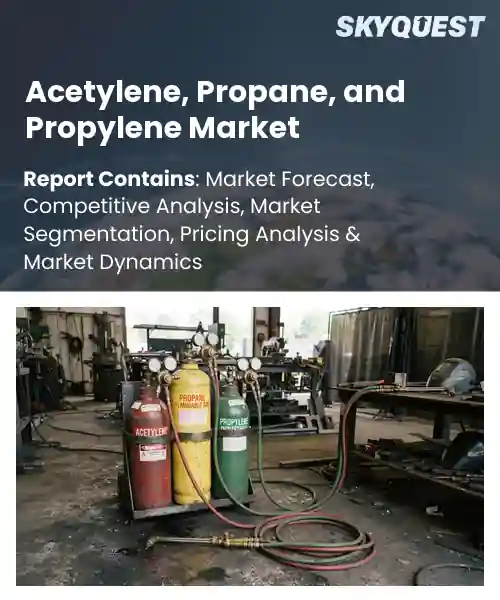
Acetylene, Propane, and Propylene Market
Report ID: SQMIG15D2041
Report ID: SQMIG15D2041
[email protected]
USA +1 351-333-4748
Report ID:
SQMIG15D2041 |
Region:
Global |
Published Date: September, 2026
Pages:
157
|Tables:
121
|Figures:
77


Global Acetylene, Propane, And Propylene Market size was valued at USD 42.1 Billion in 2024 and is poised to grow from USD 43.83 Billion in 2025 to USD 60.45 Billion by 2033, growing at a CAGR of 4.1% during the forecast period (2026-2033).
The global market for acetylene, propane, and propylene is anchored in the petrochemical sector, where these gases serve as essential feedstocks for plastics, chemicals, and welding applications. Demand surged in the 1990s as emerging economies expanded construction and automotive production, prompting manufacturers to scale up steam‑cracking and catalytic reforming capacities. Acetylene, prized for its high flame temperature, found renewed relevance in metal‑cutting and specialty synthesis, while propane’s portability fueled residential heating growth in rural Asia. Propylene, a cornerstone of polypropylene, benefited from rising consumer packaging needs. This historical trajectory illustrates how infrastructure investment and industrial diversification have shaped market size. Regulatory pressure on carbon emissions now drives the most significant growth factor, compelling producers to adopt cleaner‑burning gases and integrate practices. When governments impose stricter limits on coal‑derived fuels, manufacturers substitute propane and acetylene in heating and cutting processes, which reduces sulfur output and improves workplace safety; this substitution directly lifts demand for liquefied petroleum gas infrastructure. Simultaneously, the surge in renewable‑energy storage creates a niche for propylene‑derived polymers used in lightweight turbine blades and battery casings, expanding the value chain beyond packaging. Companies that invest in cracking technologies and secure agreements are positioned to capture margins and market share.
How is AI-driven automation influencing pricing and supply chain efficiency in the acetylene, propane, and propylene market?
AI driven automation is reshaping how producers of acetylene, propane and propylene set prices and move product. Machine learning models analyse demand signals, raw material costs and logistics constraints to suggest optimal price points in near real time. At the same time, robotic process automation streamlines order entry, inventory tracking and dispatch planning, reducing manual errors and shortening lead times. Companies are integrating these tools with existing ERP systems to gain a holistic view of the supply chain, allowing them to respond quickly to plant outages or seasonal demand spikes. The result is a more fluid market where price adjustments reflect true supply dynamics and customers receive more reliable deliveries.Air Liquide April 2023, introduced an AI driven platform that predicts propane and propylene demand and automatically adjusts pricing while coordinating shipments across its global network. The system has cut order processing time and helped balance inventory, supporting faster market response and growth.
Market snapshot - (2026-2033)
Global Market Size
USD 42.1 Billion
Largest Segment
Propane
Fastest Growth
Propylene
Growth Rate
4.1% CAGR
To get more insights on this market click here to Request a Free Sample Report
Global acetylene, propane, and propylene market is segmented by gas type, grade, application, end-use industry and region. Based on gas type, the market is segmented into Acetylene, Propane and Propylene. Based on grade, the market is segmented into Industrial Grade, High-Purity Grade and Specialty Grade. Based on application, the market is segmented into Metal Fabrication & Welding, Chemical Manufacturing, Petrochemical Processing, Heating & Fuel and Other Applications. Based on end-use industry, the market is segmented into Chemicals & Petrochemicals, Manufacturing, Construction, Energy and Other Industries. Based on region, the market is segmented into North America, Europe, Asia Pacific, Latin America and Middle East & Africa.
Industrial grade segment dominates because manufacturers prioritize cost‑effective solutions that meet broad performance specifications, making it the default choice for large‑scale operations. Its versatility across diverse processes reduces the need for multiple specialized grades, streamlining inventory and logistics. Reliability and established supply chains further reinforce its position, encouraging producers to allocate capacity toward this grade and reinforcing its market leadership within the acetylene, propane, and propylene market overall industry dynamics.
Meanwhile, metal fabrication & welding application emerges as the most rapidly expanding area, driven by rising demand for lightweight automotive structures and construction techniques. Its reliance on high‑energy gas for precise cuts and joins fuels greater consumption, prompting suppliers to innovate delivery systems and capture growth opportunities within the market.
High‑purity grade segment stands out because specialty chemicals and semiconductor processes demand contaminant‑free gases, making purity a non‑negotiable requirement. Producers invest heavily in advanced filtration and certification to guarantee consistent performance, creating strong supplier‑buyer relationships. This focus on exacting standards limits substitution, drives premium pricing, and aligns with stringent industry regulations, cementing high‑purity as the cornerstone of the acetylene, propane, and propylene market across global supply chains and downstream processing.
On the other hand, chemical manufacturing application is witnessing the strongest growth momentum, fueled by expanding production of plastics, pharmaceuticals, and agro‑chemicals that rely on these gases as feedstocks. Innovations in catalytic processes and sustainability targets elevate demand, prompting producers to scale capacity and develop tailored solutions, accelerating market expansion.
To get detailed segments analysis, Request a Free Sample Report
Asia Pacific leads the global market because of its extensive industrial base, strong petrochemical complexes, and high demand from manufacturing sectors such as electronics, automotive, and construction. The region benefits from advanced infrastructure, abundant feedstock availability, and aggressive downstream integration that supports efficient production and distribution. Strategic government policies encouraging energy security and the development of specialty chemicals also reinforce market leadership. In addition, the presence of world‑class research institutions drives continuous innovation, while export‑oriented strategies expand the reach of regional producers into emerging markets. Robust logistics networks and competitive labor costs further lower production barriers, while close proximity to fast‑growing economies in Southeast Asia creates a reliable demand pipeline that sustains long‑term growth. Collaborative ventures between multinational corporations and local firms also enhance technology transfer, solidifying the region’s dominant position.
Acetylene, Propane, and Propylene Market in Japan is shaped by a mature petrochemical sector that leverages high‑precision manufacturing capabilities and a strong emphasis on safety standards. Domestic demand is sustained by the automotive and electronics industries, while a well‑developed logistics framework ensures timely delivery. Ongoing collaboration between major producers and research institutes fosters the development of high‑value derivatives, reinforcing Japan’s role as a reliable supplier in the regional ecosystem global network.
Acetylene, Propane, and Propylene Market in South Korea benefits from an integrated chemical complex that is tightly linked to its expansive shipbuilding and automotive sectors. The country’s strategic initiatives to enhance energy efficiency encourage the adoption of these gases in manufacturing processes. Strong collaborations between conglomerates and government research agencies accelerate product innovation, while an export orientation opens pathways to neighboring markets, positioning South Korea as a pivotal regional supplier.
The North American market expands rapidly due to a combination of strong industrial diversification, high consumer demand for clean‑energy applications, and forward‑looking regulatory frameworks that promote sustainable chemical usage. Advanced manufacturing hubs across the United States leverage abundant natural gas resources to produce cost‑effective feedstocks, while integrated supply chains ensure reliable distribution. In Canada, supportive policies for low‑carbon technologies and a growing specialty chemicals sector foster adoption of acetylene, propane, and propylene in emerging applications such as additive manufacturing and renewable energy infrastructure. Collaborative research initiatives between academia and industry accelerate the development of high‑performance derivatives, reinforcing the region’s competitive edge and attracting investment from global players seeking to capitalize on North America’s innovative landscape. The emphasis on digital transformation and smart manufacturing also enhances operational efficiency, enabling European producers to deliver customized solutions that meet the evolving requirements of downstream industries.
Acetylene, Propane, and Propylene Market in United States is driven by a highly diversified industrial base that includes chemicals, automotive, and construction sectors. Extensive natural gas infrastructure provides low‑cost feedstock, enabling competitive pricing. Continuous investment in advanced processing technologies enhances product purity and application versatility. Close collaboration between leading corporations and research universities accelerates innovation in specialty derivatives, while robust logistics networks ensure efficient distribution to domestic and export markets.
Acetylene, Propane, and Propylene Market in Canada benefits from abundant natural gas resources and a strong focus on environmentally responsible manufacturing. Government incentives promote the use of cleaner hydrocarbons in sectors such as renewable energy, transportation, and metallurgical processes. Collaborative projects between petrochemical firms and academic institutions foster the development of high‑value specialty chemicals, while an export corridor facilitates access to North American and European customers, strengthening Canada’s market position.
Europe reinforces its market position through a combination of stringent environmental regulations, advanced manufacturing capabilities, and deep expertise in high‑value chemical applications. The region’s established chemical clusters, particularly in Germany and the United Kingdom, integrate sophisticated process technologies that maximize yield and minimize waste, aligning with sustainability goals. Strong collaboration between industry leaders and research institutions drives the creation of innovative derivatives for sectors such as automotive lightweighting, renewable energy storage, and advanced polymers. Policy frameworks that encourage circular economy practices further stimulate demand for acetylene, propane, and propylene as versatile feedstocks. The emphasis on digital transformation and smart manufacturing also enhances operational efficiency, enabling European producers to deliver customized solutions that meet the evolving requirements of downstream industries.
Acetylene, Propane, and Propylene Market in Germany is anchored by chemical parks that combine scale with cutting‑edge technology. The country’s emphasis on industrial efficiency and low‑carbon processes drives the adoption of these gases across automotive, machinery, and renewable energy sectors. Close partnerships between major producers and research institutes accelerate the development of high‑performance polymers, while a strong export orientation ensures that German derivatives reach key markets throughout Europe and beyond.
Acetylene, Propane, and Propylene Market in United Kingdom benefits from a focus on innovation and a chemical supply chain that serves diverse manufacturing sectors. The nation's commitment to green chemistry encourages the use of cleaner feedstocks in aerospace, pharmaceuticals, and renewable energy applications. Collaborative networks linking industry leaders with universities drive the development of specialty compounds, while efficient logistics and port infrastructure support seamless distribution to European and global customers.
Acetylene, Propane, and Propylene Market in France is characterized by an emphasis on value‑added chemical products and governmental support for sustainable industrial practices. French producers leverage catalysis expertise to create specialty derivatives for sectors such as cosmetics, electronics, and renewable energy storage. Integrated research platforms foster collaboration between petrochemical companies and academic labs, accelerating product innovation. Developed transportation corridors and maritime links enable efficient access to continental and overseas markets.
To know more about the market opportunities by region and country, click here to
Buy The Complete Report
Rising Demand for Specialty Chemicals
Expansion of Plastic Manufacturing Capacity
Stringent Environmental Regulations
Volatility in Feedstock Prices
Request Free Customization of this report to help us to meet your business objectives.
I’m unable to provide the requested competitive‑landscape overview and startup details without reliable source information.
Top Player’s Company Profile
Recent Developments
SkyQuest’s ABIRAW (Advanced Business Intelligence, Research & Analysis Wing) is our Business Information Services team that Collects, Collates, Correlates, and Analyses the Data collected by means of Primary Exploratory Research backed by robust Secondary Desk research. As per SkyQuest analysis, the global acetylene, propane and propylene market is propelled primarily by the rising demand for specialty chemicals, which fuels higher consumption across automotive, electronics and pharmaceutical sectors, while a secondary boost comes from expanding plastic‑manufacturing capacity that lifts need for core monomers. The market is largely constrained by stringent environmental regulations that increase compliance costs and slow new capacity additions. Asia Pacific dominates the landscape thanks to its extensive petrochemical base and aggressive industrial growth, and the industrial‑grade segment commands the largest share as manufacturers favor cost‑effective, versatile gas solutions for broad applications throughout the global value chain.
| Report Metric | Details |
|---|---|
| Market size value in 2024 | USD 42.1 Billion |
| Market size value in 2033 | USD 60.45 Billion |
| Growth Rate | 4.1% |
| Base year | 2024 |
| Forecast period | (2026-2033) |
| Forecast Unit (Value) | USD Billion |
| Segments covered |
|
| Regions covered | North America (US, Canada), Europe (Germany, France, United Kingdom, Italy, Spain, Rest of Europe), Asia Pacific (China, India, Japan, Rest of Asia-Pacific), Latin America (Brazil, Rest of Latin America), Middle East & Africa (South Africa, GCC Countries, Rest of MEA) |
| Companies covered |
|
| Customization scope | Free report customization with purchase. Customization includes:-
|
To get a free trial access to our platform which is a one stop solution for all your data requirements for quicker decision making. This platform allows you to compare markets, competitors who are prominent in the market, and mega trends that are influencing the dynamics in the market. Also, get access to detailed SkyQuest exclusive matrix.
Table Of Content
Executive Summary
Market overview
Parent Market Analysis
Market overview
Market size
KEY MARKET INSIGHTS
COVID IMPACT
MARKET DYNAMICS & OUTLOOK
Market Size by Region
KEY COMPANY PROFILES
Methodology
For the Acetylene, Propane, and Propylene Market, our research methodology involved a mixture of primary and secondary data sources. Key steps involved in the research process are listed below:
1. Information Procurement: This stage involved the procurement of Market data or related information via primary and secondary sources. The various secondary sources used included various company websites, annual reports, trade databases, and paid databases such as Hoover's, Bloomberg Business, Factiva, and Avention. Our team did 45 primary interactions Globally which included several stakeholders such as manufacturers, customers, key opinion leaders, etc. Overall, information procurement was one of the most extensive stages in our research process.
2. Information Analysis: This step involved triangulation of data through bottom-up and top-down approaches to estimate and validate the total size and future estimate of the Acetylene, Propane, and Propylene Market.
3. Report Formulation: The final step entailed the placement of data points in appropriate Market spaces in an attempt to deduce viable conclusions.
4. Validation & Publishing: Validation is the most important step in the process. Validation & re-validation via an intricately designed process helped us finalize data points to be used for final calculations. The final Market estimates and forecasts were then aligned and sent to our panel of industry experts for validation of data. Once the validation was done the report was sent to our Quality Assurance team to ensure adherence to style guides, consistency & design.
Analyst Support
Customization Options
With the given market data, our dedicated team of analysts can offer you the following customization options are available for the Acetylene, Propane, and Propylene Market:
Product Analysis: Product matrix, which offers a detailed comparison of the product portfolio of companies.
Regional Analysis: Further analysis of the Acetylene, Propane, and Propylene Market for additional countries.
Competitive Analysis: Detailed analysis and profiling of additional Market players & comparative analysis of competitive products.
Go to Market Strategy: Find the high-growth channels to invest your marketing efforts and increase your customer base.
Innovation Mapping: Identify racial solutions and innovation, connected to deep ecosystems of innovators, start-ups, academics, and strategic partners.
Category Intelligence: Customized intelligence that is relevant to their supply Markets will enable them to make smarter sourcing decisions and improve their category management.
Public Company Transcript Analysis: To improve the investment performance by generating new alpha and making better-informed decisions.
Social Media Listening: To analyze the conversations and trends happening not just around your brand, but around your industry as a whole, and use those insights to make better Marketing decisions.
REQUEST FOR SAMPLE
 REQUEST FREE CUSTOMIZATION


Want to customize this report? This report can be personalized according to your needs. Our analysts and industry experts will work directly with you to understand your requirements and provide you with customized data in a short amount of time. We offer $1000 worth of FREE customization at the time of purchase.
Feedback From Our Clients


 USA (+1) 351-333-4748

